Languages
Friday, October 2, 2026



News and Views from the Global South
Asia-Pacific
Once Evicted From This Kashmir Lake, People Now Seen as Its Saviours
For the past few weeks, residents living in and around Dal Lake in Indian Kashmir have witnessed “a different phenomenon” as a green sludge has accumulated on the once pristine water. Photos circulating widely on social media triggered a public outcry.
Failing to Learn: Afghan Girls Repeat Grades to Avoid Exclusion
It is almost unheard of for a student to deliberately fail final school exams for no apparent reason. Therefore, when 13-year old Sara (not her real name) from Mazar-i-Sharif in Afghanistan took her school report home to her parents, they were shocked to learn that the top-performing student had failed her final exams and would not advance to the next level. But there was no longer a next level for Sara, even if she had passed.
Experts, Rights Groups Warn of Crisis of Obstetric Violence
Government and medical professionals must implement systematic changes to deal with a “crisis” of obstetric violence (OV) across Eastern Europe and Central Asia (EECA), experts and rights campaigners have said.
Nepal’s Gen Z Electoral Revolution
Less than six months after Nepal’s Generation Z rose up in protest, the country has a new prime minister. A 35-year-old former rapper who soundtracked the protests swept to power in a landslide in the 5 March election.
‘The Political System Only Moves When Threatened Directly’
CIVICUS discusses Nepal’s upcoming election with youth activist Anusha Khanal of the Gen Z Movement Alliance, a youth-led civil society coalition mobilising for democratic accountability and governance reform in Nepal.

Running on Sunshine: Pakistan’s Solar Boom to Tide Over Middle East Energy Crisis
Energy expert Vaqar Zakaria believes solar power makes “excellent economic sense” – and he lives by it. For over five years, his rooftop panels have slashed his bills, sometimes to zero, even allowing him to sell surplus electricity back through net metering.
How a Handful of Fishers Show How Harpooning Can Be Ecologically Sustainable
Sudhi Kumar animatedly moves his hands, resembling a graceful dance performance, as he demonstrates how a fishing harpoon is used. He has been on a brief hiatus from harpooning, owing to the recent rough nature of the sea, and doesn’t have the tool with him as we speak. But more than three decades of experience using harpoons is apparent in how vividly he uses his body to mimic the process.
My Name is Dhaka
 My Name is Dhaka is a one-minute experimental film portraying Dhaka as a living, breathing entity with a 400-year history. Through a reflective voice, the city recounts its transformations, crises, and resilience. It captures contrasts between pollution and celebration, hardship and hope, revealing a megacity shaped by climate change, migration, and human survival.

Geospatial Innovations Addressing Critical Water Data Gaps in Asia
Across Asia, new initiatives are showing how satellite Earth observation data and AI-powered technologies can turn fragmented water-related data into actionable insights for managers and policymakers in line ministries and local governments.
Young Afghan Taekwondo Women Coach Chose Resistance over Surrender to Taliban
When Khadija Ahmadzada was arrested in Herat province of Afghanistan in January this year, it sparked widespread domestic and international protests. Women’s rights activists and social media users raised their voices with slogans such as “Sport is not a crime,” “Education is a right for women,” and “Don’t erase women,” often using the hashtag #BeHerVoice.
CHINA: ‘The State Is Using Generative AI to Engineer Reality Through Informational Gaslighting’
CIVICUS discusses China’s tech-enabled repression with Fergus Ryan, a Senior Analyst at the Australian Strategic Policy Institute (ASPI), where he specialises in how the Chinese Communist Party shapes global information environments through censorship, propaganda and platform governance. His research includes a major study on China’s AI ecosystem and its human rights impacts, as well as investigations into China’s use of foreign influencers.

Iran Conflict: “Civil War Will Be Inevitable”
Iranian and Israeli flags fill the centre of Manchester, in northern England. There are also portraits of a king overthrown almost half a century ago and of his son, now a claimant to the throne from exile. It is yet another march of Iranians calling for Reza Pahlavi as an alternative to the regime of the ayatollahs.
Philippines: ICC Hearing Gives Survivors of Duterte’s Drug War Hope
Gito* had just arrived at his father’s house in Caloocan City in the Philippines on December 7, 2016, when three armed policemen burst into the home, grabbed his father, took him outside and shot him multiple times. Gito told IPS his father had put his hands up when the officers told him they had come to arrest him, but they opened fire anyway.
Housing as Climate Resilience in Asia-Pacific Cities
Access to adequate housing is a foundation of resilient cities. Safe and affordable homes provide stability, allow residents to access essential services, and enhance the capacity for communities to withstand and recover from shocks. Yet housing is often treated as a downstream outcome of urban development or disaster recovery rather than as a strategic investment in resilience.
Syria’s Mobile Cultural Bus: Championing Cultural Justice, Delivering Art and Literature to Children of War
In the Al-Azraq camp in northern Syria, 10-year-old Abeer Al-Qaddour sits, browsing a colourful book with intense focus and curiosity. Nearby stands a bus, elegantly inscribed with the words 'The Cultural Bus'.
Public Flogging in Afghanistan Strips Women of Dignity
In the bone-chilling Afghanistan winter, a woman was dragged into a public square early this year and publicly lashed for a crime she may or not have committed. According to the ruling handed by the Taliban Supreme Court, the woman and the male culprit who was jointly accused of extra-marital affair received 30 lashes each and a one-year suspended prison sentence. The sentence was carried out in the presence of several local officials and residents in a province whose name is left out to protect the victim.
15 Years After the Great East Japan Earthquake & Tsunami
On 11 March 2011, the powerful 9.0 magnitude Tōhoku earthquake struck off the northeastern coast of Japan, triggering a 40-meter Tsunami. Many coastal towns along Japan’s Pacific coast were devastated. Approximately 20,000 people lost their lives and around 470,000 were evacuated from their homes.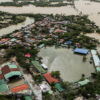
As La Niña Fades, WMO Experts Warn That El Niño Could Set New Global Heat Records
Earlier this week World Meteorological Organization (WMO) announced that the weakening conditions of La Niña conditions are beginning to fade, with climate conditions transitioning toward ENSO-neutral —a phase in which neither El Niño nor La Niña is present and oceanic and atmospheric conditions in the tropical Pacific remain near average. The agency noted that this shift could lead to the development of El Niño later in the year, a pattern typically associated with rising global temperatures and an increased risk of extreme weather events worldwide.
Turning Waste into Hope: A Youth-Led Model for Sustainable Change
From the beginning, this project was a collaboration between student teams in Japan and Korea. Although we live in different countries, we shared one common question: How can young people reduce waste while supporting families facing food insecurities?
From Truancy to Belonging: Why Safe Spaces Matter for Youth Well-Being
I recently came across a statistic that stopped me in my tracks.
International Women’s Day 2026: For Girls in Pakistan’s Tribal Belt, Women’s Sports Come at a Cost
“I was very happy to see the way Aina Wazir was playing cricket,” says 28-year-old Noorena Shams, a professional squash player, when she saw the seven-year-old’s video. The clip, which spread rapidly across social media, drew widespread praise for the young girl’s remarkable talent.« Previous Page — Next Page »


The Week with IPS

NEXT STOP - SDGs
Tracking global progress towards a sustainable world
Tracking global progress towards a sustainable world
