Languages
Thursday, October 1, 2026



News and Views from the Global South
Asia-Pacific
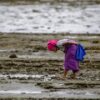
Pacific Ocean Under Pressure — Now a Region Finally Armed With Evidence
For generations, Pacific people have understood the ocean not as a resource but as identity, sustenance, and survival. Today, that relationship is being tested in ways science is only just beginning to fully capture.
‘Nuclear Weapons Are Not Just Tools of War. They Are Weapons of Mass Suffering.’
"We choose hope because despair is a form of surrender that we cannot accept,” UN Ambassador to the Philippines, Enrique Manolo, told civil society representatives and the diplomatic community, considering the question of whether to pursue nuclear disarmament in a world that is becoming more polarized on the issue.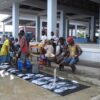
Pacific Islanders Combat Mercury Poisoning of the Environment
It is an invisible contaminant that has been found in fisheries, an essential part of the food chain for many Pacific Islanders. Mercury, emitted from fossil fuel power generation and other industrial processes around the world, has now penetrated marine ecosystems in the Pacific Islands with detrimental consequences for people’s health and wellbeing.
Corruption in Bangladesh: Will Development Partners Remain Complicit?
Bangladesh remains one of the most corrupt countries in the world. Its corruption perception index (CPI) score, 24, is 18 points below the global average score of 42, and 21 points lower than the Asia-Pacific region’s average of 45. One of the main sources of corruption is over-priced aid-funded projects as they lack competitive bidding. Projects funded through Government-to-Government deals drive up costs by more than 400% compared to more transparent alternatives, and around 35% of project costs are lost to corruption and inefficiency.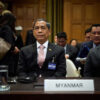
Indonesia’s Genocide Case Shines the Spotlight on Myanmar Atrocities
Yasmin Ullah, from Myanmar’s persecuted Rohingya minority, is determined to see justice. On 13 April, she filed a complaint alleging genocide against Myanmar’s president, Min Aung Hlaing, to Indonesia’s Attorney General’s Office. Min Aung Hlaing led the 2021 coup that ousted a democratically elected government and this month was named president following a sham election held amid intense repression, rubber stamping the army’s continuing grip on power. However secure he appears in his position, Yasmin Ullah’s legal action offers hope his impunity may not be guaranteed.
NEPAL: ‘Voting on Discord Was a Very Gen Z Way of Doing Politics’
CIVICUS discusses Gen Z-led protests in Nepal with Abhijeet Adhikari (Abhi), a lawyer and political activist who took part in the protests.

Feminist Governance and Democratic Change in Armenia
 The period after Armenia's 2018 "Velvet Revolution" maintains a fragile status which presents both substantial democratic and feminist achievements and rising internal and external international pressures.

No Bones Broken, No Crime Committed: Inside the Taliban’s New Rules on Violence Against Women
The Taliban have announced new laws that effectively legalise domestic violence against women and children. Afghanistan's supreme leader, Mullah Hibatullah Akhundzada, signed a decree introducing a new criminal code in January. It contains three parts, ten chapters, and 119 articles that legalise violence, codify social inequality, and introduce punitive measures widely condemned as a return to slavery.
Guardians of the Sea: How GEF Small Grants Program Enables Young Volunteers Take the Lead in Sea Turtle Conservation
Every winter thousands of sea turtles come ashore at Cox’s Bazar, in the Bay of Bengal, Bangladesh, to lay eggs.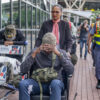
Russia’s African Cannon Fodder
On 7 April, the government of Cameroon published a list of 16 of its citizens confirmed killed fighting for Russia against Ukraine. That means the number of Cameroon citizens killed in this distant war has likely surpassed a hundred, making the country the biggest victim of a Russian recruitment drive increasingly focused on Africa.
Bridging Knowledge Systems: How Pacific Communities Are Reclaiming Climate Solutions Through Nature
Climate change is no longer a distant threat. Across the Pacific, it is a daily reality reshaping coastlines, livelihoods, and the delicate balance between people and the environment. But in a region long defined by resilience, solutions are not being invented from scratch. They are being remembered, strengthened, and scaled.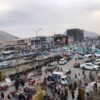
Online University Throws a Lifeline to Afghan Women Shut Out of Education
Ever since childhood, Khatera’s (not her real name) dream was to study medicine at university and become a doctor.
Explainer: How the GEF Funds Global Environmental Action
The Global Environment Facility, widely known as the GEF, plays a central role in financing environmental protection across the world. It supports developing countries in tackling climate change, biodiversity loss, land degradation, pollution, and threats to ecosystems.
Why the Rohingya Refugees in Bangladesh Need Work, Not Just Rations
While global attention right now is on escalating geopolitical tensions involving the United States, Israel, and Iran, another crisis continues quietly in Bangladesh.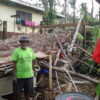
Informal Settlements Grapple With Climate Extremes in Pacific Islands
A rising cycle of poverty and extreme weather threatens many towns and cities, especially those situated on coastlines, in the Pacific Islands. Urban centres in the Pacific have grown at an unprecedented rate this century, rapidly straining national resources for urban planning. But governments are now making progress on improving people’s lives in the informal settlements that dominate the urban sprawl in some of the region’s largest cities.
Japan and Kazakhstan Draw Closer as Iran Crisis Reshapes Energy and Security Priorities
As tensions surrounding Iran deepen and uncertainty spreads across global energy markets, Japan is once again confronting a structural weakness: its heavy dependence on Middle Eastern oil.
Cambodia Unveils Statue Honouring Tanzanian-Born Bomb-Sniffing Rat Magawa
At Mazimbu village, not far from Tanzania’s Sokoine University of Agriculture (SUA), Stephano Jaka still remembers the night he trapped and killed a rat that had been feasting on his maize cobs – stored in a meticulously woven basket designed to protect grains from rodents.
The Political Economy of Bangladesh’s LDC Graduation
Bangladesh is scheduled to graduate from the least developed country (LDC) status in November this year after more than half a century. Bangladesh joined the UN club of LDCs in 1975 and consistently met all three graduation criteria – per capita Gross National Income (GNI), human asset and economic vulnerability – since 2018.
From Dialogue to Delivery: The Pacific’s Climate Mobility Moment
Rising seas, intensifying storms, saltwater intrusion and shifting coastlines are the lived realities of Pacific communities today. Families are making difficult decisions about whether to stay, adapt or move. Some communities have already relocated. Others are preparing for that possibility. Many are determined to stay for as long as possible on lands that hold ancestral meaning and identity.
Post-Protest Bangladesh: Restoration More than Renewal
Bangladesh’s first credible election in nearly two decades delivered a landslide win for the Bangladesh Nationalist Party (BNP) and its leader Tarique Rahman, son of a former prime minister, just back from 17 years of self-imposed exile.
Once Evicted From This Kashmir Lake, People Now Seen as Its Saviours
For the past few weeks, residents living in and around Dal Lake in Indian Kashmir have witnessed “a different phenomenon” as a green sludge has accumulated on the once pristine water. Photos circulating widely on social media triggered a public outcry.« Previous Page — Next Page »


The Week with IPS

NEXT STOP - SDGs
Tracking global progress towards a sustainable world
Tracking global progress towards a sustainable world
