Languages
Saturday, September 19, 2026



News and Views from the Global South
Biodiversity

How Community Radio Is Powering Tanzania’s Climate Resilience
At dawn in the mangrove-choked Rufiji estuary, paddles from wooden canoes slice through still waters as a soft voice drifts across the tide.
Thousands Gather in Nairobi as Science Meets Diplomacy for Planet Protection
“There will never be a better time than now to invest in a stable climate, thriving ecosystems, and resilient lands, or in sustainable development that delivers for all,” said Amina J. Mohammed, the deputy Secretary-General of the United Nations, during the opening plenary of the seventh meeting of the UN Environment Assembly (UNEA-7) taking place from December 8 to 12, 2025.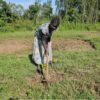
Farmers Earn While Reviving Native Forests Through a Blockchain-Powered App
For years, Morris Onyango had been trying to reforest his degraded land on the shores of River Nzoia, in Siaya county, 430 kilometers from Kenya’s Capital, Nairobi. But every time he planted trees on his farm, his efforts bore little fruit, as floodwaters would not only wash away his tree seedlings but also fertile topsoil on his land.
Businesses Impact Nature on Which They Depend — IPBES Report Finds
Nature is a double-edged sword for global business. A groundbreaking report will reveal how businesses profit from exploiting natural resources while simultaneously impacting biodiversity.
Fresh Lens For Nuanced Multifaceted Climate Solutions Needed
“I see more philanthropic support aligning with systems thinking, linking climate stability, biodiversity protection, Indigenous leadership, and community resilience,” says Michael Northrop, Program Director at the Rockefeller Brothers Fund.
Why the UN Environment Assembly is Essential to a Safer, More Resilient Planet
As geopolitical challenges and tensions escalate globally, one thing is clear: fragmented politics will not fix a fractured planet. This is why the United Nations Environment Assembly (UNEA) – the world’s highest decision-making body on the environment – is so critical to address our shared and emerging environmental threats.
From Access to Action — Carbon Markets Can Turn Developing Countries’ Ambitions into Realities
The UN climate talks at COP30 once again brought the critical issue of climate finance to the forefront of global discussions. However, while much of the debate revolved around traditional forms of aid directed at developing countries most vulnerable to the impacts of climate change, a faster, more transformative approach lies in expanding access to carbon markets.
COP30: Broken Promises, New Hope — A Call to Turn Words into Action
When the world gathered in Glasgow for COP26, the mantra was “building back better.” Two years later, in Sharm El Sheikh, COP27 promised “implementation.” This year, in Belém, Brazil, COP30 arrived with a heavier burden: to finally bridge the chasm between lofty rhetoric and the urgent, measurable steps needed to keep 1.5 °C alive.
Zanzibar’s Battle to Save Endangered Turtles Intensifies as Global Study Exposes Deadly Microplastic Threat
On a warm morning at Matemwe, a small crowd gathers behind a rope barrier as the sand begins to tremble. A tiny head pushes through a soft mound of earth, then another, and another. Within minutes, the shallow nest—protected for weeks by a ring of wooden stakes and mesh—comes alive with the rustle of dozens of hatchlings. Volunteers crouch nearby, recording the emergence time and shading the small creatures with their hands to protect them from swooping gulls.
Bonn to Belém: Three Decades of Promises, Half-Delivered Justice, and Rights-Based Governance Is Now Inevitable
COP30 in Belém is not just another annual climate meeting; it is the 32-year report card of the world governance architecture that was conceived at the Rio Earth Summit of 1992. And that is what report card says: delivery has been sporadic, cosmetic and perilously disconnected with the physics of climatic breakdown.
If COP30 Fails, It Won’t Be North vs. South, but Power vs People
Belém, at the mouth of the Amazon River, was always going to be a symbolic host for the UN COP30 climate summit, but the mood here has gone far beyond symbolism.
Sidelined—Quilombos Fight on for Health of World’s Largest Rainforest
Just 30 minutes from where the UN climate negotiations are unfolding in the port city of Belém, Afro-descendant communities are engaged in a fierce struggle for the full recognition and legal titling of their ancestral territories—critical as their security and livelihoods are compromised by businesses wanting to set up contaminating landfill sites and drug cartels.
Cold or Heat, A Disputed Roadmap to Leave Fossil Fuels Behind in COP30
The heat in the Hangar Convention Center of the Amazonia, in the northeastern Brazilian city of Belém, has reached the negotiation rooms of the climate summit. Over the past 72 hours, one of the most delicate and significant discussions of this climate meeting has been taking place: the path to progressively abandon the production and use of coal, gas, and oil.
You Cannot Make Decisions About Our Lives—A Perspective on Global Climate Change Negotiations
Immaculata Casimero, a leader of the Wapichan Women’s Movement, remembers the beauty of the mountains that are cultural sites to her indigenous community in Guyana.
Snatching Victory From Jaws of Defeat Through Belém’s Mutirão Approach
Mutirão first entered the global climate discourse in Ambassador André Corrêa do Lago’s first letter to the world, which was sent in March 2025 as part of his COP30 presidency.
As COP30 Takes Place, Can Africa Draw Lessons from Brazil on How It Develops Its Livestock Sector?
As the world gathers in Brazil for the UN climate talks, the country’s livestock sector - one of the largest in the world - is understandably in the spotlight.
Latin America: a Test Case for Aligning Climate Action, Food Security and Social Sustainability
The urgency of linking climate action with social and wider environmental priorities is clear. Climate change, environmental degradation and violent conflict are often deeply connected and even mutually reinforcing. At the same time, climate action can either support or undermine efforts to improve social justice and halt environmental degradation.
Hollow Promises or Hope?
COP30 Brazil – Moment of Truth for the Planet
COP30 Brazil, though shadowed by the absence of many world leaders, remains a pivotal milestone in the global fight against climate change, tasked with building on the Paris Agreement’s momentum. Yet the glaring lack of commitment, coupled with withdrawals from the accord, casts a grim shadow over the future. The planet continues to warm, and scientists warn that current targets may not prevent a catastrophic temperature spike. While the summit’s focus on implementation not just new promises—is a welcome shift, it’s clear: words alone won’t cool the Earth.

A Tale of Two Cities – Belém, Nairobi and Why Global Tax Justice Must be at Center of Climate Crisis Response
The climate crisis is getting worse and requires fundamental changes to societies, economies, and our global financial architecture in response. While extreme economic inequality is on the rise – the world's billionaires now hold more wealth in the world than every country except the U.S. and China – the impacts of climate change are also unequally felt, with the poor in the Global South and North most at risk.
The Top Climate Leaders Are Now in The Global South
When world leaders now gather in Belém, Brazil for the UN climate conference, expectations will be modest. Few believe the meeting will produce any breakthroughs. The United States is retreating from climate engagement. Europe is distracted. The UN is struggling to keep relevant in the 21st century.
COP30: The Age of Irrationality in Climate Policy
I have been working on climate policy since the late 1990s. I was in the room when Europe’s early carbon market discussions were shaping the architecture that would eventually underpin the Kyoto Protocol.« Previous Page — Next Page »


The world's diverse flora and fauna are facing urgent threats due to pollution, climate change, commercialization of nature and other forms of harmful human intervention. The widespread loss of biodiversity is worrying not simply because of the disappearance of exotic species which deserve saving, but because tampering with nature's equilibrium means that the loss of one form of life is a threat to another. IPS taps into its own diverse network of correspondents around the world to report on continuing and emerging dangers to nature's riches - and the struggle to protect them.

The Week with IPS

NEXT STOP - SDGs
Tracking global progress towards a sustainable world
Tracking global progress towards a sustainable world
