Languages
Saturday, September 19, 2026



News and Views from the Global South
Civil Society

Can These Prehistoric Sea Creatures Survive Climate Change?
In November, tens of thousands of male olive ridley sea turtles (Lepidochelys olivacea) start congregating on just five kilometers of nearshore in Odisha in eastern India. They wait for the females of the species to arrive. The survival of these prehistoric sea species has largely depended on suitable pairing and mating. However, research findings from around the world indicate that, in the long term, there may be a limited number of males at these mating sites compared to an overwhelming number of females.
The 2025 World Social Summit Must Not Be a Missed Opportunity
Rumors circulating at UN Headquarters suggest there is little appetite for ambition at the Second World Summit for Social Development, set to take place in Doha on 4-6 November 2025. Diplomats and insiders whisper of “summit fatigue” after a packed calendar of global gatherings—the 2023 SDG Summit, the 2024 Summit of the Future, and the upcoming June 2025 Fourth International Conference on Financing for Development. Compounding this fatigue is the chilling rise of anti-rights rhetoric and political resistance from some governments, casting a shadow over multilateral efforts. For some, just getting any multilateral agreement is good enough. As a result, the Zero Draft of the Social Summit Political Declaration lacks the ambition required to confront the multiple social crises our world faces.
UNOC3: Bringing Ocean Education and Science to the Global Agenda
A greater understanding and appreciation of the world’s oceans is needed to protect them. As the global community prepares to convene for the ocean conference, they must also prepare to invest in scientific efforts and education that will bolster their joint efforts.
A New Pope at a Pivotal Moment: Civil Society’s Hopes for Leo XIV
The new pope, the latest in a line dating back almost 2,000 years, was quickly subjected to a very modern phenomenon: no sooner had Pope Leo XIV delivered his first address than people started trawling his social media history for clues about his views. In the context of an ongoing culture war, the fact that far-right grievance entrepreneurs were quick to decry the new pope as ‘woke’ seemed reason enough for progressives to welcome him. But for civil society and the global human rights community, it’s how Leo acts that matters.
Agenda for Nuclear Non-Proliferation Review Conference Still Unclear
The Treaty on the Non-Proliferation of Nuclear Weapons must not be allowed to collapse under the weight of geopolitical cynicism, the preparatory committee at the UN heard.
‘Our Legal Challenge of the Funding Freeze Is Testing the Judiciary’s Ability to Check Executive Power’
CIVICUS speaks with Eric Bjornlund, President and CEO of Democracy International, about the impacts of the US foreign aid freeze and the resulting legal challenges the Trump administration is facing. Democracy International is a global civil society organisation (CSO) that works for a more peaceful and democratic world.

How Mangroves Save Lives, Livelihoods of Bangladesh Coastal Communities
Golenur Begum has faced 12 cyclones in her life. As a child, she witnessed her father’s house destroyed, and as an adult, she watched her home smashed. Saltwater brought by the tidal surges that accompanied the cyclones wrecked their farms and livelihoods. And with climate change, these impacts are becoming more intense and frequent.
From Grief to Action: Demands for Democratic Renewal in the Balkans
Three catastrophic events in the Balkans have sparked powerful movements for systemic change. A train collision that killed 57 people in Greece, a nightclub fire that claimed 59 young lives in North Macedonia and a collapsed railway station roof that left 15 dead in Serbia have ignited sustained anti-corruption protests in all three countries. These weren’t random tragedies but the culmination of systemic failure – neglected safety regulations, illegally issued permits and compromised oversight – with corruption the common denominator.
Young Africans Priced Out of Cities as Urban Housing Crisis Deepens
After graduating in 2019, Jeremiah Achimugu left Sokoto State in northwestern Nigeria for Abuja, the nation’s capital, in search of better opportunities. But life in the city brought unexpected challenges, especially the high cost of housing.
‘Our Weak and Corrupt Institutions Acted Too Late to Address Manipulation That Destabilised Democracy’
CIVICUS discusses Romania’s presidential election with Anda Serban, Executive Director of Resource Center for Public Participation (CERE), a civil society organisation (CSO) that focuses on public participation and transparency in decision-making processes.

Hungary’s LGBTQI Amendment an Affront to Human Rights, Say Activists
A controversial amendment to Hungary’s constitution has left the country’s LGBTQI community both defiant and fearful, rights groups have said.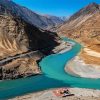
The Indus Water Treaty Suspension: A Wake-Up Call for Asia–Pacific Unity ?
On April 23, India suspended the Indus Water Treaty (IWT), a 65-year-old agreement that had been a rare symbol of cooperation between India and Pakistan despite decades of hostility. The suspension came a day after militants attacked civilians in Jammu and Kashmir, a disputed region, killing 26 people, most of them Indian tourists. India accused Pakistan of supporting “cross-border terrorism” and responded by halting the treaty. Pakistan denied involvement in the attack and called India’s move an “act of war.”

In Zimbabwe, Farmers Are Leading Scientific Research on Conservation Agriculture
Migren Matanga grew up shying away from small and traditional grains in Rushinga, in northern Zimbabwe. The 58-year-old mother of four from Toruzumba village relied on maize and cotton, one of the major cash crops in the area at the time.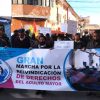
Rights with No Age Limit: Hopes for a Convention on the Rights of Older People
The world’s population is ageing. Global life expectancy has leapt to 73.3 years, up from under 65 in 1995. Around the world, there are now 1.1 billion people aged 60-plus, expected to rise to 1.4 billion by 2030 and 2.1 billion by 2050. This demographic shift is a triumph, reflecting public health successes, medical advances and better nutrition. But it brings human rights challenges.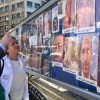
UN Needs to Protect its Vital, Yet Underfunded, Human Rights Work
Major-power cutbacks and delayed payments amidst conflict and insecurity are testing the very principles and frameworks upon which the international human rights infrastructure was built nearly 80 years ago.
‘Trump Is Advancing a 21st-century US Variant of Fascism, Backed by a White Nationalist Ideology’
CIVICUS speaks about democratic decline in the USA with humanitarian and civil society activist Samuel Worthington, former president of the US civil society alliance InterAction and author of a new book, Prisoners of Hope: Global Action and the Evolving Roles of US NGOs.
Speaking Out for SRHR: Why Lived Experiences Must Shape Policy and Practice
Just a month ago, I found myself in a hospital, anxiously waiting for my son to be attended to. As we sat quietly in one of the waiting rooms, an emergency case was wheeled in — a young woman, barely out of her teens. Her face contorted in visible pain. Her dress was soaked with blood, which had begun to pool beneath the wheelchair and trickle onto the floor.
World Press Freedom Day 2025
Call to Protect Elections from AI ‘Information Pollution’
The prevalence of artificial intelligence (AI) is changing the flow and access of information, which has a wider influence on how freedom of expression is affected. National and local elections can demonstrate the particular strengths and vulnerabilities that can be exploited as AI is used to influence voters and political campaigns. As people grow more critical of institutions and the information they receive, governments and tech companies must exercise their responsibility to protect freedom of expression during elections. 
New Forms of Power-Sharing are Needed to Uphold Rights of Indigenous Peoples
A UN groundbreaking report published in 1982 laid the legal ground for defining the inalienable rights of Indigenous Peoples. The document, written by José Martínez Cobo, a United Nations Special Rapporteur, analyzed the complex discrimination patterns faced by Indigenous Peoples.
Lawyer-Turned-Activist Bhuwan Ribhu Honored for Leading a Campaign to End Child Marriage
Bhuwan Ribhu didn’t plan to become a child rights activist. But when he saw how many children in India were being trafficked, abused, and forced into marriage, he knew he couldn’t stay silent.
Third LDC Future Forum Concludes with Ambitious Plans to Build Resilience in Least Developed Countries
The 3rd LDC Future Forum, held from April 1-3, 2025, in Zambia, brought together global leaders, policymakers, and experts to address the urgent need for resilience in the world’s 44 Least Developed Countries (LDCs).« Previous Page — Next Page »


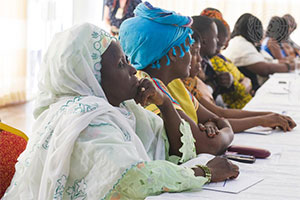 Representatives of Civil Society, Sierra Leone. Credit: UN Photo/Eskinder Debebe
Civil society faces mounting threats worldwide, even as it remains essential for democratic accountability, especially in countries struggling with economic instability and social inequality. However, at the same time, nations with weak democratic governance structures also systemically suppress the power of civil society. Human rights activists across the Global South frequently challenge issues such as political persecution and gender oppression, but in return face state-sanctioned punishment for their advocacy. Imprisonment and exile are common mechanisms of punishment that seek to erode the strength of civil society. The 2026 World Press Freedom Index has reached its lowest level in 25 years, with more than half of the world’s countries now falling into the "difficult" or “very serious” category for press freedom. IPS seeks to highlight the work of civil society across the Global South as well as the challenges that they face.
Updated by Yilan Batista and Shuli Wong August 2026

The Week with IPS

NEXT STOP - SDGs
Tracking global progress towards a sustainable world
Tracking global progress towards a sustainable world
