Languages
Sunday, November 29, 2026



News and Views from the Global South
Civil Society
Young Gather to Show Their Power
With young people spearheading the revolutionary movements in the Middle East and other regions, the seventh Youth Forum taking place here this week has particular relevance, participants say.
Qatar Launches New Global Award to Promote Education
The internationally-renowned Nobel Prizes have been awarded annually for superlative achievements in physics, chemistry, medicine, literature and peace.Occupy Wall Street Protests March on Midtown, and the World
Activists from the Occupy Wall Street movement in New York City flooded Times Square on Saturday as part of a global day of action, with protesters packing the sidewalks and some streets as far as the eye could see in every direction, centered on the plaza where the famous ball drops on New Year's Eve.
PAPUA NEW GUINEA: Women Call the Shots on Mega Copper Mine
Whether the world’s largest open-cut mine on this island territory of Papua New Guinea (PNG) will resume copper and gold production, after being mothballed for 22 years, will depend on how satisfied matrilineal landowners are with the proposals.
SOUTH KOREA: Preventing Desertification Better Than Cure
"Humanity is the only desert-making species and we’ve been degrading usable land at one percent per year," says Luc Gnacadja, executive secretary of United Nations Convention to Combat Desertification (UNCCD).Western Sanctions Look Fussy in Burma
On the face of it, the sudden release of political prisoners in Burma would appear a triumph for the sanctions regime imposed on the Southeast Asian nation by Western governments.Conference Renews Eroded Efforts to Combat Desertification
Degradation of land is the world's quiet crisis, undercutting food production, increasing water scarcity, impoverishing hundreds of millions of people and affecting two billion overall. Nearly 20 million square kilometres of the earth's arable lands – an area twice the size of Canada – have already been degraded.RIGHTS-JAPAN: Lifer’s Case Tells Migrant Workers’ Plight
A Nepalese worker serving life for a murder he denies committing has become the rallying point for activists lobbying for the rights of migrant labour.
Farmers’ Networks Urge Government Action Against Land Grabbing
Civil society organisations and global farmers' networks are gathered in Rome this week to ask governments to stop the "disastrous practice of land grabbing", ahead of next week's Committee on World Food Security.CAMBODIA: Resignation Raises Doubts Over Khmer Rouge Tribunal
The United Nations must address a "crisis of confidence" at the beleaguered Khmer Rouge war crimes tribunal in Cambodia following the resignation of a controversial judge, critics say.GERMANY: Anti-Nuclear Exhibit Calls for Culture of Peace
The question which is safer - the heavily armed world we live in now, or a world in which all peoples' basic needs are met - is one core issue of an antinuclear exhibition that has reached Germany after touring more than 220 cities in 28 countries.INDIA: Unauthorised Clinical Trials on Bhopal Victims
Ajay Shrivastav from Bhopal, the central Indian city that witnessed one of the worst industrial disasters of the world in 1984 from a deadly gas leak, is an angry man seeking justice.“The Death Penalty Has No Dissuasive Effect”
Capital punishment continues to exist because in some countries people are barraged with propaganda depicting it as a curb on crime, which it is not, said Federico Mayor Zaragoza, chair of an international commission against the death penalty that inaugurated its new headquarters in Geneva Monday.DEATH PENALTY: Arab League Asked to Intervene
Campaigners from around the world have called upon the Arab League and on the African Commission on Human and People's Rights to explore the possibility of adopting regional protocols to abolish the death penalty.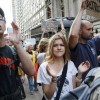
U.S.: Backlash Swells Against New “Gilded Age”
The encampment of disenchanted young protesters in New York City's financial district has exposed growing anger around the United States over rising inequality and a stubborn jobs crisis.
INDIA: Microcredit Fights to Regain Credibility
As microcredit institutions - once touted as the vital ‘last mile' in extending credit to poor rural women -fight a government backlash that has encouraged honest borrowers to turn defaulters, hopes for revival hinge on a new bill awaiting passage in India's parliament.SPAIN: Streets Paved with Evicted Families
As the number of apartments and houses left empty in Spain due to failure to make mortgage or rental payments climbs, tens of thousands of families, including many immigrants, are living on the streets, in shantytowns, or crowded into seedy boarding houses.
Around the Globe, Workers Demand Decent Jobs
The modern English word "economy" is derived from the Greek "oikonomia", meaning "household management".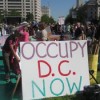
U.S.: “Leaderless” Protest Movement Continues to Snowball
"First they ignore you, then they ridicule you, then they fight you – then you win," a middle-aged man yells into the microphone from a makeshift stage erected at the far end of Freedom Plaza in Washington, DC.
NAMIBIA: Skulls Repatriated – But No Official German Apology
A delegation of Namibian government representatives and leaders of the indigenous Herero and Nama people who came to Germany to repatriate 20 skulls of their ancestors were once again disappointed in their hopes for dialogue and an official apology.
Q&A: Carving Out a New Aid Order at Busan
Busan represents the possibility of an aid revolution – a time in history where an encompassing, inclusive aid framework may be possible. This is according to Tony Tujan, director of IBON International, a capacity development non- governmental organisation.« Previous Page — Next Page »


 Representatives of Civil Society, Sierra Leone. Credit: UN Photo/Eskinder Debebe
Civil society faces mounting threats worldwide, even as it remains essential for democratic accountability, especially in countries struggling with economic instability and social inequality. However, at the same time, nations with weak democratic governance structures also systemically suppress the power of civil society. Human rights activists across the Global South frequently challenge issues such as political persecution and gender oppression, but in return face state-sanctioned punishment for their advocacy. Imprisonment and exile are common mechanisms of punishment that seek to erode the strength of civil society. The 2026 World Press Freedom Index has reached its lowest level in 25 years, with more than half of the world’s countries now falling into the "difficult" or “very serious” category for press freedom. IPS seeks to highlight the work of civil society across the Global South as well as the challenges that they face.
Updated by Yilan Batista and Shuli Wong August 2026

The Week with IPS

NEXT STOP - SDGs
Tracking global progress towards a sustainable world
