Languages
Saturday, October 10, 2026



News and Views from the Global South
Crime & Justice
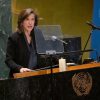
Antisemitism On The Rise Among Younger Generations
The United Nations (UN) held the annual Holocaust Memorial Ceremony on January 27 with the theme "Holocaust Remembrance for Dignity and Human Rights". This year - 2025 - marks the 80 year anniversary of the end of World War II and the liberation of Nazi concentration camps that resulted in the deaths of over 6 million Jews. This event included testimonies from Holocaust survivors, underscoring the importance of understanding and remembrance. With Holocaust denial and attacks on Jews on the rise, it is important to take meaningful steps as a society to combat racism and antisemitism.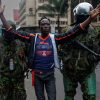
Kenya’s Shadow War on Activism
Kenya’s young protesters are paying a high price for speaking out. Last June, a protest movement led by first-time activists from Generation Z emerged in response to the government’s Finance Bill, which would have introduced sweeping tax increases. The government quickly withdrew its plans, but protests continued, articulating anger at economic strife, elite corruption and out-of-touch politicians. The government’s response has been violent. Police have used batons, teargas and water cannon against protesters. On the worst day of violence, 25 June, when some protesters attempted to storm parliament, police fired live ammunition. Over 60 people were reported killed during the protests. At least 1,200 were reportedly arrested.
Living Conditions in Syria Deteriorate During Transitional Period
Thirteen years of extended conflict, economic downturns, and multiple earthquakes, has left Syria in the midst of a severe humanitarian crisis. Hostilities remain abundant across all of Syria’s governorates, with each facing widespread civilian displacements and damage to critical infrastructures. Following the change of government in December of 2024, Syrian refugees have begun returning from neighbouring countries. However, this return has been marred with insecurity due to the sheer scale of unexploded ordnance, which has resulted in numerous civilian casualties.
A Dream Deferred: Why Is Traveling Across Africa So Hard for Africans?
Aliko Dangote, Africa’s richest man, carries his frustration as visibly as he carries his passport. To travel across the continent he calls home, he needs 35 visas—each a bureaucratic hurdle and a reminder of the barriers to free movement and trade in Africa.
Israel and Palestine Secure Ceasefire Agreement After 15 Months of Conflict
A ceasefire agreement between the states of Israel and Palestine was reached on 15 January, 2025 , effectively putting an end to hostilities in the Gaza Strip. This comes after nearly 15 months of conflict, which has caused immense damage to Palestinian infrastructure, development, and civilian life. The three-phase plan proposed for the ceasefire agreement consists of the return of Israeli hostages, Palestinian refugees returning home, and the reconstruction of Gaza. Additionally, the ceasefire is expected to essentially put an end to the Israel-Hamas War and significantly mitigate the humanitarian crisis occurring in the Gaza Strip.
The Fall of Assad is a Cautionary Tale of Blowback
A regime built on terror, ruled by fear and sustained by foreign proxy forces crumbled in less than a fortnight. In the end, the foundations of the House of Assad (1970–2024) rested on the shifting sands of time. In the good ol’ days, despots could retire with their plundered loot into comfortable lifestyles in Europe’s pleasure haunts. No longer. The reverse damascene expulsion has seen the Assads scurry to safety to Moscow.
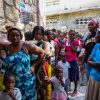
2024 Marked An Escalation in Brutality for Haiti’s Gang War
2024 was a transitional period in Haiti’s history, marked by rampant political instability, brutal gang violence, and widespread civilian displacement. Since the eruption of hostilities in March 2024, the Caribbean nation has been in a state of emergency. In response, the United Nations (UN) Security Council approved The Multinational Security Support (MSS) Mission in Haiti to assist the Haitian government in deposing gang activity and restoring order. However, the support mission has been largely ineffective as gangs continue to seize more areas in Haiti.
Violence Flows in Parts into Mexico from the United States
The case of a man arrested in Texas, in the south of the United States, for shipping arms parts to Mexico immediately caught the attention of authorities in both countries. But it was only one thread in a web that continues to become more and more tangled.
The Year 2024: Hopes & Despairs
Thank God, we have survived another year of genocide, war, destruction and climate crisis. The passing year of 2024 has been a mixture of hope and despair. It began with some hope as the International Court of Justice (ICJ) ruled in favour of South Africa’s case against Israel for committing genocide and ordered Israel to take all measures within its power to prevent the commission of all acts within the scope of Article II of the Genocide Convention, and to take immediate and effective measures to enable the provision of urgently needed basic services and humanitarian assistance to address the adverse conditions of life faced by Palestinians in the Gaza Strip.
Sudan’s Humanitarian Crisis Expected to Worsen in 2025
As the Civil War rages on in Sudan, the nationwide humanitarian crisis continues to worsen. Armed conflict has caused an escalation in civilian casualties and displacement in the past few months. Additionally, famine looms in the nation’s most conflict-impacted areas, which is exacerbated by tightened restrictions that impede humanitarian aid deliveries. Despite numerous calls for a cessation of hostilities by the international community, relief efforts are severely underfunded.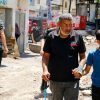
Genocidal President, Genocidal Politics
When news broke over the weekend that President Biden just approved an $8 billion deal for shipping weapons to Israel, a nameless official vowed that “we will continue to provide the capabilities necessary for Israel's defense.” Following the reports last month from Amnesty International and Human Rights Watch concluding that Israeli actions in Gaza are genocide, Biden’s decision was a new low for his presidency.
The most Secret Memory of Men and the Disgraceful Condemnation of Two African Authors
In 2021, the Senegalese novelist Mohamed Mbougar Sarr became the first writer from sub-Saharan Africa to be awarded the Prix Goncourt, France’s oldest and most prestigious literary prize.
‘Digital platforms amplify the Israeli narrative while systematically silencing Palestinian voices’
CIVICUS discusses the challenges Palestinian civil society faces in resisting digital suppression and advocating for justice with Palestinian lawyer and researcher Dima Samaro.

Education Cannot Wait Interviews UN Special Rapporteur on the Situation of Human Rights in Afghanistan Richard Bennett
Richard Bennett was appointed as the Special Rapporteur on the situation of human rights in Afghanistan in April 2022. He has served in Afghanistan on several occasions in different capacities, including as the Chief of the Human Rights Service with the United Nations Assistance Mission in Afghanistan. He has previously played a role in the promotion and protection of human rights in Afghanistan and supported the United Nations on a number of human rights issues, such as protection of civilians, transitional justice, child rights, rule of law, rights of people with disabilities, protection of human rights defenders and a range of economic, social and cultural rights.

IPS – Year End Video, 2024

The world’s troubles deepened in 2024. Civilians bore the brunt of war. Violence in Gaza, Sudan, Ukraine, Haiti, and more displaced over 100 million people worldwide.

Civil Society Trends for 2025: Nine Global Challenges, One Reason for Hope
It's been a tumultuous year, and a tough one for struggles for human rights. Civil society’s work to seek social justice and hold the powerful to account has been tested at every turn. Civil society has kept holding the line, resisting power grabs and regressive legislation, calling out injustice and claiming some victories, often at great cost. And things aren’t about to get any easier, as key challenges identified in 2024 are likely to intensify in 2025.
‘The Election Is Just Another Tool to Keep Lukashenko in Power for as Long as Possible’
CIVICUS discusses the ongoing crackdown on civil society in Belarus with Natallia Satsunkevich, human rights defender and interim board member of the Viasna Human Rights Centre.

Trapped on a Runaway Train: Looking Back on 2024
Do you sometimes feel like a hamster on its wheel, or perhaps stuck on a runaway train hurtling towards the abyss? Whatever metaphor one might choose for our world looking back on 2024, rainbows don’t easily spring to mind.
Water Deprivation Looms in Gaza
As talks of a ceasefire between Israel and Palestine intensify, bombardments in Gaza continue, raising the number of civilian casualties and internal displacements. A December 19 report from Human Rights Watch (HRW) condemned Israeli authorities for committing acts of genocide upon the people in the Gaza Strip, including the deprivation of water and the destruction of critical water sanitation infrastructures.
US & Western Allies Provide a Hefty 260 Billion Dollars in Military Aid to Ukraine
The United States and Western allies have jointly provided a staggering $260 billion in aid, mostly weapons and military assistance, to Ukraine as the long-drawn-out conflict continues following Russia’s invasion in February 2022. Speaking to reporters at NATO headquarters in Brussels early December, US Secretary of State Antony Blinken said: “All told, the United States has provided $102 billion in assistance to Ukraine, and our allies and partners, $158 billion”.
South Korea’s Democracy Defended
Democracy is alive and well in South Korea. When President Yoon Suk Yeol tried to impose martial law, the public and parliamentarians united to defend it. Now Yoon must face justice for his power grab.« Previous Page — Next Page »





Issues of crime and justice are as pertinent to development as they have ever been. The struggle for abolition of the death penalty is not over, and penal reform is desperately needed in many countries around the world. From violence to religious persecution, white-collar crime to police brutality, we keep you updated with reports from around the world. IPS correspondents focus on the causes of crime, attempts to prevent it, and the process of bringing those who commit crimes to justice. We also cover the campaign against capital punishment, and for legal and prison reforms that would give prisoners the right to life, and also to justice and decency.

The Week with IPS

NEXT STOP - SDGs
Tracking global progress towards a sustainable world
Tracking global progress towards a sustainable world
