Languages
Friday, October 9, 2026



News and Views from the Global South
Crime & Justice
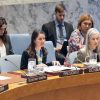
Women and Girls in Afghanistan Bear the Brunt of the Country’s Crisis
Since the Taliban’s return to power in Afghanistan nearly four years ago, human rights have begun diminishing for over 14 million women. Heightened gender inequality has exacerbated the pre-existing humanitarian crisis in Afghanistan, which has been marked by conflict, displacement, climate change, food insecurity, and economic instability. In 2025, widespread cuts in humanitarian funding look to further strain the crisis.
Surges in Violence in Haiti Push Basic Services to the Brink of Collapse
In 2025, the humanitarian crisis in Haiti has grown increasingly dire amid the ongoing gang wars. With rates of displacement, child recruitment, food insecurity, physical violence, and sexual violence having skyrocketed in the past year alone, the national police have found it difficult to keep gang activity under control.
Agriculture for Economic Resilience During Political and Financial Crisis – The Case of Bangladesh
The recent student movement in Bangladesh demanding reform of the quota system for public jobs led a ‘march of the people’ towards the official Residence of the Prime Minister Sheikh Hasina on 5th of August 2024. The security forces of the country, including the army, refused to open fire on the marching crowd. Fearing an imminent attack on her residence without the protection of the army, Sheikh Hasina fled to neighbouring India after being in power continuously since 2008. With Sheikh Hasina fleeing to India on 5th of August 2024 her authoritarian and corrupt rule of 15 years just melted away.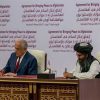
First Vietnam, Then Afghanistan: Is Ukraine Next?
The ongoing war in Ukraine has raised difficult questions for U.S. foreign policy. With U.S. and Russian leaders engaged in direct talks in Saudi Arabia over the future of the conflict, many are left wondering whether the Ukraine crisis could become another Afghanistan or Vietnam—two conflicts where the U.S. pursued peace talks with its adversaries while sidelining local governments, leading to catastrophic outcomes. Drawing lessons from these past negotiations and the eventual collapse of South Vietnam in 1975 and the Republic regime in Afghanistan in 2021, one cannot help but wonder whether Ukraine could face a similar fate unless the U.S. carefully navigates these talks with a more inclusive approach.
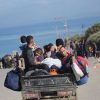
Tensions Between Israel and Hamas Threaten Second Phase of Gaza Ceasefire
On March 1, the first phase of the Israel-Hamas ceasefire was scheduled to end. However, as Israel continues to block humanitarian aid from entering Gaza, and Hamas declining to release more hostages until the second phase goes into effect, the long-term feasibility of the ceasefire agreement is uncertain. Additionally, U.S. President Donald Trump’s recent inflammatory comments surrounding the conflict between the two parties might put further strain on the already fragile ceasefire agreement.
The Gates to Paradise Are Closing
In 2020, a historic announcement emerged from the Global Trafficking in Persons Report, an annual assessment that evaluates human exploitation in 129 countries. For the first time, the world witnessed a 13% decrease in the number of victims. For those of us who fight against this heinous crime, it felt as if a door to paradise had opened—an Eden where no human being is for sale.
DAWN Calls on ICC to Investigate U.S. Officials for War Crimes in Gaza
On February 24, the human rights organization Democracy for the Arab World Now (DAWN) called on the International Criminal Court (ICC) to investigate former U.S. President Joe Biden, Secretary of State Antony Blinken, and Secretary of Defense Lloyd Austin, among other U.S. government officials, for aiding and abetting Israeli war crimes that deliberately infringed on human rights in the Gaza Strip. This poses significant implications for the future of U.S. foreign policy and the role of impunity in world conflicts.
Humanitarian Groups Face Challenges in Reaching the Sudanese Displaced Population
In the final quarter of 2024 ,there has been an escalation in the Sudanese civil war, with armed clashes between the Rapid Support Forces (RSF) and the Sudanese Armed Forces (SAF) having grown in brutality. Heightened insecurity has pushed millions of people into displacement, hunger, and poverty. Additionally, the continued hostilities have made it difficult for humanitarian organizations to scale their responses up.
A Full Implementation of the Israel-Hamas Ceasefire is Uncertain
On January 19, Israel and Hamas implemented a ceasefire agreement that would end the fighting in Israel and Palestine, see the return of hostages and prisoners, and begin a period of recovery and reconstruction for Palestine. Although the past several weeks have seen a relatively smooth transition and a cessation of hostilities, the prospect of a long-term implementation of the ceasefire remains fragile and there is significant risk of a return to warfare and heightened instability across the Middle East. With the humanitarian situation in Gaza improving for the first time in 16 months, it is imperative that the ceasefire remains in effect.
Sexual Violence and Displacement: Disproportionate Threats to Children in Haiti
As ongoing gang violence and unrest bring down the living conditions in Haiti, humanitarian groups sound the alarm on human rights violations and the increasing challenges they dace in providing relief efforts.
Belarus: A Sham Election That Fools No One
Alexander Lukashenko will soon begin his seventh term as president of Belarus. The official result of the 26 January election gave him 86.8 per cent of the vote, following an election held in a climate of fear. Only token opposition candidates were allowed, most of who came out in support of Lukashenko. Anyone who might have offered a credible challenge is in jail or in exile.
Forcing Palestinians Out of Gaza is A Recipe for Unimaginable Disaster
Even after Trump declared that he wanted to take back the Panama Canal, acquire Greenland by force, if necessary, and rename the Gulf of Mexico to the Gulf of America, I could not, like many others, imagine that his madness could reach a new unfathomable height.
Haitian Government Faces Criticism for its Response to Gang Attack in Kenscoff
The humanitarian situation in Haiti continues to deteriorate as armed gangs expand their control in Port-Au-Prince and escalate acts of violence throughout the nation. Due to heightened insecurity, civilian displacement has reached new peaks, with hunger, disease, and the economic crisis having grown worse. With access to basic services diminished, approximately 5.5 million Haitians are dependent on humanitarian aid for survival. However, relief efforts have been severely hampered due to safety risks, restricted mobility and the vast scale of needs.
‘Reconciliation Will Require Robust Transitional Justice and Accountability Mechanisms’
CIVICUS discusses the ongoing conflict in Ethiopia’s Amhara region with Hone Mandefro, advocacy director at the Amhara Association of America, and Henok Ashagray, PhD candidate and project officer at the Centre for Human Rights at the University of Pretoria.
Afghanistan’s Humanitarian Crisis Expected to Worsen in 2025
The humanitarian crisis in Afghanistan has deteriorated significantly since the 2021 Taliban Offensive, an insurgency that resulted in the Taliban’s reclamation of power and the fall of the nation’s republic. In 2024, the Taliban issued further restrictions on human rights in Afghanistan, particularly for women and girls. These restrictions caused the country to enter a state of economic emergency. This, compounded with heightened insecurity and limited access to basic services, has left over 23 million people in dire need of humanitarian assistance.
Venezuela: The Democratic Transition That Wasn’t
Venezuela stands at a critical juncture as Nicolás Maduro begins a controversial third term as president. His 10 January inauguration, following a post-election period marked by widespread protests against election fraud and heightened repression, represents a significant setback for democratic aspirations in a country devastated by years of economic collapse and political oppression. Maduro’s confirmation at the helm is the latest chapter in a decades-long process that has transformed Venezuela from a beacon of leftist democratic aspirations into a full-blown authoritarian regime, where the last shred of legitimacy – popular election – has now vanished.
‘Areas Essential to the Global Climate Are Being Threatened by Economic Projects’
CIVICUS discusses activism against oil auctions in the Democratic Republic of the Congo (DRC) with François Kamate, founder and coordinator of the young environmental volunteer movement Extinction Rebellion Rutshuru.

Safeguarding Civil Society – a New Global Initiative Could Become a Game-Changer
Across the world, civil society faces increasing pressure—from restrictive laws on civil society operations to digital surveillance, funding restrictions, and direct attacks on human rights defenders. In response, a global civil society coalition is stepping up. The newly launched European Union System for an Enabling Environment for Civil Society (EU SEE) spans 86 countries, equipping civil society actors, governments and other stakeholders with the data, tools, and resources needed to anticipate and respond in real time to shifts in the enabling environment—ensuring that civil society can thrive, freely express itself, and actively shape its context.
Genocide 2.0—Trump’s Plan for Cleansing Gaza
Either the new US President, Mr. Trump, is ignorant of international law or thinks he’s so brilliant that he doesn’t care about it. Either way, he seems to have stumbled into proposing an extension of Israeli Prime Minister Netanyahu’s clearly documented crime of genocide by suggesting that somebody “clear out” the people in Gaza, in effect advocating the ethnic cleansing of the territory.
Israel’s Ban on UNRWA Threatens to Undermine Ceasefire in Palestine
On January 19, Israel and Hamas implemented a three-phase ceasefire agreement that seeks to end the war between Israel and Palestine, facilitate the exchange of prisoners and hostages between the two nations, and begin a period of reconstruction in the Gaza Strip. Since the ceasefire took effect, humanitarian organizations have struggled to assist hordes of displaced Palestinians as they made their treacherous returns back home. Insecurity has reached new peaks as Gazans struggle to cope with inadequate levels of humanitarian aid and the dangers of unexploded ordnance. Furthermore, the Israeli Knesset’s ban on the United Nations Relief and Works Agency for Palestinian Refugees (UNRWA) is set to greatly exacerbate living conditions and access to aid.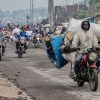
Greed and Cynicism Fuel Rwanda’s War in DRC
The fresh offensive by the M23 rebels and Rwanda forces in Eastern Democratic Republic of the Congo (DRC) coincides with the first anniversary of the Memorandum of Understanding (MOU) signed between the European Union (EU) and Rwanda to cooperate on the supply of “critical minerals.”« Previous Page — Next Page »





Issues of crime and justice are as pertinent to development as they have ever been. The struggle for abolition of the death penalty is not over, and penal reform is desperately needed in many countries around the world. From violence to religious persecution, white-collar crime to police brutality, we keep you updated with reports from around the world. IPS correspondents focus on the causes of crime, attempts to prevent it, and the process of bringing those who commit crimes to justice. We also cover the campaign against capital punishment, and for legal and prison reforms that would give prisoners the right to life, and also to justice and decency.

The Week with IPS

NEXT STOP - SDGs
Tracking global progress towards a sustainable world
Tracking global progress towards a sustainable world
