Languages
Wednesday, November 11, 2026



News and Views from the Global South
Development & Aid
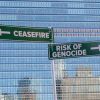
Global Governance: Time for Reform
At last the UN Security Council has passed a resolution calling for an immediate ceasefire in Gaza. While stopping short of demanding a permanent end to the violence, it goes further than the world’s peak peace and security body had so far managed since the start of the current brutal phase of conflict in October. But the time it’s taken to get to this point signals an ongoing failure of global institutions to uphold human rights.
Abandoned Children Growing Problem in Northern Syria
Wael Al-Hassan was returning from work in the Syrian city of Harim when he heard the sound of a baby crying. He was returning from work on December 10, 2023. He stopped momentarily, turned on his mobile phone flashlight to investigate, and spotted a baby girl, around one month old, wrapped in a white blanket, lying by the roadside.
IMF Urges Non-alignment in Second Cold War
The IMF no. 2 recommends non-alignment as the best option for developing countries in the second Cold War as geopolitics threatens already dismal prospects for the world economy and wellbeing.
Child Malnutrition in Peru Driven Up by Poverty and Food Insecurity
Quechua farmer Felipa Noamesa, who lives in the southern Peruvian department of Cuzco, prepares a cream of fava bean soup for breakfast every morning with bread and vegetable soup with noodles. Her children are grown up, so her priority is that her five-year-old granddaughter does not suffer from anemia or malnutrition, two problems she frequently sees in her community.
Governments Worldwide Prioritize School Feeding for Its Multiple Benefits
 Before COVID-19 hit, in January 2020, 388 million children worldwide were being fed every day at school. Soon after lockdowns began, that number plummeted to 18 million, but just two years later, in 2022, it had recovered, and more — school feeding had reached 420 million children.
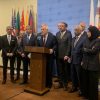
UN Security Council’s Ceasefire Resolution in Gaza Welcomed
After nearly six months of a devastating war in Gaza, the UN Security Council has at last adopted a resolution calling for an immediate humanitarian ceasefire. The resolution calls for the ceasefire to come into effect for the month of Ramadan, demands the unconditional release of all hostages and ensures humanitarian access.
Building Resilience and Mental Health Capacity of Youth
Sri Lankan lawmaker Hector Appuhamy, in conversation with IPS ahead of a two-day conference aimed at educating and involving university students in mental health issues, said parliamentarians were concerned about gaps in the programmes and financing for youth mental health. They were looking beyond the country's health budget for support in ensuring that youth were able to access mental health facilities in a supportive environment.
Grassroots Venezuelan Initiative Aims to Combat Electricity Crisis with Solar Energy
Sweating profusely, unable to sleep because of the heat, fed up with years of blackouts several times a day, many residents of Venezuela's torrid northwest want to cover the roofs and balconies of their homes with solar panels, and are asking the government to import them massively and cheaply from China.
Taliban Rule Exacerbates Malnutrition Crisis: Afghan Women and Children Hardest Hit
Malnutrition in Afghanistan has reached an unprecedented level, according to United Nations humanitarian organizations. It is estimated that half of the country's population grapples with severe hunger year-round, placing Afghanistan among the top ten nations globally with the highest rates of maternal and infant mortality due to malnutrition.
Conservation Efforts by Ethnic Communities in Bangladesh Bolster Water Security
Just a few years ago, Sudarshana Chakma (35), a resident of the remote Digholchari Debarmatha village under Bilaichari upazila in the Rangamati Hill District, had to traverse a long hilly path to fetch water for her household because there were no local water sources. "Unchecked deforestation and degradation of village common forests (VCFs) led to the drying up of all-natural water sources in our village. We struggled to collect drinking and household water," Chakma explained to IPS.
Fall-out from Ecuador’s Crises Highlights Need to Invest in Grassroots Resilience
Shocking and ongoing levels of violence in Ecuador since the New Year followed by flooding caused by El Niño landed a double blow for those in the country who live day to day and are most vulnerable to instability.
Reimagining Cooperation in a Polarized World in the Context of Zimbabwe?
This year’s UNDP Global Human Development Report (HDR) marks a dramatic shift away from the cautious optimism espoused in the HDR just four years ago: despite reaching a new high, the Global Human Development Index now evolves meaningfully below the 2019 trend – threatening to make global development losses permanent.
New Report Examines Progress on Global Sustainable Development Goals
At the half-way point of the 2030 Agenda, the Sustainable Development Goals (SDGs) “are in deep trouble.” The need to accelerate progress towards the Sustainable Development Goals has never been more urgent as only approximately 12% of targets are currently on track. “Planet” is equally at risk as “people”.
Fueling Future: Dabaa Nuclear Project Offers Light in Egypt’s Economic Gloom
Egypt’s economy continues to face significant challenges, but amidst these, the Dabaa Nuclear Power Plant project emerges as a beacon of hope.
Women’s Land Rights in Farming Need Further Recognition
In the developing world, land rights for women remain tenuous in the agricultural sector. But if women farmers are recognized as landowners in their own right, it can lead to greater economic empowerment and be a positive step towards eradicating poverty. This formed part of the wider discussions that are being hosted during the 68th session of the Commission for the Status of Women (CSW68) in New York. The leading theme of CSW68 and its side events is the effort to accelerate gender equality by addressing poverty and strengthening institutions.
Unpaid Caregivers, a Symbol of Inequality in Chile
In Chile, as in the rest of Latin America, the task of caring for people with disabilities, the elderly and children falls to women who, as a result, do not have access to paid jobs or time for themselves.
Managing Transboundary Aquifers for Peace
Like surface waters, groundwater resources frequently cross international boundaries, potentially igniting disputes among nations that rely on this essential resource. Disagreements over shared groundwater can arise from various issues, such as inequitable resource distribution, competing water needs and economic dependencies, governance challenges, and the varying effects of climate change on water availability.
Biogas Is Key to Harmony Between Agribusiness and Environment in El Salvador – VIDEO
 Faced with the recurring problem of environmental pollution caused by the poultry industry in rural communities in El Salvador, some companies are responding by producing biogas from organic waste from their chicken farms and processing plants, and using the gas to generate clean electricity.
Industrial Policy, East or West, for Development or War?
Developing countries wanting to pursue industrial policy were severely reprimanded by advocates of the ‘neoliberal’ Washington Consensus. Now, it is being deployed as a weapon in the new Cold War.
Education Cannot Wait Interviews Professor Mohammed Belhocine, Commissioner for Education, Science, Technology and Innovation within the African Union
Professor Mohammed Belhocine is an Algerian national. Former Head of the Department of Internal Medicine, he held various positions in Algeria, at the Faculty of Medicine and the Ministry of Health, before joining the international civil service in 1997. Former Director of the Division of Non-Communicable Diseases at the WHO Regional Office for Africa (in Harare, then in Brazzaville), he was also WHO Representative in Nigeria and Tanzania. He ended his career as UN System Coordinator and UNDP Resident Representative in Tunisia from 2009 to 2013. From June 2015 to February 2016, at the request of the WHO Regional Director, he returned to duty as WHO Representative in Guinea, playing an active role in providing technical support and expertise to the country's response to the Ebola epidemic. In October 2021, supported by his country, he was elected to the position of Commissioner for Education, Science, Technology and Innovation within the African Union. Professor Belhocine is the father of three children and has six grandchildren.

How A Program in Ghana to Create Green Jobs Can Be a Lesson for US Mayors & Across the Globe
For the past eight years, Chiso has collected waste as part of Accra’s informal waste management sector. Since arriving in Ghana from Nigeria, he has earned enough to allow him and his family to survive, but saving money has been nearly impossible.« Previous Page — Next Page »





 2026 High-level Political Forum on Sustainable Development. Credit: UN Photo/Eskinder Debebe
In 2015, the United Nations and its Member States adopted the Sustainable Development Goals (SDGs) in an effort to make the world a more sustainable and peaceful place for future generations. Progress on the 17 SDGs has been uneven, and inequality persists across the globe. 10 years after adoption, the 2025 UN SDGs Report revealed that only 35% of the SDG targets are on track, with more than half moving too slowly, and 18% moving backwards from the 2015 baseline. Poverty remains one of the world’s most pressing issues, with hunger, violence, and inequality impeding the opportunities for all people to achieve success. In September 2024, the United Nations Summit of the Future introduced a new goal: to eradicate global poverty by 2030, ensure universal rights to basic services, and increase the overall standard of living in terms of industrialization, economic well-being, citizen health, and literacy. Furthermore, recent shifts in United States foreign aid policy – notably, major budget cuts to USAID and the termination of thousands of development programmes– have severely threatened vital lifelines of financial aid to impoverished communities around the world. Additionally, the United States’ withdrawal from the Paris Climate Agreement has undercut international efforts at sustainable development. With the upcoming 2030 deadline, the UN Secretary-General has called for urgent multilateralism across six priority areas: food systems, energy, digital connectivity, education, jobs and social protection, and climate and biodiversity. IPS sheds light on marginalized communities that struggle on a daily basis to survive and have their stories heard and respected.
Updated by Yilan Batista and Shuli Wong August 2026

The Week with IPS

NEXT STOP - SDGs
Tracking global progress towards a sustainable world
Tracking global progress towards a sustainable world
