Languages
Thursday, November 12, 2026



News and Views from the Global South
Development & Aid

Poverty & Hunger Eradication Targeted to Miss UN’s 2030 Deadline by Wide Margins
When the UN’s 193 member states reviewed the current status of the 17 Sustainable Development Goals (SDGs), including the eradication of extreme poverty and hunger by 2030, the verdict was mostly failures—and with little or no successes. The hunger/poverty nexus was best characterized by Alvaro Lario, President of the International Fund for Agricultural Development (IFAD), who warned last week that under current trends, 575 million people will still be living in extreme poverty in 2030—and as many people suffering from hunger by 2030 as in 2015 (600 million people).
Reality is Governments Not Truly Held Accountable to Implement SDGs
What does transformative and sweeping really mean in the overarching efforts to achieve the Agenda 2030? With the conclusion of the second edition of the SDG Summit, it is time for stocktaking on what was agreed at the United Nations HQ in New York this week. At the core of the Summit were not the several Leaders’ Dialogues that, as important as it can be to have heads of state and government reflecting on the Agenda, are just talking shops without any practical implications.
The Ocean Offers Rich Solutions for Climate Change
For the people of Seychelles, the ocean is more than just a source of livelihood. It is also a way of life. About 80% of our homes and infrastructure are located along the coast and those homes and infrastructures are impacted by the ocean in various ways.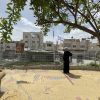
Barriers to Movement are the Never Ending Normal for Palestinians
Sundus* scans the news before she heads home, checking for signs that her 30-minute commute could turn into a four-hour-long slog. Any incident could make travel difficult. Sometimes Sundus waits for her father to call and tell her if the checkpoints around their home are open. After living in Hebron, a city in the West Bank, for the last 20 years, she is used to planning her day around unpredictability.
The Bitter-Sweet Sides of Uganda’s Oil and Gas Development
French oil and gas giant TotalEnergies and China National Offshore Oil Corporation (CNOOC) are moving with pace in the development of oil and gas projects with a potential investment portfolio estimated at more than USD 15 billion. IPS looks at the project's human rights record for the compensation of affected communities.
Why Root Crops Are the Future of Food Security in Africa
Despite the dominance of the “Big Three” cereal crops and a steady rise in meat consumption, an overlooked food sector is projected to become ever more central to Africa’s food security and rural economic growth between now and 2050.
Population Increase in Egypt: A Blessing That Has Become a Curse
The population of Egypt increased from 104 million in November 2022 to 105 million in June 2023, according to the Central Agency for Public Mobilization and Statistics (CAPMAS). This represents the growth rate for the country, where the poverty rate is 27.3 percent. The population increase means that every 245 days, it increases by one million, or 3 people per minute.
Dangerous Scramble for Renewable Energy Resources
The growing and changing material requirements for new technologies have triggered natural resource scrambles for strategic minerals, generating dangerous rivalries fought out in the global South.
With Hope and Courage, They Inspire Us
“My dream is to become a teacher,” says 13-year-old Alia. A small glimmer of hope can be traced in her beautiful, almond-shaped, brown eyes. Together with her mother, siblings and aunt, Alia has fled the conflict in Sudan to Chad. With extraordinary courage to survive, she made the harrowing journey at night across checkpoints, threatened by guns and militia roaming around in the dark. While her eyes are still hollow from the flight, I see that sparkle for a split second: she still has hope.
The Taliban Can Reverse the Unacceptable Ban on Girls’ Education
Today, we mark the second anniversary of the ban on secondary school girls’ education in Afghanistan and join the world in calling for it to be lifted now.
UN Must Live Up to Its Promises of Gender Equality —and Support Women
In 2015, the UN’s 193 member states adopted 17 goals for the health of the world that together comprise the Sustainable Development Goals (SDGs) to be reached worldwide by 2030.
The Case for Afghan Women and Girls: How an International Criminal Court Investigation Could Expand Human Rights
Two years have passed since the Taliban re-assumed power in Afghanistan, and women and girls have yet to return to work or school. Can the international justice system now come to their defense? Experts say a case for Afghan women and girls has the potential to change the way the legal community thinks about human rights abuses. Will it?
We Must Act to Bridge the Gap Between Words and Deeds
In today's increasingly interconnected world, marked by grave economic, environmental, and security crises that transcend global boundaries, it's abundantly clear that our interdependence is an undeniable reality.
Deepening Democracy in an AI-enabled World
In 2002, the Human Development Report (UNDP) focused on ‘Deepening Democracy in a Fragmented World’. It was an important discourse then [and still is] that evoked lot of insightful cross-regional exchanges of ideas. It reiterates that politics matter for human development because people everywhere want to be free to determine their destinies, express their views and participate in the decisions that shape their lives.
Multilingual #AfghanGirlsVoices Campaign to Return Millions Back to School
A Taliban edict is rolling back time in Afghanistan after access to education for all Afghan girls over the age of 12 was indefinitely suspended on September 18, 2021. Afghanistan is the only country in the world where girls are forbidden from attending school beyond the primary level, leaving more than 1.1 million girls and young women without access to formal education.
Treated Wastewater Is a Growing Source of Irrigation in Chile’s Arid North
The reuse of treated wastewater in vulnerable rural areas of Chile's arid north is emerging as a new resource for the inhabitants of this long, narrow South American country.
Latin America Is Lagging in Its Homework to Meet the SDGs
The Latin American and Caribbean region is arriving at the Sustainable Development Goals Summit on the right track but far behind in terms of progress, at the halfway point to achieve the SDGs, which aim to overcome poverty and create a cleaner and healthier environment.
Halfway to 2030: Our 5 Asks at the SDG Summit
At the UN SDG Summit in New York, the Forus global civil society network is calling for decisive action on SDG implementation. Clearly, as we hit the midpoint towards the "finish line" of the Agenda 2030, progress is stagnating.
Carbon Colonialism Has No Place in Liberia’s Forests
The fate of Liberia and its forests are entwined. Yet a new climate change deal, set to be announced at the UN climate change talks in Dubai this November, would drive a wedge between our communities and their woodlands.
African Agro-Processors Call for Policies Conducive to Local Manufacturing
Experts at the Africa Food Systems Forum (AGRF) in Dar es Salaam, Tanzania, have called on African governments to make and review existing policies to protect the processing and agro-industrialisation of locally produced agricultural products.
The Vast Potential of the Human Spirit
With hope and courage, we must rise to the challenges before us. We must rise to the challenge of a world set afire by climate change, forced displacement, armed conflicts and human rights abuses. We must rise to the challenge of girls being denied their right to an education in Afghanistan. We must rise to the challenge of a global refugee crisis that is disrupting development gains the world over. We must rise to the challenge of brutal and unconscionable wars in places like Sudan and Ukraine that are putting millions of children at risk every day.« Previous Page — Next Page »





 2026 High-level Political Forum on Sustainable Development. Credit: UN Photo/Eskinder Debebe
In 2015, the United Nations and its Member States adopted the Sustainable Development Goals (SDGs) in an effort to make the world a more sustainable and peaceful place for future generations. Progress on the 17 SDGs has been uneven, and inequality persists across the globe. 10 years after adoption, the 2025 UN SDGs Report revealed that only 35% of the SDG targets are on track, with more than half moving too slowly, and 18% moving backwards from the 2015 baseline. Poverty remains one of the world’s most pressing issues, with hunger, violence, and inequality impeding the opportunities for all people to achieve success. In September 2024, the United Nations Summit of the Future introduced a new goal: to eradicate global poverty by 2030, ensure universal rights to basic services, and increase the overall standard of living in terms of industrialization, economic well-being, citizen health, and literacy. Furthermore, recent shifts in United States foreign aid policy – notably, major budget cuts to USAID and the termination of thousands of development programmes– have severely threatened vital lifelines of financial aid to impoverished communities around the world. Additionally, the United States’ withdrawal from the Paris Climate Agreement has undercut international efforts at sustainable development. With the upcoming 2030 deadline, the UN Secretary-General has called for urgent multilateralism across six priority areas: food systems, energy, digital connectivity, education, jobs and social protection, and climate and biodiversity. IPS sheds light on marginalized communities that struggle on a daily basis to survive and have their stories heard and respected.
Updated by Yilan Batista and Shuli Wong August 2026

The Week with IPS

NEXT STOP - SDGs
Tracking global progress towards a sustainable world
Tracking global progress towards a sustainable world
