Languages
Saturday, November 21, 2026



News and Views from the Global South
Development & Aid

The Future of Our Cities: New Agenda, New Faces, New Year
Urban development is one of our greatest challenges. While the world is highly urbanizing, our cities are transforming the nexus for the social, economic, environmental and political realities of our times.
Aid Group Shines Spotlight on the Neglected
Though 2017 was marked by stories of humanitarian disasters around the world, many crises remain under the radar with devastating consequences for those affected, a new report says.
Migrants Without Shoes
Addis Ababa, Ethiopia, 2013. It is past midnight. The aircraft come in from Saudi Arabia carrying workers who had been hastily ejected. They had gone from Ethiopia to work in a variety of jobs in a Kingdom flush with oil wealth.
Wealth Concentration Continues to Increase
As the ‘masters of the universe’ gather for their annual retreat at Davos, the World Economic Forum (WEF) has just published its Inclusive Development Index (IDI) for the second time.
China’s Mass Market Adopts Mobile Payments
China’s mass-market adoption of mobile payments in recent years has stunned observers. In 2016, more than 500 million Chinese used mobile payments and transacted 97 billion times on nonbank mobile apps.
Can Drought Be Prevented? Slovakia Aims to Try
A landmark programme to combat drought set to be implemented in the small Central European country of Slovakia could be an inspiration for other states as extreme weather events become more frequent, the environmental action group behind the plan has said.
Left Behind: Families of Migrants Wait in Limbo
Wahid Haider talks about his son’s departure to Italy almost seven years ago without regret or hesitation. Haider has not seen Nayeem, now 30 years old, since he left Nankar in search of better economic prospects, travelling through Romania, where he spent several months, before entering Italy.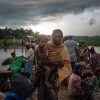
UN Migration Agency Appeals for USD 1.4 Billion to Help over 80 Million People in 50 Countries
IOM, the UN Migration Agency, is appealing for nearly USD 1.4 billion to address the needs of over 80 million people in 50 countries in 2018. These vital funds will support people displaced within the borders of their own countries, migrants, refugees and the communities that host them, people returning to their areas of origin and people experiencing or recovering from conflict and natural disasters.
Groups Condemn U.S. Cuts to Palestinian Refugee Agency
International organizations have criticized the United States’ decision to cut more than half of planned funding to a UN agency serving Palestinian refugees.
Davos: a Tale of Two Mountains
As the elite in the world of finance gather in the Swiss luxury town of Davos, rallies are taking place around the world as citizens demand for solutions to rising inequality. At the same time as the World Economic Forum’s rich and powerful hold forth about fixing the crisis of inequality they created, a new movement called the Fight Inequality Alliance is telling another story that is growing around the world.
Argentina’s Law on Forests Is Good, But Lacks Enforcement
Never in the parliamentary history of Argentina had something similar happened: one and a half million people in 2007 signed a petition asking the Senate to pass a law to reduce deforestation. The law was quickly approved, and promulgated on Dec. 26 of that year. But 10 years later, it has left a bittersweet taste.
Caught Between Two Countries
Three friends are relaxing in a quiet courtyard. They speak English with a strong American accent and talk about their disadvantaged neighborhoods. Their tattoos depict a rough life on the street. One of them calls Massachusetts home, while the others grew up in Georgia.
PPPs Likely to Undermine Public Health Commitments
The United Nations Agenda 2030 for the Sustainable Development Goals (SDGs) is being touted in financial circles as offering huge investment opportunities requiring trillions of dollars. In 67 low- and middle-income countries, achieving SDG 3 — healthy lives and well-being for all, at all ages — is estimated to require new investments increasing over time, from an initial $134 billion annually to $371 billion yearly by 2030, according to recent estimates by the World Health Organization (WHO) reported in The Lancet.
40% of India’s Thermal Power Plants in Water-Scarce Areas, Threatening Shutdowns
New WRI research finds that 40 percent of the country’s thermal power plants are located in areas facing high water stress, a problem since these plants use water for cooling. Scarce water is already hampering electricity generation in these regions—14 of India’s 20 largest thermal utilities experienced at least one shutdown due to water shortages between 2013-2016, costing the companies $1.4 billion.
Expansion of Soy Resurrects Key Railway Line in Brazil
The railroad can contribute to the economy, making transportation cheaper, but it is unlikely to foment equitable development in and of itself, apart from facing complex construction obstacles in countries like Brazil.
Fate of the Rohingyas – Part Two
With discussions underway between Bangladesh and Myanmar about the repatriation of more than a half a million Rohingya refugees, many critical questions remain, including how many people would be allowed back, who would monitor their safety, and whether the refugees even want to return to violence-scorched Rakhine state.
From Seedling to Shade: Planting Trees in South Sudan’s Displacement Sites
With sweltering heat — temperatures often over 40 degrees Celsius — and either extreme humidity or dust, life in the UN protection of civilians (PoC) site in Bentiu, South Sudan, is harsh by any measure. Bentiu hosts the largest PoC site in the country, with a population of more than 112,000 people, many of whom have been seeking protection in the site since the conflict erupted in December 2013.
Sustainable Energy Critical for Achieving Overall Goals of Paris Climate Agreement
The Paris Agreement ushered in a new global approach to climate change. At the core of this agreement are the Nationally Determined Contributions. We are now implementing these pledges.
Thousands Still Dying at Sea En Route to Europe
Amid concerns that 160 people may have drowned while attempting to cross the Mediterranean this week alone, the UN refugee agency have urged countries to offer more resettlement places.
Fate of the Rohingyas – Part One
The repatriation of Rohingya refugees driven from their villages through violence and terror appears uncertain, with critics saying the agreement legalising the process of their return is both controversial and impractical.
UN Chief Calls for Collective Global Response to Migration
I am very pleased to present this report, “Making Migration Work For All”, which serves as my principal input to the zero draft of the “Global Compact for Safe, Orderly and Regular Migration.”« Previous Page — Next Page »


 2026 High-level Political Forum on Sustainable Development. Credit: UN Photo/Eskinder Debebe
In 2015, the United Nations and its Member States adopted the Sustainable Development Goals (SDGs) in an effort to make the world a more sustainable and peaceful place for future generations. Progress on the 17 SDGs has been uneven, and inequality persists across the globe. 10 years after adoption, the 2025 UN SDGs Report revealed that only 35% of the SDG targets are on track, with more than half moving too slowly, and 18% moving backwards from the 2015 baseline. Poverty remains one of the world’s most pressing issues, with hunger, violence, and inequality impeding the opportunities for all people to achieve success. In September 2024, the United Nations Summit of the Future introduced a new goal: to eradicate global poverty by 2030, ensure universal rights to basic services, and increase the overall standard of living in terms of industrialization, economic well-being, citizen health, and literacy. Furthermore, recent shifts in United States foreign aid policy – notably, major budget cuts to USAID and the termination of thousands of development programmes– have severely threatened vital lifelines of financial aid to impoverished communities around the world. Additionally, the United States’ withdrawal from the Paris Climate Agreement has undercut international efforts at sustainable development. With the upcoming 2030 deadline, the UN Secretary-General has called for urgent multilateralism across six priority areas: food systems, energy, digital connectivity, education, jobs and social protection, and climate and biodiversity. IPS sheds light on marginalized communities that struggle on a daily basis to survive and have their stories heard and respected.
Updated by Yilan Batista and Shuli Wong August 2026

The Week with IPS

NEXT STOP - SDGs
Tracking global progress towards a sustainable world
Tracking global progress towards a sustainable world
