Languages
Friday, November 6, 2026



News and Views from the Global South
Development & Aid

Afghanistan’s Overlapping Crises Deepen Following 6.0 Magnitude Earthquake
Over the past week, Afghanistan’s humanitarian situation has deteriorated significantly following the August 31 earthquake, which measured over 6.0 in magnitude and caused an immense loss of life and widespread destruction of critical infrastructure. Compounded by the nation’s fragile economy, severe shortages of essential resources, and persistent access challenges, humanitarian organizations have found it increasingly difficult to reach vulnerable communities—especially women and children.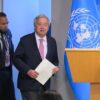
Global Military Spending Shows Misalignment of Priorities, says UN Secretary General
Global military spending has been on the rise for more than 20 years, and in 2024, it surged across all five global regions in the world to reach a record high of USD 2.7 trillion. Yet, such growth has come at the cost of diverting financial resources away from sustainable development efforts, which the United Nations and its chief warn puts pressure on an “already strained financial context.”
Nepal Faces Political Crisis after Deadly Gen-Z Protests
Nepal entered into a new era of constitutional and political crisis after deadly protests by the deeply frustrated young generation (Gen-Z). Prime Minister KP Sharma Oli resigned on Tuesday after protests grew out of control.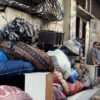
Palestinians Pushed into Deeper Crisis with Israeli Displacement Order on Entire Gaza City
Israel’s intent to displace around 1 million civilians, half of whom are living in famine, is impossible and illegal Oxfam said, while the Israeli military continued to flatten Gaza City building by building as its mass forced displacement of civilians in the city gains terrifying momentum.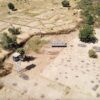
Banks Embed Climate Risk, Gender and Sustainability in Finance Products
As climate shocks intensify across East Africa, from failed rains in Kenya’s arid north to devastating floods in Tanzania’s coastal belt, the region’s banks are emerging as unlikely but powerful players in the resilience race.
Translating Recognition of a Palestinian State into Reality
During the upcoming annual UN General Assembly, several key European countries are expected to recognize a Palestinian state. The question that looms is how to translate such a significant development into reality, whereby the Palestinians will realize their national aspiration for statehood
North Worsens Tropical Catastrophe
Greenhouse gas (GHG) emissions have risen over the last two centuries, with current and accumulated emissions per capita from rich nations greatly exceeding those of the Global South.
Do We Need a Pacific Peace Index?
Globally, there is a 0.36% deterioration in average levels of peacefulness, as more countries are increasing their levels of militarisation against the backdrop of rising geopolitical tensions, increasing conflict, and rising economic uncertainty.
No Progress Without Women’s Freedom
In recent weeks, the walls of the Afghan capital have been plastered with slogans about women's hijab: “Unveiling is a sign of ignorance”; “Hijab is a father's honour and the pride of Muslims”.
Japan Backs Africa’s Health Future at TICAD
At a time of great transformation for global health, solidarity is more important than ever. As other countries have retreated from their commitments, Japan has instead continued its steadfast investment in a shared future that prioritizes human dignity and security.
Is Western Support for Israel Beginning to Crumble?
When the high-level meeting of over 150 world leaders takes place at the United Nations, September 22-30, one of the political highlights would be the announcement by at least 10 Western nations to recognize Palestine as a sovereign nation state. The 10 countries-- some already announcing their recognition ahead of the UN meeting -- include UK, France, Canada, Australia, Portugal, Malta, Belgium, Spain, Ireland and Norway-- proving the longstanding support for Israel is gradually diminishing in the Western world.
UN Mobilizes Amid Cascading Earthquakes in Eastern Afghanistan, Aiming to ‘Build Back Better’
United Nations aid organizations are rallying after a series of earthquakes and powerful aftershocks wreaked unprecedented havoc across eastern Afghanistan—particularly in the mountainous provinces of Kunar and Nangarhar.
‘Angola produces large quantities of oil and diamonds, yet most people don’t see the benefits’
CIVICUS discusses recent protests in Angola with Florindo Chivucute, founder and executive director of Friends of Angola, a US-based civil society organisation established in 2014 that works to promote democracy, human rights and good governance in Angola.

We Can’t Meet Our Climate Goals Without Financing Agrifood Systems
Despite absorbing a quarter of climate-related losses and having the potential to reduce one-third of global emissions, agrifood systems receive less than 8% of climate finance. This imbalance threatens progress in addressing global climate challenges. If we’re serious about solutions, we need to start where the impact—and the promise—is greatest: investing in the systems that feed the world.
The Debacle of the Global Plastics Treaty Negotiations –& Some Ideas for a Way Forward
The debacle that was the latest round of negotiations for a global treaty on plastics (including in the marine environment); known as “INC 5.2” has already been written about at length by many colleagues on all sides of the issues. Despite all the very informative posts, articles, and other analyses, I believe I have several key observations to make, particularly about the process to-date.
Chile Aims to Become a Latin American Hub for Data Storage and Transmission
Chile wants to be a hub in Latin America in data storage and transmission by developing data centers, leveraging its wealth of renewable energy, and its optimal digital interconnection.
Rise of the Planet of the Aged
It is becoming increasingly apparent that planet Earth is evolving into the planet of the aged. In nearly every country around the world, the numbers and percentages of the aged, commonly defined as individuals aged 65 years or older, have increased rapidly.
‘Tell Us When the Next Storm Will Come’—Human Stories From Kashmir’s Deadliest August
The relentless rain that battered the mountains and valleys of Jammu and Kashmir this August shattered lives and records.
Climate Change is Deepening Child Poverty in Latin America and Caribbean
2025 has been marked by a significant escalation of the climate crisis and its effects on vulnerable populations, as the World Meteorological Organization (WMO) warn that average global temperatures could exceed the 1.5°C threshold within the next five years. In Latin America and the Caribbean, rising temperatures and emissions continue to strain access to essential services and deepen poverty, particularly among children.
Trump’s Tariff Tsunami Hits Brazil
Since January 2025, Donald Trump’s second presidency has been focused on securing the global supremacy of the United States. It justifies a package of international coercive and intimidatory measures, accompanied by an aggressive, arrogant rhetoric. Right at the outset, the new administration announced a veritable tsunami of tariffs and immediately implemented them as a sign of its new independence.
We Are Making Progress in the Fight Against Hunger, but Not Everyone Equally
In perspective, good news: world hunger is beginning to decline. The State of Food Security and Nutrition in the World 2025 (SOFI 2025) reported a drop in the proportion of people suffering from hunger, from 8.5% in 2023 to 8.2% in 2024. Latin America and the Caribbean has played a pivotal role in this progress.« Previous Page — Next Page »





 2026 High-level Political Forum on Sustainable Development. Credit: UN Photo/Eskinder Debebe
In 2015, the United Nations and its Member States adopted the Sustainable Development Goals (SDGs) in an effort to make the world a more sustainable and peaceful place for future generations. Progress on the 17 SDGs has been uneven, and inequality persists across the globe. 10 years after adoption, the 2025 UN SDGs Report revealed that only 35% of the SDG targets are on track, with more than half moving too slowly, and 18% moving backwards from the 2015 baseline. Poverty remains one of the world’s most pressing issues, with hunger, violence, and inequality impeding the opportunities for all people to achieve success. In September 2024, the United Nations Summit of the Future introduced a new goal: to eradicate global poverty by 2030, ensure universal rights to basic services, and increase the overall standard of living in terms of industrialization, economic well-being, citizen health, and literacy. Furthermore, recent shifts in United States foreign aid policy – notably, major budget cuts to USAID and the termination of thousands of development programmes– have severely threatened vital lifelines of financial aid to impoverished communities around the world. Additionally, the United States’ withdrawal from the Paris Climate Agreement has undercut international efforts at sustainable development. With the upcoming 2030 deadline, the UN Secretary-General has called for urgent multilateralism across six priority areas: food systems, energy, digital connectivity, education, jobs and social protection, and climate and biodiversity. IPS sheds light on marginalized communities that struggle on a daily basis to survive and have their stories heard and respected.
Updated by Yilan Batista and Shuli Wong August 2026

The Week with IPS

NEXT STOP - SDGs
Tracking global progress towards a sustainable world
Tracking global progress towards a sustainable world
