Languages
Sunday, October 18, 2026



News and Views from the Global South
Economy & Trade
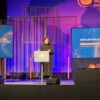
How Mongolia Can Expedite It’s Just Transition Plans to Include Its Nomads
Youth activist Gereltuya Bayanmukh still reflects on the events in her formative years that inspired her to become a climate activist. When she was a child, she would visit her grandparents in a village 20 km to the south of the border between Russia and Mongolia.
World Bank’s IFC Finally Adopts Remedial Action Framework
The World Bank’s private sector arm has raised the bar — and others may follow. On April 15, the International Finance Corporation (IFC) became the first development finance institution to adopt a formal remedy policy, publishing its Remedial Action Framework (RAF) to address environmental and social harm caused by IFC-supported investment projects.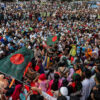
Bangladesh’s Democratic Promise Hangs in the Balance
When Bangladesh’s streets erupted in protest in mid-2024, few could have predicted how swiftly Sheikh Hasina’s regime would crumble. The ousting of the prime minister last August, after years of mounting authoritarianism and growing discontent, was heralded as a historic opportunity for democratic renewal. Almost a year on, the question remains whether Bangladesh is genuinely evolving towards democracy, or if one form of repression is replacing another.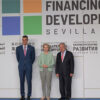
FfD4 at Sevilla Plants the Seeds of Debtor Unity
UN Member States adopted the ‘Compromiso de Sevilla’ at the Fourth Financing for Development Forum (FfD4) which concluded July 3-- the culmination of months of contentious negotiations that pitted wealthy nations against the developing world in competing visions for reform of the global economic architecture.
African Fish Workers Excluded From International Trade Deals: Report
A new report has raised concerns about the exclusion of African fish workers from trade protocols between their governments and developed countries, resulting in impoverished communities relying on fishing.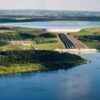
Pumped Storage Hydropower is an Option for Latin America
Having hydroelectric power without damming rivers, dismantling the environment or displacing populations is possible in Latin America and the Caribbean, with reversible power plants that take advantage of their mountainous geography, and pave the way for only renewable sources to generate electricity.
Multi-Year Drought Gives Birth to Extremist Violence, Girls Most Vulnerable
While droughts creep in stealthily, their impacts are often more devastating and far-reaching than any other disaster. Inter-community conflict, extremist violence, and violence and injustice against vulnerable girls and women happen at the intersection of climate-induced droughts and drought-impoverished communities.
From Parliaments to the G20: A Call to Champion Women’s Sexual & Reproductive Health & Rights
About 21 million adolescent girls get pregnant annually in low- and middle-income countries. Beyond the numbers lie lost futures and deepening cycles of poverty that undermine girls’ education, wellbeing, and, ultimately, national development.
The Juggling of Aid: How WFP is Delivering More with Less
Serious-to-severe food insecurity has been widely felt among those living through the worst, protracted humanitarian crises. For organizations like the World Food Programme (WFP), they must work under the “relentless demand” for humanitarian aid, including food.
FFD4 Must Deliver for the World’s Most Vulnerable Nations
Five years from the 2030 deadline for the Sustainable Development Goals (SDGs), we face a development emergency. The promise to eradicate poverty, combat climate change, and build a sustainable future for all is slipping away. The SDG financing gap has ballooned to over $4 trillion annually—a crisis compounded by declining aid, rising trade barriers, and a fragile global economy.
As FfD4 Kicks Off in Spain, Global Cooperation Still Matters
As the Fourth International Conference on Financing for Development (FfD4) kicks off in Sevilla, Spain, the stakes couldn’t be higher.
Trump Undresses Rival Trade Myths
President Trump’s tariffs have exposed neoliberal trade ideology and undermined corporate lobbying in the name of free trade. But his rhetoric has also exposed the fallacies of his own economic strategy.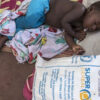
When Life-Saving Treatment Disappears: The Coming Crisis in Child Malnutrition
On July 1st, USAID officially shuts down and transfers operations to the U.S. State Department. Amid growing uncertainty about the future of U.S. foreign assistance structures and funding, supply chains that deliver life-saving treatment to malnourished children worldwide have broken down, triggering a global nutrition crisis.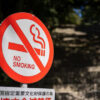
Global Tobacco Control Efforts Protect up to 6.1 Billion People
Tobacco kills up to half its users who don’t quit, a grim reality that highlights the urgent mission of global tobacco control. A new report from the World Health Organization (WHO) reveals that while many countries have followed the organization’s protocols to reduce tobacco use, major gaps still remain in broader implementation.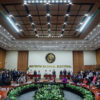
Mexico’s Judicial Elections: A Democratic Mirage
On 1 June, Mexico made history by becoming the only country in the world to elect all its judges by popular vote, from local magistrates to Supreme Court justices. This unprecedented process saw Mexican voters choose candidates for 881 federal judicial positions, including all nine Supreme Court justices, plus thousands at local levels across 19 states. Yet what the government heralded as a transformation that made Mexico the ‘the most democratic country in the world’ may turn out to be a dangerous deception.
The Young Nigerian Innovator Lighting Up Communities With Recycled Solar Innovation
When Stanley Anigbogu heard his name announced as the 2025 Commonwealth Young Person of the Year in London earlier in March, he could hardly believe it. He had not expected to win, especially among a pool of brilliant nominees from across the globe.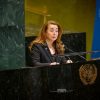
UN Drug Office Warns that Global Drug Crisis Will Intensify
Since 1989, the United Nations (UN) has recognized June 26 as the International Day Against Drug Abuse and Illicit Trafficking in an effort to raise awareness around the global drug problem and foster a more compassionate world, free of drug abuse. Through this year’s campaign, “Break the Cycle. #StopOrganizedCrime”, the UN underscores the importance of addressing the root causes of global drug abuse and illegal drug trading, and investing in reliable systems that prioritize prevention, education, and health.
Brazil’s Most Sustainable Capital Puts Value on its Waste
Living with her neighbours, getting to know them and chatting with them is what Lucila Neves enjoys most in the community orchard of Portal de Ribeirão, a neighbourhood in the south of Florianopolis, considered the most sustainable of Brazil's 27 state capitals.
Increased Demand for Cobalt Fuels Ongoing Humanitarian Crisis in the Democratic Republic of the Congo
The demand for cobalt and other minerals is fueling a decades-long humanitarian crisis in the Democratic Republic of the Congo (DRC). In pursuit of money to support their families, Congolese laborers face abuse and life-threatening conditions working in unregulated mines.
Rising Temperatures, Rising Inequalities: How a New Insurance Protects India’s Poorest Women
As Deviben Dhaundhaliya, 45, a streetside seller of artificial jewelry, waits for her husband Devabhai to arrive and help her shift their iron-frame mobile ‘shop’ to the Bhadra Fort open-air marketplace in Ahmedabad city, she tells of how “as heat increased, my wares started melting under the direct exposure to the sun, or they got discolored.”
Poland’s Democratic Deadlock
Poland’s embattled Prime Minister Donald Tusk emerged bruised but still standing after his government survived a parliamentary vote of confidence on 11 June. He’d called the vote, which he won by 243 to 210, just days after the presidential candidate of his Civic Platform (PO) party suffered an unexpected defeat.« Previous Page — Next Page »





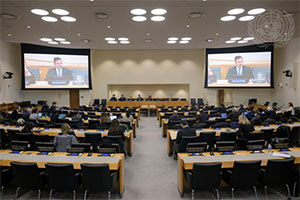 UN Commission on International Trade Law Holds Colloquium on Harmonizing Law in Age of Digital Trade and Finance. Credit: UN Photo/Manuel Elías
Trade has historically been a geopolitical tool that can both be used to propel development as well as entrench inequalities. In various nations in East Asia and Latin America, increased trade, as often seen in export booms, has allowed them to achieve influential standings within the global economy. On the other hand, many low-income countries in Sub-Saharan Africa, Asia, and Latin America struggle to maintain a robust trade performance, and oftentimes are subjugated to exploitative trade dynamics through intense extraction of their natural resources. In recent decades, international trade has reached a new era as emerging economies across the world are rising in economic preeminence. Stable international trade is crucial to world peace as global interconnectedness facilitates reliable diplomacy. Nevertheless, significant challenges are on the rise. Notably, a major wave of United States tariff escalations in January 2025 lifted US import taxes to their highest level since the 1930s, changing market dynamics and forcing renegotiations with global trading partners.These articles are aimed at informing readers about the complexities of trade and its varying effects on development, with a special focus on the consequences of the global economic crisis, the potential of fair trade and the gender implications of trade policies.
Updated by Yilan Batista and Shuli Wong August 2026

The Week with IPS

NEXT STOP - SDGs
Tracking global progress towards a sustainable world
Tracking global progress towards a sustainable world
