Languages
Friday, October 9, 2026



News and Views from the Global South
Editors' Choice
Trapped by Tradition: The Widows of Ukerewe and the Ritual They Cannot Escape
The night after her husband was laid to rest, 24-year-old Vivian Magesa sat in the dimly lit brick-walled house, surrounded by women from her late husband’s family. She had spent the past few days in mourning, wrapped in a white shroud, her head shaved as custom dictated. But as the hushed voices of her in-laws filled the room, Magesa realized her grief was far from over.
Global Disability Summit Galvanizes Education Support for Crisis-Impacted Children with Disabilities
Of the nearly 234 million children and adolescents of school age affected by crises, 85 million are already out of school. At least 20 percent of them—or 17 million—are children living with disabilities.
Solar-Powered Spinning Machines Help Indian Women Save Time and Earn More
As light enters through the small window of a modestly constructed tin-roofed house, Philim Makri sits on a chair deftly spinning cocoons of eri silk with the help of a solar-powered spinning machine in Warmawsaw village in Ri Bhoi district of Meghalaya in northeast India.
Regime Obstructs Aid But Finally Declares Ceasefire in Quake-hit Myanmar
Boosting faint hopes of still finding survivors, rescue workers from Myanmar and Turkey pulled a man alive from the rubble of a hotel in the capital early on Wednesday, five days after the quake hit. But hope of finding more survivors is slim after central Myanmar was devastated by a massive earthquake last Friday. Now aid workers are struggling to deliver body bags, medicines and food and water against the backdrop of civil war.
UN Staff Put on Alert — as US Visa Holders Face Threats and Deportation
The Trump administration’s ground-rules are dangerously clear—and devastating. If you are a pro-Palestinian demonstrator, denouncing Israeli atrocities in Gaza, you are either a supporter of the “terrorist organization” Hamas or you are described as anti-Semitic veering on hate crimes liable for prosecution.
Global Climate Action Progressing, but Speed and Scale Still Lacking
2025 marks the tenth anniversary of the Paris Climate Agreement. One of its chief architects, Christiana Figueres, says the world is heading in the right direction but warns that urgent action is needed to close critical gaps. The pact, adopted in 2015 by 195 nations, set out to limit global warming to "well below 2°C" above pre-industrial levels, striving for 1.5°C. But in 2024, the world shattered records as the hottest year ever, surpassing that crucial threshold.
Latin America & the Caribbean in 2024: Renewable Energy and Early Warning Systems Offer Hope Amid Climate Extremes
Hope in the face of climate extremes. That is the overarching message about the State of the Climate in Latin America and the Caribbean in 2024.
The Giant Plastic Tap: How art fights plastic pollution
"The size of the faucet highlights the magnitude of the problem. It makes the problem impossible to ignore. We're used to throwing things 'away'—but when we're confronted with what happens when 'away' is not an option, I think it creates an emotional wake-up call," says Benjamin Von Wong.
Indian Colonialism in Sri Lanka
Following independence from Britain, both India and Sri Lanka emerged as leaders of the Non-Aligned Movement, which sought to advance developing nations' interests during the Cold War. Indeed, the term "non-alignment" was itself coined by Indian Prime Minister Jawaharlal Nehru during his 1954 speech in Colombo.
Organic Fertilizers Prove Effective on Tea as Farmers Abandon Synthetic Inputs
On the outskirts of Kericho town within Kenya’s Rift Valley region, Kaptepeswet tea farm, an organic tea estate sprawling on a 50-acre piece of land, is a testament that organic fertilizers can be used on mature tea bushes and still produce the desired quantity and quality of premium leaves.
A Chance for Sisi to Follow Sadat’s Vision and Courage
On March 26, Israel and Egypt celebrated the 46th anniversary of their peace treaty, which has upended the very nature of the Arab-Israeli conflict. Egypt remains pivotal in the search for Israeli-Palestinian peace, especially now in the wake of the Israel-Hamas war.
Will UN be a Possible Target as US Goes on a Rampage?
The Trump administration, spearheaded by senior adviser Elon Musk, has been on a wild rampage: mass layoffs of government employees, gutting federal agencies, dismantling the Department of Education and USAID, defying a federal judge and threatening universities with drastic cuts in grants and contracts—decisions mostly engineered by the newly-created Department of Government Efficiency (DOGE).
Royalties, a New Indigenous Right for Hydroelectric Damages in Brazil
Indigenous peoples in Brazil have won a new right: a share in the profits of hydroelectric plants that cause them harm when built on or near their lands.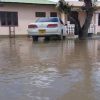
The Ocean Creeps In: Tanzanian Coastal Communities Fight a Losing Battle
The first time Jumanne Waziri tasted salt in his morning tea, he thought his wife had made a mistake. “Why did you put salt instead of sugar?” he asked, setting his cup down in their home in Ununio, a quiet suburb north of Dar es Salaam.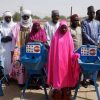
A Path Towards Ending Child Marriage
As the sun rises over coastal Gopalpur, Odisha, in eastern India, dozens of children prepare for school. Unfortunately, for many girls in the state, the arrival of their first period can mean the end of their school years as they face societal pressures to become brides.
Seeds of Survival, Amid Conflict Sudan Is Saving Its Agricultural Future
Sudan’s diverse crops and agricultural heritage are at risk of being lost. The ongoing conflict in Sudan is claiming lives and threatening livelihoods and food security. In the chaos of conflict, scientists like Ali Babiker are fighting to protect Sudan’s future food security—not with weapons, but with seeds.
World Meteorological Day
Closing the Early Warning Gap to Save Lives
The World Meteorological Organization (WMO) is urging nations to increase investments in their meteorological and hydrological services and build robust early warning systems (EWS) to safeguard communities from the mounting threats posed by climate-related disasters. 
Funding Crunch Puts Years of Progress at Risk in Fight Against Tuberculosis
Governments and donors must ensure funding is sustained to fight tuberculosis (TB), organizations working to stop the disease have said, as they warn the recent US pullback on foreign aid is already having a devastating effect on their operations. NGOs and other groups that play a critical role in national efforts to stop what is the world’s deadliest infectious disease say the US administration’s recent decisions to first freeze and then cancel huge swathes of foreign aid funding have put countless lives at risk around the world.
World Day for Glaciers
Glaciers Are in Threat, May Not Survive the 21st Century
Many glaciers in the world will not survive the 21st century, according to reports published by the United Nations. Five of the past six years have experienced the most rapid glacier retreat on record; 2022-24 was the largest three-year loss of glacier mass. 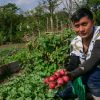
Food Security and Water, a Priority for Border Towns in Central America
The hope of Salvadoran Cristian Castillo to harvest tomatoes in a municipality of the Central American Dry Corridor hung by a thread when his well, which he used to irrigate his crops, dried up. However, his enthusiasm returned when a regional project taught him how to harvest rainwater for when the rains begin in May.
Award Winning Women Goat Herders in Chile Confront Climate Change
Women goat herders in the municipality of Ovalle, in northern Chile, are confronting climate change by defending their heritage through improvements in the quality and variety of their products, which has led some to win international awards for their cheeses.« Previous Page — Next Page »





The Week with IPS

NEXT STOP - SDGs
Tracking global progress towards a sustainable world
Tracking global progress towards a sustainable world
