Languages
Friday, November 13, 2026



News and Views from the Global South
Energy
ENVIRONMENT-AFRICA: Kenya Makes Business Sense of Renewable Energy
The 12th session of the Conference of Parties of the United Nations Framework Convention on Climate Change came to an end in the Kenyan capital, Nairobi, recently with little mention of cleaner sources of energy.DEVELOPMENT-SOUTHERN AFRICA: States Against Zambezi Current
Seventy percent of the Zambezi river's hydropower potential remains untapped because stakeholder countries have failed to ratify an agreement as the first step towards activating this potential.ECONOMY-ALGERIA: What is the Best Week End for the Weekend?
Many Algerian employers are lobbying for a return to having their country's weekends over Saturdays and Sundays, rather than Thursdays and Fridays, saying the current policy is cutting into foreign trade revenues.ENVIRONMENT-AFRICA: Changing Climate, Changing Lives
Marginalised communities attending a United Nations conference on climate change being held in the Kenyan capital, Nairobi, have given accounts of how their lives are being altered for the worse - something they blame on climate change.DEVELOPMENT-KENYA: Switch On the Sun to Get Cooking
The women in Kajiado were sceptical - unwilling to believe that cardboard containers lined with aluminium foil on the inside could cook food when placed in the sun.ENERGY-NIGERIA: ‘Solar Power Brings Relief to Villagers’
Bishop Kodji, a small fishing and canoe carving island in the Atlantic Ocean off Nigeria's sprawling commercial hub of Lagos, has become the first village to be electrified under the Lagos State government's pilot solar energy project..ENVIRONMENT-NIGER: City Takes Step to Protect Forest
As fears of its destruction mount, city authorities have taken steps to protect the forest, or the greenbelt, around Niamey and evict squatters living within its confines. The forest protects the city from encroaching desertification and the extremes of Niger's climate.AFRICA: Group Slams Janus Face of U.S. Policy
When some 6,000 U.S.-led NATO forces land next June for two weeks of manoeuvres in Cape Verde, will they be rehearsing more for rapid deployment in humanitarian emergencies, as in Darfur, Sudan, or for securing oil supplies and access to other key African resources?POLITICS-US: Funding Doubled for “Anti-Terror” Forces in Africa
As Washington's dependence on African oil intensifies, some analysts predict the region will increasingly play host to confrontations between U.S. forces deployed there and various insurgent groups, predominantly Islamic extremists.ENERGY-CAMEROON: A Dam Good Idea, or a Bad One?
With just months to go before construction of a hydroelectric dam gets underway along Cameroon's Lom river, environmentalists are raising concerns about the initiative.ENERGY-SENEGAL: Theft Casts a Shadow Over Solar Programmes
At a time when concerns about global warming and the need for renewable energy sources are grabbing headlines the world over, it seems particularly regrettable that communities would be afflicted by the theft of solar panels.CHALLENGES 2005-2006: An Assured Power Supply a Distant Dream in Nigeria
At the end of a year that was meant to solve Nigeria's chronic electricity problems, an assured power supply is still a distant dream in this oil-rich nation.POLITICS-NIGERIA: A Season of Ethnic Discontent
The release and re-arrest of members of a Yoruba organisation this week have marked the latest chapter in Nigeria's bid to contain ethnic unrest in various parts of the country.POLITICS-SUDAN: Oil Sector Proves a Hard Nut to Crack
For geological engineer Farouq Kam, Sudan's 21-year civil war didn't really end in January when the country's Islamist government signed a peace agreement with rebels from the Christian and animist south. It just took on a more subtle hue.AFRICA: Fuel Reserves Oil the Wheels of Corruption
Corruption is costing Africa's oil industry billions of dollars annually says Peter Eigen, founder and chairman of Transparency International (TI) - a non-governmental group based in Berlin which monitors and fights graft.ENVIRONMENT: Pollution Takes a Backseat in Congo
Yellow flames from oil rigs light up the night sky, helping Richard Vuadi guides his boat as he sets out to cast his nets along the Democratic Republic of Congo's coast. Oil rigs that dot the horizon have polluted the water, so much that fishermen say they pose health risks.ECONOMY-ZIMBABWE: Running on Empty
The sight of cars caked with dust, lined up outside filling stations, has become a common one in Zimbabwe. Some of the vehicles have been there for days, even weeks, as motorists grapple with what many view as the worst episode yet in the country's recurrent fuel crisis.EGYPT: Gas Deal Cements Rapprochement With Israel
A recent deal to sell Egyptian natural gas to Israel, while unpopular with the general public here, marks steadily improving diplomatic relations between the historical antagonists.DEVELOPMENT: Oil Booms End Up a Bust, Study Shows
The U.S. strategy to increase oil production from non-Middle Eastern nations in the least developed countries may serve consumers in Western nations, but is likely to add to those poor nations' burdens of debt and economic hardship, according to a new study released Thursday.DEVELOPMENT-SWAZILAND: Home-Grown Electricity Needed
A media scare in Swaziland about an imminent cut-off of the country's electricity by foreign suppliers has highlighted its near-total dependence on external power sources - and jump-started contingency plans to expand domestic power production.DEVELOPMENT: Sudan Dam Draws Fresh Fears of Social Unrest
One of Africa's largest dams, now under construction in Sudan, carries a hefty price for the environment and threatens intensified social unrest, project critics say.« Previous Page — Next Page »


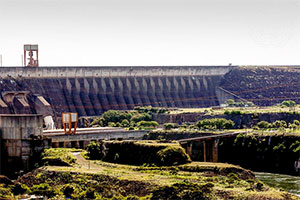 UN Power Plant, Paraguay. Credit: UN Photo/Evan Schneider
Energy has posed a great challenge for economies around the world. As global energy consumption skyrockets throughout the years, so does the need for sustainable solutions. The Sustainable Development Goals are essential in providing people with access to safe, affordable, and sustainable energy sources that minimize harm on the planet. Progress towards these goals opens the door for an advancement in modernization for communities on a global level and allows for a potential mitigation of tensions between nations.
The UN’s Summit of the Future in 2024 offered new initiatives that are being taken to achieve these goals, including a decreased reliance on fossil fuels, a switch to renewable energy sources, and improved climate financing.
IPS is well positioned to provide relevant, insightful, and compelling analysis of recent updates and measures being taken around the world to achieve a cleaner future.

The Week with IPS

NEXT STOP - SDGs
Tracking global progress towards a sustainable world
Tracking global progress towards a sustainable world
