
Sunday, November 29, 2026



News and Views from the Global South
Environment
CLIMATE CHANGE: Sort It Out In The Air
Air travel needs to be quickly included in a European Union programme for addressing climate change if pledges on curbing greenhouse gas releases are to be kept, a new study has found.CLIMATE CHANGE: U.S. Talking, Up to aPoint
Despite its new willingness to participate in a UN-monitored regime for reducing greenhouse gas (GHG) emissions, the U.S. government continues to oppose legally binding caps.
ENVIRONMENT-AUSTRALIA: Pulp Mill Friction Turns Election Issue
A proposed pulp mill in the scenic Tamar Valley of the island state of Tasmania has become a contentious issue between environmentalists and pro-development groups as Australia goes to federal elections this year.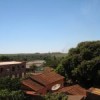
BRAZIL: Bittersweet Sugarcane
The sugarcane workers in this small Brazilian town ate at least 200 of the little roasted wild birds. But they had not hunted them. They merely collected the roasted bodies of the birds that died in the controlled fire set in the cane field.ENVIRONMENT: Sands Running Out for UN Desertification Treaty
Concrete, firm and effective steps need to be taken by governments at the Eighth Conference of the Parties to the United Nations Convention to Combat Desertification, inaugurated in Spain’s capital Monday by the prince and princess of Asturias.HEALTH: ‘Avian Flu Spread by Poultry, Not Wild Birds’
The search for answers to the spread of the deadly bird flu virus is calling into question a long-held practice in science where recognition is given to positive test results, say experts meeting in the Thai capital.CLIMATE CHANGE: The New Utopia, Keeping the World As It Is
Utopias have always inspired humankind - from the defence of enlightenment against religious fanaticism during the Middle Ages, to reconstruction after last century's wars, to the end of colonialism.
Brazilian Ethanol Divides Agro-Industry
The "green tsunami" must be stopped, say leaders in Brazil's agribusiness sector, worried by the advance of sugarcane plantations to feed the demand for fuel alcohol.
Argentina Creates Its First Marine Park
The marine and coastal park of Argentina's southern Patagonia will protect biological and economic wealth, but will not completely ban its exploitation.Ecobreves – MEXICO: Electrochemical Gold Purification
Mexican researchers began operating a prototype electrochemical reactor that separates gold and silver from other minerals, without producing toxic residues.Ecobreves – BRAZIL: Lawsuit Against Eucalyptus
Seven environmental organizations from the southern Brazilian state of Rio Grande do Sul are demanding that federal justice authorities only authorize eucalyptus plantations if they comply with environmental impact studies.Ecobreves – CENTRAL AMERICA: Honduras and Guatemala to Protect Shared Ecosystems
The governments of Honduras and Guatemala signed a cooperation agreement on Aug. 27 to protect the natural resources the two countries share along their Caribbean coastlines.Ecobreves – ARGENTINA: Whales in the Schools
A plan for children to develop "a comprehensive appreciation of whales and their environment" will begin in late September in five schools of the southern Argentine province of Chubut.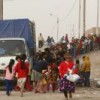
PERU: Little Help for Slum-Dwellers Left Homeless by Quake
"We have come here because God sent us," says pastor Pedro Leyva Díaz. He looks tired after distributing food, clothes and sweets in dozens of poor communities devastated by the earthquake in southern Peru.ENVIRONMENT: 21st Century May Belong to the Shrub
As atmospheric carbon dioxide levels continue to climb shrubs and other woody plants will likely dominate grasslands, altering pastoral lifestyles around the world, a U.S. study has found.SOUTHERN AFRICA: Plans to Dam the Cunene River Are Shelved Again
Political interests and specialist lobby groups appear once again to have stalled plans to dam the Cunene River where it forms the border between Angola and Namibia. After years of negotiations, several expensive feasibility studies and considerable political rhetoric, the proposed Epupa Dam on the Cunene River is not even close to the beginning of a construction phase.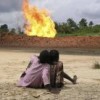
ENERGY: Billions Up in Flames as Oil Firms Burn Gas
Energy producers waste about 40 billion dollars every year by burning off gas released at oil fields, says a new study commissioned by the World Bank.
ENVIRONMENT-ZAMBIA: Efforts to Halt the Strangulation of Kafue
The World Wide Fund for Nature (WWF), an international conservation organisation, has launched an initiative to protect Zambia's Kafue River from pollution: the 'Save the Kafue River Campaign'. At present, the river provides potable water to over 40 percent of people in the Southern African country.ASIA: War Footing Needed to Fix Water, Sanitation Issues
Government officials, sanitation experts, funding agencies and civil society representatives are unanimous that Asia’s water delivery and sanitation problems should be tackled with the same urgency as disaster relief.HEALTH-GHANA: Boreholes That Proved a Lifeline Have Come at a Cost
Ask people to list the causes of tooth discolouration and they may mention tobacco chewing, or one too many cups of coffee a day. Pose the question in Ghana's northern Nayorigo village, however, and someone might answer: desertification.ENVIRONMENT-MEXICO: Green Plan to Cut Smog
The Mexico City government announced new environmental measures Thursday aimed at further restricting traffic, the main culprit for the city’s notorious smog. The plan is also to streamline the city’s chaotic traffic, in the face of warnings from experts of a total collapse of the system by 2010.« Previous Page — Next Page »


Through our global network of local writers, we are continuing our award-winning coverage of global and local environmental challenges, with a focus on the people for whom the ecosphere matters in a direct way: rural dwellers who have little means to protect themselves against adverse conditions; communities that need to switch to sustainable development in order to survive; poor women and children, who are the most vulnerable in natural disasters. Sponsored by the United Nations Environment Program (UNEP), the United Nations Development Program (UNDP) and The World Bank (WB), IPS also maintains the award-winning Tierramérica, a specialised information service on environment and development.

The Week with IPS

Tracking global progress towards a sustainable world


