
Sunday, November 29, 2026



News and Views from the Global South
Environment

EGYPT: Desert Reclamation the Country’s Best Hope – Or a Mirage?
"You can grow anything here," says 76-year-old Mohamed Ahmed, spreading his arms wide to point to the cascading bougainvilleas and an orchard of mango trees drooping with fruit. But, "When I first came here, there was nothing here but sand and more sand."
SOUTHERN AFRICA: Blind, Translucent, Vulnerable – And Important For Your Health
An unexpectedly rich variety of organisms can be found in groundwater, a source that more than 37 percent of people in Southern Africa are dependent on, according to the Southern African Development Community's Water Sector Co-ordinating Unit. And, an Australian scientist visiting South Africa believes these tiny animals should be studied more intensively to monitor the quality of groundwater.ENERGY: ‘Gas OPEC’ Still a Long Way Off
A cartel of natural gas-producing nations similar to OPEC (Organisation of Petroleum Exporting Countries), an idea floated by countries like Iran, Russia and Venezuela, remains a distant possibility due to the nature of the market.
Argentina Aims to Expand Its Maritime Frontier
The sea floor of the South American continental platform holds vast energy, mineral and genetic wealth. Argentina wants to claim its share.
Amazon Fruit Gatherers Face Biofuel Dilemma
Babaçú fruit gatherers in the Brazilian Amazon must decide if they will join or reject the biodiesel production boom, which will alter the economy of this traditional activity.Ecobreves – CHILE: Mapuches Win Battle Against Dump
The municipal government of the southern Chilean city of Temuco backed away from a project to construct a new sanitary landfill which came under fire from indigenous Mapuche communities and the University of the Border.Ecobreves – HONDURAS: Tighter Regulations for Mines
The reforms of the Honduran Mining Law, expected to be approved in August, entail stricter controls over the mining companies, ranging from higher taxes to potential fines of more than one million dollars, legislative sources told Tierramérica.Ecobreves – CUBA: Electricity for Rural Guantánamo
Peasant farmers who live near the hydroelectric dam of the Guaso River in the eastern Cuban province of Guantánamo will see their living conditions improve as a result of a project to take place in the second half of 2007.Ecobreves – VENEZUELA: 26 Million Trees Planted
The Tree Mission, which was launched in Venezuela a year ago as a five-year plan to plant 100 million trees on 150,000 hectares at the heads of the tributaries of the Orinoco River, has already completed a quarter of its target, reported the authorities.Ecobreves – BRAZIL: Distance Dispute Between GM and Traditional Maize
A distance of a minimum of 100 meters between a commercial field of genetically modified corn and another field of conventional or organic corn is enough to prevent genetic contamination, says a proposal by Brazil's National Technical Commission on Biosafety.
ENVIRONMENT-BALKANS: Much Energy Now Goes to Waste
After years and even decades of neglect, Balkans nations are seeing a new awareness of environmental issues. But across Bosnia, Croatia, Montenegro and Serbia waste management remains a serious problem.ALBANIA: UNESCO Not a Life Saver
Good looks have not sufficed to make Gjirokaster, a picturesque historical city in Southern Albania, the wealthy and successful tourist destination it aspires to be.ARGENTINA: Groups Lobby Congress for Changes to Mining Laws
People from 14 Argentine provinces visited Congress this week to call for changes in the country’s mining code, which grants substantial tax incentives that have drawn foreign corporations with poor environmental records.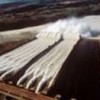
ARGENTINA: A Crack in Dam Safety
More than 500 dams around the world have collapsed since the mid-20th century. In Argentina, ageing and inadequate maintenance of dams built before the 1970s, the lack of coordination amongst regulatory bodies, and budget shortfalls are giving a boost to the latent threat.US-INDIA: ‘123’ Nuclear Agreement Completed
India and the United States have announced a bilateral agreement permitting the export of U.S. civilian nuclear technology to India in exchange for a promise that the South Asian giant will allow International Atomic Energy Association (IAEA) inspectors access to its nuclear facilities.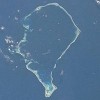
ENVIRONMENT: Tiny Tuvalu Fights for Its Literal Survival
The second smallest nation on Earth hopes to turn itself into an example of sustainable development that others can emulate.DEVELOPMENT-NAMIBIA: No Water In Babylon
Cardboard and rickety tin structures jostle for space on a barren outcrop in the sprawling suburb of Katutura in Namibia’s capital Windhoek. A putrid smell hangs in the still, afternoon air as flies wing their way over the debris.ENERGY: Biofuels Pushing Up Food Aid Prices
A dramatic increase in the production of biofuels has led to rising food prices with serious implications for developing countries reliant on food aid to combat famine.ENVIRONMENT-CHINA: Jittery Officials Thwart Green GDP Report
The pollution cost tally is becoming a potentially explosive political issue in China.BRAZIL: In Search of Sustainable Ethanol
To curb international criticism of its cane alcohol industry, the Brazilian government announced that it will ban new sugarcane fields in the Amazon region and in the vast Pantanal wetland.
SOUTHERN AFRICA: Unequal Water Resources Present a Challenge
Water resources are unevenly distributed throughout the countries of Southern Africa. The region boasts of some of the world’s largest lakes and rivers, but is also a land of vast deserts.« Previous Page — Next Page »


Through our global network of local writers, we are continuing our award-winning coverage of global and local environmental challenges, with a focus on the people for whom the ecosphere matters in a direct way: rural dwellers who have little means to protect themselves against adverse conditions; communities that need to switch to sustainable development in order to survive; poor women and children, who are the most vulnerable in natural disasters. Sponsored by the United Nations Environment Program (UNEP), the United Nations Development Program (UNDP) and The World Bank (WB), IPS also maintains the award-winning Tierramérica, a specialised information service on environment and development.

The Week with IPS

Tracking global progress towards a sustainable world


