
Sunday, November 29, 2026



News and Views from the Global South
Environment
Ecobreves – HONDURAS: River Recovery Campaign
The "Adopt-a-River" project, presented by the Honduran government, is an effort to prevent contamination and the use of water sources as dumps.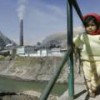
A Breath of Fresh Air for La Oroya?
The Peruvian city of La Oroya will adopt a warning system to protect its residents from the worst moments of air pollution.
Global Fight to Protect the Ozone Layer Celebrates 20 Years
The Montreal Protocol on ozone-depleting substances eliminated emissions of around 11 million tons of greenhouse gases, benefiting the climate system, the Protocol's executive secretary Marco González told Tierramérica.Ecobreves – MEXICO: Green Rooftops to Clean the Air
The Azoteas Verdes (Green Rooftops) project, of the municipal government of the Historic Center of Mexico City, aims to improve household ecology by planting bushes and gardens on buildings' rooftops. The first will be completed in four months.WEST AFRICA: Stock Farmers Migrate From Difficulties, To Difficulties
No more grass for livestock to graze on. No more water, either. More than 50 stock animals dead. For farmer Samba Diallo, staying in Burkina Faso was no longer an option.DEVELOPMENT-BURKINA FASO: A Province Too Popular For Its Own Good
Kompienga, in eastern Burkina Faso, is the country's most verdant province - but for how long?
Q&A: South-South Cooperation 'Can Change the Geography of the Planet'
Brazil's Foreign Minister Celso Amorim, who also heads his country's delegation in multilateral trade negotiations, believes cooperation among developing countries can change the way people perceive the world.ENERGY-SOUTH AMERICA: Mega Gas Pipeline Plans Held Up
The South American mega-pipeline project to transport natural gas from the Caribbean to the River Plate, supplying a large part of Brazil en route, "has cooled down because of attacks from within South America itself" and due to attempts by the United States to delay the plans, complained Venezuelan President Hugo Chávez.ENVIRONMENT: UN Skips Gender Perspective in Climate Change
When the United Nations concluded a two-day debate Thursday on the potential devastation from climate change, it covered a lot of territory: deforestation, desertification, greenhouse gases, renewable energy sources, biofuels and sustainable development.ENVIRONMENT-MEXICO: So Far from God, So Close to…Venice?
Mexico City, one of the most populous cities in the world, could become the Venice of Latin America, although without the "gondolieri" to serenade tourists as they row them along.PAKISTAN: Devastating Floods Fail To Move Media
"Media is not interested in human suffering where the process of death is slow," lashes out Sadiqa Salahuddin, director of the Indus Resource Centre, a non-governmental organisation (NGO), working in the flood-affected area of Sindh, in Pakistan.CLIMATE CHANGE: EU Car Makers Have a Long Road Ahead
Over the next few months, members of the European Parliament (MEPs) will mull proposed limits on the amount of greenhouse gases emitted by the traffic that clogs up the continent's roads each day. If the experience so far this year is anything to go by, the MEPs will almost certainly be heavily lobbied by car makers determined to avoid measures that could prove vital in fighting climate change but which they deem too costly.CHILE: Arica Residents Tired of ‘Undrinkable’ Tapwater
Residents of the city of Arica, in northern Chile, are demanding regulations to limit the amount of boron in their drinking water, while the authorities are waiting for the results of a study to determine whether it has a harmful effect on human health.PARAGUAY: Hospitals – Generating Health or Pollution?
A thousand inflated transparent plastic bags labelled "Pathological Garbage" cover the floor of one of the exhibition rooms at the Juan de Salazar Cultural Centre in the Paraguayan capital.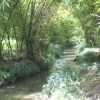
ENVIRONMENT-CUBA: Reforestation Renews a Barrio
Every morning Mario Véliz makes his way through the streets of Pogolotti, a low-income neighbourhood in the Cuban capital, to the milk shop. Those who only know him because he works there are unaware that this thin, wiry man with a face seamed with age is the life and soul of local reforestation.DEVELOPMENT-ZIMBABWE: The City of “Passport Size” Ablutions
The City Council of Bulawayo, Zimbabwe’s second largest city, has issued a warning to residents of a possible outbreak of disease following a massive cut in the city’s water supply. This is the first time in Bulawayo's history such a health warning has been issued.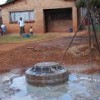
DEVELOPMENT-ZIMBABWE: Water Shortages in Capital Leave Residents Desperate
Taps in the Zimbabwean capital, Harare, are running dry even though the city’s main supply dams are more than 60 percent full, according to figures from the Zimbabwe National Water Authority (ZINWA). With more than half of Harare's three million inhabitants now experiencing water shortages, residents are resorting to desperate measures to find supplies.
DEVELOPMENT-UGANDA: A Dam That Activists Simply Can’t Make Peace With
As preparations for construction of the Bujagali dam on the Nile River in Uganda gain momentum, a local civil society coalition is calling on the World Bank and the African Development Bank (AfDB) to reconsider their decision to release funds for this hydro-electric project - which the World Bank estimates will cost 799 million dollars.
ENVIRONMENT: Climate-Driven Pest Devours Canada’s Forests
Environmentalists and researchers say that climate change is a significant factor in the pine beetle epidemic that has ravaged forests in the western Canadian provinces of British Columbia (BC) and Alberta.
ARGENTINA: A Bid to Expand Maritime Frontier
Argentina is hoping to push its national boundary to the east and incorporate a vast territory with energy and other natural resources of strategic value under the Atlantic Ocean. To do this, it must demonstrate that its continental platform goes beyond 200 nautical miles.PAKISTAN: Uncontrolled Population Blamed for Climate Change
When it comes to climate change population matters, particularly for countries in South Asia, Africa and some Arab countries, says Prof. Khalid Rashid. A mathematician and physicist in Pakistan, he has long been studying the phenomenon of global warming and views the uncontrolled population explosion with much trepidation.« Previous Page — Next Page »


Through our global network of local writers, we are continuing our award-winning coverage of global and local environmental challenges, with a focus on the people for whom the ecosphere matters in a direct way: rural dwellers who have little means to protect themselves against adverse conditions; communities that need to switch to sustainable development in order to survive; poor women and children, who are the most vulnerable in natural disasters. Sponsored by the United Nations Environment Program (UNEP), the United Nations Development Program (UNDP) and The World Bank (WB), IPS also maintains the award-winning Tierramérica, a specialised information service on environment and development.

The Week with IPS

Tracking global progress towards a sustainable world


