
Sunday, November 29, 2026



News and Views from the Global South
Environment
ENVIRONMENT: Top U.S. Sushi Company Linked to Whaling
An investigation has revealed that the U.S. supplier of sushi to more than 6,000 restaurants is associated with a Japanese company that sells millions of tins of whale meat.
ENVIRONMENT-MALAWI: Waste Not, Want Not
In many parts of Malawi, discussing human excreta is taboo. The mere mention of faeces, in any of the country's 10 official languages, makes those taking part in the conversation uncomfortable. But, excreta could be about to gain respectability.POLITICS: Security Council to Take Up Climate Change
The U.N. Security Council, whose primary mandate is to prevent wars and preserve world peace, will once again break tradition next week when it debates the newest threat to international security: climate change.
ENVIRONMENT-BRAZIL: The Amazon Jungle as Vast Savannah
An Amazon region that is less lush, where forest is replaced by grasslands, is the image drawn by the latest scientific reports in which meteorologists are taking the lead, going beyond even the direst warning of ecologists.RIGHTS: Indigenous Peoples’ Rights Ignored Again
The rights of indigenous people are given respect in speech after speech, but few countries have signed up to an international convention to protect those rights.CLIMATE CHANGE-US: Grasping the Geopolitics of Warming
The Central Intelligence Agency, National Security Agency, the Pentagon and the Federal Bureau of Investigation should pool data and offer a comprehensive review of the national security threat posed by global warming, say U.S. Senators Dick Durbin and Chuck Hagel.CHILE: Transantiago Shakes Up Transport and Politics
A new public transportation system that was intended to curb air pollution in the Chilean capital and improve quality of life has prompted hundreds of protests and the worst crisis yet for the administration of Michelle Bachelet. But what is it about the controversial Transantiago project that doesn't work?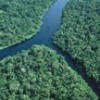
The Amazon Jungle as Vast Savanna
Global warming will broaden the effects of deforestation, which could turn 60 percent of the Amazon forest into grassland in this century, say scientists from the Intergovernmental Panel on Climate Change.
A Balancing Act for Whales
The Dominican Republic has protected since 1986 the areas where humpback whales give birth. The sites have also attracted tens of thousands of tourists in recent years.Ecobreves – BRAZIL: Advertising a Boon for Obesity
Television advertising is one of the main factors behind the rise of obesity in Brazil, says a University of Sao Paulo doctoral thesis.Ecobreves – CHILE: Ecologists vs. Monsanto Soy
The Transgenic-Free Chile Network opposes a project of the agribusiness transnational Monsanto to plant 5,000 hectares of genetically modified soybeans beginning in October 2007, and increasing to 20,000 hectares in 2010.Ecobreves – VENEZUELA: Endangered Orchids in Religious Procession
The Nazarene of St. Paul procession that takes place each year on Wednesday of Catholic Holy Week in the city center of Caracas, was this year adorned with 5,000 orchids that are endangered in Venezuela.Ecobreves – CUBA: Solar Energy Arrives in Rural Community
Some 60 homes in the Guantánamo community of Los Cerezos, some 1,000 km from Havana, will be supplied with electricity from photovoltaic cells by May.BOLIVIA: Errors in Contracts Complicate Gas Nationalisation
In the face of gas shortages, Bolivians are criticising the way the nationalisation of the country's energy reserves is being carried out, and social activists have once again begun to demand the outright confiscation of the assets of the 12 foreign oil companies operating here.Q&A: “Our Homes Are Going Into the Sea”
"The ice is not only our roads but also our supermarket," says Sheila Watt-Cloutier, an Inuit leader who has been fighting for the rights of indigenous peoples in the Canadian Arctic region for many years.WORLD HEALTH DAY: South American Arms Race Against Dengue
In the face of the current outbreak of dengue fever in several countries of South America, infrastructure for detecting cases has become a top priority. But laboratories do not obviate the need for clinical diagnosis by skilled health professionals.CLIMATE CHANGE: The Challenge of the Century?
Climate change is already altering the Arctic, sub-Saharan Africa, small islands and Asia's river deltas, the Intergovernmental Panel on Climate Change (IPCC) reported Friday in Brussels.HUNGARY: Russian Energy Troubles West
Western powers are concerned that Hungary's relations with Russia, and especially the Russian state-owned energy giant Gazprom, are becoming too warm at a time when Europe seeks to reduce dependence from Russian natural gas.ENVIRONMENT-ROMANIA: That Lethal Name, Copsa
In Copsa Mica the cemetery, a heavy metal factory and a complex of apartment buildings for the factory workers are all close together. To the residents the message seems to be that they are disposable.CLIMATE CHANGE: The Worst Is Yet To Be
Hundreds of millions of people are at early risk from the consequences of climate change, the Intergovernmental Panel on Climate Change (IPCC) confirmed in its new assessment published Friday.CLIMATE CHANGE: Southwestern U.S. Becoming a Dust Bowl
The severe seven-year drought in the Southwestern United States is just the beginning of a new and even drier climate for the region due to climate change, scientists say.« Previous Page — Next Page »


Through our global network of local writers, we are continuing our award-winning coverage of global and local environmental challenges, with a focus on the people for whom the ecosphere matters in a direct way: rural dwellers who have little means to protect themselves against adverse conditions; communities that need to switch to sustainable development in order to survive; poor women and children, who are the most vulnerable in natural disasters. Sponsored by the United Nations Environment Program (UNEP), the United Nations Development Program (UNDP) and The World Bank (WB), IPS also maintains the award-winning Tierramérica, a specialised information service on environment and development.

The Week with IPS

Tracking global progress towards a sustainable world


