Languages
Saturday, November 7, 2026



News and Views from the Global South
Featured
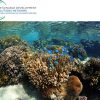
Our Health is at Stake: The Solutions SIDS Need to Fight Climate Change
Climate change is one of the most serious global threats to the future of the world’s population. Its impact extends far and wide, from the economy to governance to the very health and well-being of society.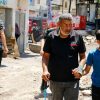
Genocidal President, Genocidal Politics
When news broke over the weekend that President Biden just approved an $8 billion deal for shipping weapons to Israel, a nameless official vowed that “we will continue to provide the capabilities necessary for Israel's defense.” Following the reports last month from Amnesty International and Human Rights Watch concluding that Israeli actions in Gaza are genocide, Biden’s decision was a new low for his presidency.
Is Bangladesh’s Currency Reprint Pressing Delete on Bangabandhu’s Legacy?
History seems to be chasing Bangladesh even while the interim government is grappling with real issues of administering a country thrown into chaos. In July last year, this south Asian country faced an upheaval when a students’ movement drove out Prime Minister Sheikh Hasina from office.
Why Russia’s Ban on Child-Free ‘Propaganda’ Impacts Human Rights
“A lot of people are very scared,” says Zalina Marshenkulova. “This is obviously another tool of repression. The state is waging war on the remnants of free-thinking people in Russia and trying to suppress all dissent and freedom,” the Russian feminist activist tells IPS. The warning from Marshenkulova, who left Russia soon after the country’s full-scale invasion of Ukraine in 2022 and now lives in Germany, comes just days after new legislation came into force in her home country banning "child-free propaganda.”
Tanzania’s Disaster Preparedness: A Nation on Edge
As the dust settled over Kariakoo’s bustling streets, Halima Abdallah’s voice trembled through the cracks of a collapsed four-story building. “Help me, please! I don’t get air,” she gasped, trapped under the rubble. For four hours, rescue workers scrambled to locate her. Their efforts, hampered by the lack of proper equipment, relied on tools hastily borrowed from a private company. By the time they reached her, it was too late. Abdallah had died.
A Renewed Vision for Prosperity for Landlocked Developing Countries
Over 570 million people live in the world’s 32 Landlocked Developing Countries (LLDCs), spanning across Africa, Asia, Europe, and Latin America. These nations face unique and complex development challenges. Their lack of direct access to the sea, geographical isolation, limited infrastructure, and difficulty integrating into global trade and value chains hinder sustainable development and progress.
‘Digital platforms amplify the Israeli narrative while systematically silencing Palestinian voices’
CIVICUS discusses the challenges Palestinian civil society faces in resisting digital suppression and advocating for justice with Palestinian lawyer and researcher Dima Samaro.

Who Will Save Nigeria’s Coastal City on the Brink of Extinction?
In 2021, Ojajuni Olufunsho, a 53-year-old resident of Ayetoro, a town along the Atlantic coast, southwestern Nigeria, saw her home swept away by the encroaching sea. What was once a spacious 10-room house, a sanctuary for Olufunsho and her five children, was swallowed by the relentless force of rising sea waters.
Civil Society Trends for 2025: Nine Global Challenges, One Reason for Hope
It's been a tumultuous year, and a tough one for struggles for human rights. Civil society’s work to seek social justice and hold the powerful to account has been tested at every turn. Civil society has kept holding the line, resisting power grabs and regressive legislation, calling out injustice and claiming some victories, often at great cost. And things aren’t about to get any easier, as key challenges identified in 2024 are likely to intensify in 2025.
Innovative Financing to Unlock Africa’s Blue Economy
Securing new financing for global good has become more challenging than ever. Negotiations at the recently-concluded COP16 on Nature and Biodiversity failed to reach an agreement on establishing a fund to support the implementation of the Framework for Nature agreed in 2022 under the Montreal-Kunming agreement.
‘It’s Very Tough’: Turning Youth Employment Dreams Into Reality
It’s a bright winter day in Skopje, the capital of North Macedonia in the southern Balkans. By lunchtime, the cafes are full. The atmosphere is busy and social, and it is not difficult to see why the city, home to one-third of the country’s population of 2 million, is the focus of hope for young jobseekers. But, for many, it is not an easy road.
‘The Election Is Just Another Tool to Keep Lukashenko in Power for as Long as Possible’
CIVICUS discusses the ongoing crackdown on civil society in Belarus with Natallia Satsunkevich, human rights defender and interim board member of the Viasna Human Rights Centre.

Trapped on a Runaway Train: Looking Back on 2024
Do you sometimes feel like a hamster on its wheel, or perhaps stuck on a runaway train hurtling towards the abyss? Whatever metaphor one might choose for our world looking back on 2024, rainbows don’t easily spring to mind.
Food Crises Intensify in Winter Ravaged War Zones
The days are short with bitterly cold rain in Bucharest, the capital of Romania, the largest Balkan country located south of the Ukraine. Over the border, temperatures in Kyiv will plummet to a daily average of zero in December as the Ukraine war grinds on.
Targeting Transformative Disaster Risk Reduction in Asia-Pacific Subregions
In December 2024, Vanuatu experienced yet another harrowing reminder of its vulnerability to disasters—a powerful 7.4 magnitude earthquake struck the Pacific nation’s capital, Port Vila, leaving 14 dead, over 200 injured, and thousands more affected.
US & Western Allies Provide a Hefty 260 Billion Dollars in Military Aid to Ukraine
The United States and Western allies have jointly provided a staggering $260 billion in aid, mostly weapons and military assistance, to Ukraine as the long-drawn-out conflict continues following Russia’s invasion in February 2022. Speaking to reporters at NATO headquarters in Brussels early December, US Secretary of State Antony Blinken said: “All told, the United States has provided $102 billion in assistance to Ukraine, and our allies and partners, $158 billion”.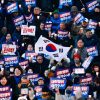
South Korea’s Democracy Defended
Democracy is alive and well in South Korea. When President Yoon Suk Yeol tried to impose martial law, the public and parliamentarians united to defend it. Now Yoon must face justice for his power grab.
UN Commits to Supporting Syria in Political Transition, Adapting Humanitarian Support
In overthrowing Bashar al-Assad and his regime, Syria reaches the process of re-affirming its sovereignty, a process that the United Nations chief asserts must be led by the Syrian people.
Museum of Modern Art Set to Launch in Cotonou, Showcase Beninese Artists
Construction of the new Museum of Modern Art is underway in Cotonou, Benin’s largest city. The museum, along with three others being built throughout the country, are part of the Beninese government’s extensive plan to ramp up the nation’s tourism industry and preserve its culture. It is expected to open at the end of 2026.
Why is It So Hard to Change? Insights from the 2024 Human Development Report on Chile
As many middle-income countries in the world, Chile finds itself at a critical juncture. The country has made significant progress over the past decades in terms of economic growth and poverty reduction, yet many structural challenges remain.
The Land of Immigrants to Deport Thousands of Refugees & Asylum Seekers
The United States, long described as a country built largely by immigrants, is planning to clamp down on migrants, refugees and asylum seekers entering the country—which averaged about 2.4 million in 2022-2023, according to the US Congressional Budget Office. The incoming Trump administration is calling for “mass deportations” of mostly illegal aliens and undocumented workers.« Previous Page — Next Page »





The Week with IPS

NEXT STOP - SDGs
Tracking global progress towards a sustainable world
Tracking global progress towards a sustainable world
