Languages
Sunday, November 8, 2026



News and Views from the Global South
Featured
Bridging the Gap: How Self-Awareness Can Unleash Youth Potential
Imagine a world where every young person has the tools they need to succeed, regardless of their age, area of residence, ethnicity, college name, or the title on their resume. It’s a world where dreams are limitless, and potential knows no bounds.
Climate Change Poses Yet Another Stumbling Block for Pakistani Sportswomen
Goalkeeper Rehana Jamali, 17, is jubilant. Her team came in second in the All Sindh Women Hockey Tournament, held last month.
Transforming India’s Villages Through Innovative Water Harvesting Techniques
Brij Mohan, a 37-year-old farmer from Deoria, a modest village in India’s northern state of Uttar Pradesh, has a story of resilience and transformation. Mohan, the lone breadwinner for his family, has two children, the eldest just 10 years old.
Neglected for Years, Mpox Now a Public Health Emergency of International Concern
There is a deadly outbreak of a new and graver variant of mpox in the Democratic Republic of Congo (DRC), and at least one case has been confirmed in nearly 12 African countries, including those like Kenya, Burundi, Uganda, and Rwanda that were previously unaffected. Suspected mpox cases across these countries have surpassed 17,000, a significant increase from 7,146 cases in 2022 and 14,957 cases in 2023.
Mauritania Pilots Digital ID App
Governments are increasingly adopting the digital public infrastructure (DPI) approach to deliver public services. An essential component of this is digital identity. Digital identities are often designed to provide a seamless experience for users which ought to be secure, user-friendly, and preserve privacy.
Venezuela Struggles to Hold on to Hope
There was an unusual sense of hope going into Venezuela’s 28 July presidential election. Democracy seemed on the horizon. María Corina Machado, the opposition’s rallying figure, had inspired a rare level of enthusiasm, promising millions of exiles they’d soon be able to return to a new Venezuela.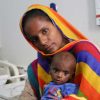
How Extreme Heat Intensifies Health Problems and Hunger
In May, temperatures soared above 52° Celsius (125.6° Fahrenheit) in Pakistan’s southern province of Sindh. To cope, Samina Kanwal, a community health worker with Action Against Hunger, began work at 7:00 am — the earliest time possible given neighborhood security protocols — to travel door-to-door helping vulnerable with the health consequences of extreme heat including heatstroke, difficulties with brain function, and even hunger.
2023 Deadliest Year for Aid Workers– & 2024 Could be Even Worse, Predicts UN
Back in August 2003, the United Nations faced one of its violent tragedies when a terrorist attack on the UN headquarters in the Iraqi capital of Baghdad claimed the lives of 22 people. Among those killed was Sergio Vieira de Mello of Brazil, the UN envoy in Iraq and High Commissioner for Human Rights, who had a long and distinguished UN career stretching over 30 years.
Gender Equality Has Everything To Do with Climate Change
After years of reporting on the frontlines of climate change, I have witnessed the devastating impact extreme weather events have on women and girls. In Kenya’s pastoralist communities in far-flung areas of Northern Kenya, West Pokot, Samburu and Narok counties, droughts mean a resurgence in harmful cultural practices such as outlawed female genital mutilation (FGM), beading and child marriages.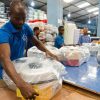
How the Private Sector Can Create Jobs and Drive Development in Western & Central Africa
Every year in Western and Central Africa, 6 million young people enter the labor force, while only about half a million new jobs are created. This enormous jobs deficit means that most entrants into the workforce work in the informal sector, with insecure income, low quality employment, and very little hope of escaping poverty.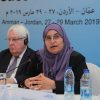
Yemen Crisis Brings Small Reprieve for Entrepreneurial Women
Once upon a time, the Sheba (Seba’a) Kingdom (today’s Yemen) had a prominent queen. Women, in the presence of men, were held in a higher position, literally.
Empowering Women for a Green Future: AFPPD Conference Tackles Climate Change and Gender Equality
Robust data collection, integrated policies, and an accelerated push towards a green economy with a gender focus topped the agenda at a conference in Islamabad, Pakistan, that brought together policymakers, experts, and advocates from across the Asia-Pacific region.
Freedom of Press in Jeopardy With Journalists in Crossfire in Kenyan Protests
In the heart of Nairobi, as tear gas clouded the streets, the line between journalists and protesters blurred in the eyes of Kenyan law enforcement. A wave of anti-government protests, ignited by opposition to a proposed finance bill, has spiraled into violence, with journalists increasingly caught in the crossfire between police and protesters.
Rizwana Hasan Vows to Ensure Justice for Those Killed During Bangladesh’s Quota Reform Movement
Justice for all those who died and suffered injuries during the recent student-led quota reform movement in Bangladesh and reforms to the systems to ensure that this justice takes place are not negotiable, an adviser to the Bangladesh interim government, Syeda Rizwana Hasan, told IPS in an exclusive interview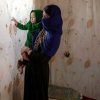
The Plight of Women Three Years after Taliban Takeover in Afghanistan
I’ve just come back from the north of Afghanistan. I asked the women I met what they want the world to know about their lives. One woman, Nasima told me: “I was married at 16. I couldn’t finish school. My hope was that my daughter’s life would be better. Now I’m worried her life is going to be worse. To those who are still listening to our voices, please help us fight for our freedom.”
Empowering Africa’s Informal Market Traders To Deliver Safe Food
Local informal food markets feed millions of urbanites in bustling African cities, but the consequences of tainted food could be illness and death for unsuspecting consumers.
Digital Trade & the Sustainable Development Goals: A Dynamic Agenda
The rapid growth of digitalization has fundamentally altered commerce, impacting production and facilitating the movement of goods. The 2023 Asia-Pacific Trade and Investment Report (APTIR), has pointed out that although digital trade revenues of Asia and the Pacific account for a significant share of global trade, this growth is uneven, with trade concentrated in a few areas, leading to disparities across the region.
Killings of Palestinian Journalists Continue –Aided by Uninterrupted Flow of US Arms
The growing number of killings of Palestinian journalists in Gaza has triggered a demand for a cut-off in US arms supplies to Israel. Sarah Leah Whitson, Executive Director, Democracy for the Arab World Now (DAWN), told IPS despite pleas of the international community to suspend arms to Israel in the face of its unprecedented atrocities against Palestinians in Gaza, including the killing of over 165 Palestinian journalists, it beggars the imagination that Biden is now seeking to sell Israel new weaponry to facilitate even more slaughter.
Small Farmers Feeling Climate Change Heat Find Little Support From the State
The over 20 million residents of Pakistan’s port city of Karachi, in Sindh province in particular, have been experiencing brutal heat since May. But they are not the only ones bearing the brunt of high temperatures and humidity. Up to 15,000 cattle died due to scorching heat mixed with high humidity which Shakir Umar Gujjar, president of the Cattle and Dairy Farmers Association, Pakistan, said was “no joke”.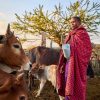
Indigenous Peoples — An Antidote in a World of Crisis
This year’s Equator Prize winners are the antidote we need in a world of crisis. Earlier this year, the World Economic Forum released its annual Risk Report. The key findings highlighted the inescapable trend over the past decade that we are facing a global polycrisis, in which problems of biodiversity loss, climate change, inequality, water scarcity and conflict are increasingly indivisible, simultaneous, and systemic.
Gaza Children’s Education, Mental Health Targeted With Emergency Response Grant
Since October 2023, 625,000 children enrolled in schools across Gaza have had no access to education, and more than 370 schools have sustained damage from attacks, according to the United Nations.« Previous Page — Next Page »





The Week with IPS

NEXT STOP - SDGs
Tracking global progress towards a sustainable world
Tracking global progress towards a sustainable world
