Languages
Friday, November 20, 2026



News and Views from the Global South
Global Geopolitics
U.N. Chief Names Advisory Panel on War Abuses in Sri Lanka
Defying a challenge by the government of Sri Lanka, U.N. Secretary-General Ban Ki-moon Tuesday named a three-member panel of experts to advise him on how he should proceed with investigating violations of human rights and humanitarian law during the concluding stages of that country's long-drawn-out separatist war last May.Raising Water Productivity to Increase Food Security
With water shortages constraining food production growth, the world needs an effort to raise water productivity similar to the one that nearly tripled land productivity over the last half-century.
AFRICA: Cautionary Notes Sounded as South-South Trade Booms
An Indian textile engineer and entrepreneur called Raj Rajendran visited Rwanda in 1999. He was tasked to close down an unviable textile factory following the civil war. But he discovered propitious agro-climatic conditions, particularly volcanic soil -- ideal for the rearing of silk worms to produce raw silk.Fragile States Becoming More Fragile
Some of the world's weakest states are becoming ever more fragile, according to the 2010 edition of the annual "Failed States Index" (FSI) released here Monday by Foreign Policy magazine and the independent Fund for Peace (FFP).Smaller Nations Fear Marginalisation by Elite G20
The 27-member Global Governance Group (3G) is challenging the politically and economically powerful G20 not to marginalise the interests of small and medium-sized countries or undermine the United Nations in key decision-making.Caribbean Under Fire for Pro-Whaling Stance
The votes of six Caribbean countries could help decide whether or not the International Whaling Commission (IWC) will ease the 1986 global ban on commercial whaling and allow hunting in the Southern Ocean Whale Sanctuary around Antarctica.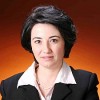
Arab-Israeli Parliamentarian Fights Death Threats
"I stopped counting after I had received 50 death threats. I told my secretary not to tell me about them any more," Arab-Israeli Knesset (parliament) member, Haneen Zoabi told IPS.Israel Navigates Between Inquiries
Israel's easing of its land blockade of Gaza is unlikely to lessen international pressure for a change in its policies towards the Palestinians. Nor can Israel be expected to give up its battle to undermine Hamas' control of the Gaza Strip.UNDP Unveils Agenda to Spur Anti-Poverty Goals
After an economic assessment of some 50 countries, the U.N. Development Programme (UNDP) has come up with a "concrete action agenda" to accelerate progress towards the achievement of the Millennium Development Goals (MDGs).Obama Still Globally Popular, But Doubts Grow in Muslim World
While U.S. President Barack Obama has largely retained huge popularity among most of the world's publics, disillusionment with his leadership appears to have set in throughout much of the Islamic world, according to the latest annual survey of global public opinion by the Washington-based Pew Research Centre released here Thursday.Recruiters of Child Soldiers Face U.N. Sanctions
Individuals and armed groups that are considered repeat offenders in the recruitment and use of child soldiers may soon be subject to United Nations sanctions.
RIGHTS-MIDEAST: ‘Gaza Blockade Must Go’
Under intense international pressure Israel declared last week that it would ease its crippling blockade on Gaza by permitting an additional but limited number of daily items, including food, into the coastal enclave.Small Arms Treaty Could Make Dent in Gang Violence
Gangs and armed groups may rank below militaries and law enforcement agencies in the possession of firearms, but "they have consistently shown a willingness to use guns and use them for violence," says Dr. Jennifer Hazen, a senior researcher with the authoritative Small Arms Survey.Israeli Flotilla Attack May Violate International, Maritime Laws
When two widely-divergent investigative panels launch their probes on the recent Israeli attack on a flotilla of ships carrying humanitarian aid to Gaza, one of the disputed issues under scrutiny would be the legality of forcibly boarding a vessel in international waters.Civil Society Pushes for Action Ahead of MDG Review
As a major high-level meeting on the Millennium Development Goals approaches at U.N. headquarters in September, anti- poverty and human rights activists are stepping up efforts to have their voices heard.China-EU Rivalry in Africa Sharpens
If China needed another prompt that the European powers have finally woken up to the fact they were losing the competition for the Africa pie, it came with France’s bid to recapture lost ground this month.Polar Heat Bringing Harder Winters
Last winter's big snowfall and cold temperatures in the eastern United States and Europe were likely caused by the loss of Arctic sea ice, researchers concluded at the International Polar Year Oslo Science Conference in Norway last week.US-CHINA: Spring Thaw to Summer Squall
Earlier this spring, many here in Washington were hopeful that Chinese president Hu Jintao's attendance at the Nuclear Security Summit, the U.S. Treasury Department's decision to hold off on naming China as a "currency manipulator", and China's support of U.N. sanctions against Iran all pointed to a thaw in the cool relationship between the Barack Obama White House and Beijing.Human Trafficking Still Widespread, U.S. Included
Ten years ago, the U.S. State Department issued its first annual review of governments' efforts to combat human trafficking. Monday, the report included the U.S.'s own struggles with the problem for the first time.SOUTH-EAST ASIA: China Goes for Friendly Giant Role in Mekong
The Mekong River is steadily emerging as a testing ground for public diplomacy, Chinese style. Beijing, it appears, wants to reach out to its southern neighbours who share the river more as a friendly giant than an imposing bully.
U.S. Bill Would Outlaw FGM “Holidays”
The U.S. currently lags behind several Western European countries in closing a legislative loophole banning the practice of Female Genital Mutilation (FGM) beyond its borders to protect U.S. citizens and residents. But this may soon change.« Previous Page — Next Page »


Is the world dominated by three great empires -- the U.S.A, China and the European Union? How much power do the great behemoths of the south -- India, Brazil, and South Africa -- wield? And where does Russia fit in that equation? Are we in the middle of a new Cold War? What are the implications of the armed conflict with Georgia? What about the new axis: Venezuela-Russia? And what role does Turkey play? What about issues like Climate Change and other global forces like the food crisis and the high energy prices? How is all this reshaping the world's forces? IPS looks for some answers.

The Week with IPS

NEXT STOP - SDGs
Tracking global progress towards a sustainable world
Tracking global progress towards a sustainable world
