Languages
Friday, November 20, 2026



News and Views from the Global South
Global Geopolitics
Shielded by U.S. Umbrella, Israel Joins Rich Man’s Club
With tongue firmly entrenched in his cheek, an Arab diplomat recounts an Israeli cabinet meeting interrupted by an aide rushing in with the latest statistics on the state of the economy.BIODIVERSITY: Oil Spill Will Devastate the North Sea Warn Experts
If an oil spill similar to that in the Gulf of Mexico were to happen in the North Sea, it would devastate the Wattenmeer, one of the most fragile and important biodiversity hotspots in northern Europe.
WORLD: North Should Pay South Reparations for Climate Change
The North should pay reparations to the South for the effects of climate change.Treaty Aimed at Banning Nukes Remains Grounded
The world's anti-war activists, including parliamentarians, civil society groups and diplomats, have succeeded in creating international treaties to ban a wide array of deadly weapons: anti-personnel landmines, blinding laser weapons, cluster munitions, dum-dum bullets and chemical and biological weapons.SPAIN: Baltasar Garzon’s Trial Threatens “Universal Justice”
The trial of Spain's "superjudge" Baltasar Garzón is aimed at squelching the principle of universal justice by suspending its main advocate, Dolores Delgado, a prosecutor at the Audiencia Nacional, Spain's highest criminal court, told IPS.UNESCO Catches Heat Over Prize Named for “Dictator”
Human rights groups are expressing outrage over a decision to proceed with the UNESCO-Obiang Nguema Mbasogo International Prize for Research in the Life Sciences, named after and funded by the controversial president of oil-rich Equatorial Guinea.U.S. Nudged Toward Closer Cooperation with ICC
The upcoming review conference of the International Criminal Court (ICC) has restarted the debate here in Washington about how the U.S. should engage with the ICC despite ongoing concerns about the prosecutorial authority and jurisdiction afforded to the court.World Bank Boosts Commitment to Lower Maternal Mortality
The World Bank intends to ramp up spending on family-planning and related initiatives to reduce maternal mortality, improve reproductive health, and reduce fertility rates in nearly 60 developing countries, particularly in sub-Saharan Africa, according to a new five-year plan released by the Bank here this week.Small Islands Sit Tight and Vow to Fight Climate Change
If nothing is done to slow the pace of climate change, many small island developing states (SIDS) will be at risk of being wiped out, both economically and literally.
WORLD: Markets Can’t Self-Regulate; State Should Step In – UNCTAD
The Washington Consensus is dead and the state must play a new role in development. The triple crises – economy, food and climate – show the need for a new developmental model as export-led growth and financial speculation in agricultural markets have proven to be disastrous.Success of “The Pill” Overshadowed by Family Planning Gaps
The birth control pill, currently used by an estimated 100 million women worldwide, commemorated its 50th anniversary last week - but remains controversial in some quarters.POLITICS: Sri Lanka’s Turnaround Could Signal New Beginning
For a country that has had quite a few run-ins with global giants in the diplomatic arena, the last fortnight has witnessed somewhat of a turnaround for Sri Lanka.ARGENTINA: Adding More Coal to the Fire
Bucking recommendations to build up renewable energy sources, Argentina is forging ahead with a plan that will increase its dependence on coal, regarded as the most polluting fossil fuel.Human Rights Council Candidates Run Unopposed
When the U.N. General Assembly meets later this week to elect 14 new members for the Geneva-based Human Rights Council (HRC), the election results will be highly predictable for one reason: all candidates are running unopposed as nominees of their respective geographical regions.
BIODIVERSITY: We Can Live Without Oil, But Not Without Flora and Fauna
The policies and deals that contributed to the massive oil spill under way in the Gulf of Mexico are also jeopardising the Earth's vital biological infrastructure, according to the Global Biodiversity Outlook 3, published Monday.Nuclear Power Nearly as Dangerous as Weapons, Critics Say
The quest for nuclear disarmament is likely to fail if governments and corporations continue to promote nuclear technologies as a solution to the world's energy needs, say independent experts.JAPAN: Promised U.S. Base Relocation: Made to Be Broken?
Prime Minister Yukio Hatoyama’s disastrous visit this week to Okinawa island, host to the largest U.S. military bases in Japan, has highlighted a rocky road ahead for the country’s much awaited change pledged by the postwar democratic and socialist government that came to power in August 2009.ENVIRONMENT: Small Islands Urge Action at UN Oceans Meet
Faced with rising sea levels, dying coral reefs and decreasing fish stocks, small island developing states (SIDS) are feeling the effects of ocean decline, and they want wealthier countries to do more to ensure the survival of the world’s seas and other waterways.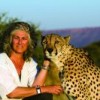
Q&A: World’s Fastest Cat on Its Ninth Life
Over the last century, 90 percent of the cheetah population in the world has been killed, and it is now the most endangered animal in Africa.
Q&A: “I Feel Duty-Bound to Push for a Nuclear-Free World”
Emerging from a U.N. conference addressing the role that the world's mayors can play on nuclear issues, Hiroshima's Mayor Tadatoshi Akiba continues to call for a rapid end to nuclear weapons.LATIN AMERICA: Foreign Investment on the Rise, But Still “Low-Quality”
Foreign direct investment (FDI) flows to Latin America and the Caribbean, which fell 42 percent in 2009 due to the global economic crisis, will grow 40 to 50 percent this year, says a new report released by ECLAC Wednesday.« Previous Page — Next Page »


Is the world dominated by three great empires -- the U.S.A, China and the European Union? How much power do the great behemoths of the south -- India, Brazil, and South Africa -- wield? And where does Russia fit in that equation? Are we in the middle of a new Cold War? What are the implications of the armed conflict with Georgia? What about the new axis: Venezuela-Russia? And what role does Turkey play? What about issues like Climate Change and other global forces like the food crisis and the high energy prices? How is all this reshaping the world's forces? IPS looks for some answers.

The Week with IPS

NEXT STOP - SDGs
Tracking global progress towards a sustainable world
Tracking global progress towards a sustainable world
