Languages
Wednesday, November 18, 2026



News and Views from the Global South
Global Governance

Venezuela
Alea Jacta Est!
The count down towards a tragic outcome in Venezuela has started. All outside powers express what they say is a shared concern for its peace-loving people that has the misfortune of sitting on what is maybe the largest oil reserves in the world. The problem is that geopolitics lead groups of foreign countries to express different, not to say opposed recipes as to how democracy can be restored and happiness pursued in Venezuela and want to make their own views prevail in this divided country. 
Fighting Machismo in Latin America: The Formula to Combat Femicides
Peru began the year with 11 femicides in January, despite progress made in laws and statutes and mass demonstrations against gender-based violence. This situation is also seen in other Latin American countries, raising the need to delve deeper into the causes of the phenomenon.
People Power Will Bring Change — Not Davos
They said they cared about climate change but they flew in on private jets in record numbers. They said they cared about inequality but laughed off the idea of higher taxes for the rich. They spoke about democracy and human rights but they dined with a far-right populist. If there was ever any doubt about Davos representing the epitome of duplicity, then 2019 has firmly laid that to rest.
2019: Year of Return for African Diaspora
In the heart of Accra, Ghana’s capital, just a few meters from the United States embassy, lie the tombs of W. E. B. Du Bois, a great African-American civil rights leader, and his wife, Shirley.
The Marrakech Compact on Migration: Myths & Realities
When 164 UN member states adopted the Global Compact for Safe, Orderly, and Regular Migration (the Marrakech Compact on Migration) on 10 December last year, I read on social media that they had decided to give up control over migration to the UN.
Ending Poverty is Possible, but it Means Facing up to Inequality – Within & Between Countries
World leaders have committed to ending poverty everywhere for all people by 2030. Achieving this aim means facing up to the need for dramatic declines in inequalities – in income, in opportunity, in exposure to risk, across gender, between countries and within countries – over the next decade.
Is the UN Being Undermined by a Demagogic Trump Administration?
The United Nations, which embodies the core principles of multilateralism since its creation more than 74 years ago, is being steadily and systematically undermined by a reactionary and demagogic Trump administration recklessly flaunting American imperialism at its worst.
Asia’s Expanding Illicit Market: Brides
Paradoxically, the world’s most populated countries are facing a population crisis: a woman shortage. And it’s women who are paying a brutal price for it.
In Venezuela, Two Presidents Vie for Power
Venezuela entered a new and astonishing arena of political confrontation, with two presidents, Nicolás Maduro and Juan Guaidó, leading the forces vying for power, while Venezuelans once again are taking to the streets to demonstrate their weariness at the crisis, which has left them exhausted.
Bullying is an “Infringement” on Children’s Rights
While rates have decreased, school violence and bullying is still a major global issue, contributing to lasting impacts on youth, a United Nations agency found.
Electronic Devices Outnumber Humans & Trigger a Surge in E-Waste
The widespread innovations in modern digital technology have a devastating downside to it: the accumulation of over 50 million tonnes of electronics waste (e-waste) globally every year.
Why Are so Many Humanitarian Crises Under-reported?
According to a recent poll of aid agencies by the Thomson Reuters Foundation, the most under-reported crisis of 2018 was the conflict in the Democratic Republic of Congo (DRC).
Bringing Greener Pastures Back Home
One month on since the Global Compact for Migration was approved, civil society has highlighted the need to turn words into action, supporting those who have been displaced or forced to migrate as a result of environmental degradation.
Asia’s Landlocked
Structural economic transformation and the expansion of international trade are among the most pressing issues to be addressed, if Asia’s landlocked developing countries (LLDCs) are to overcome the development challenges related to their geographical locations.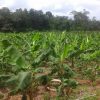
Eat Plants, Save the Planet
While the modern agricultural system has helped stave off famines and feed the world’s 7 billion residents, the way we eat and produce food is posing a threat to future populations’ food security.
Quenching Humanity’s Freshwater Thirst Creates a Salty Threat
Starting from a few, mostly Middle Eastern facilities in the 1960s, today almost 16,000 desalination plants are in operation in 177 countries, producing 95 million cubic meters of freshwater every day - equal to about half the flow over Niagara Falls.
Davos, Inequality & the Climate Emergency
Four of the top five most impactful threats in this year’s World Economic Forum´s Global Risks report are related to climate change. The report warns that we are “sleepwalking to disaster” . But that is not true. The disaster is already here, it´s not something we are still walking towards. Climate change is no future threat, it´s a current one. We have entered a new phase, one in which the impacts are coming faster, with greater intensity.
Q&A: 17 Percent of the Problem, but 30 Percent of the Solution
From expansive evergreen forests to lush tropical forests, the Earth’s forests are disappearing on a massive scale. While deforestation poses a significant problem to the environment and climate, trees also offer a solution.
A New Spectre is Haunting Europe
After Theresa May’s defeat in the British parliament it is clear that a new spectre is haunting Europe. It is no longer the spectre of communism, which opens Marx’s Manifesto of 1848; it is the spectre of the failure of neoliberal globalisation, which reigned uncontested following the fall of the Berlin Wall, until the financial crisis of 2009.
Acts of Terror Will Not Undermine Our Resolve
On 15 January 2019, terror struck Nairobi's 14 Riverside Drive. Kenya is in mourning following a senseless act on innocent and defenseless civilians by individuals preoccupied with contemptible and misplaced ideology; who hope to intimidate others through violent acts of terror. Like in their other past attempts, they have failed, and Kenya remains unbowed.
A Salty Dilemma
As the threat of water scarcity increasingly grows, many have turned to the Earth’s plentiful oceans for a solution. However, this has created a new risk threatening public and environmental health: brine.« Previous Page — Next Page »


The Week with IPS

NEXT STOP - SDGs
Tracking global progress towards a sustainable world
Tracking global progress towards a sustainable world
