Languages
Sunday, November 15, 2026



News and Views from the Global South
Global Governance

A Single Seven Year Term for the UN Secretary General?
Many UN supporters expressed disappointment that Secretary General Antonio Guterres said almost nothing, until last week, about police violence against African-Americans in the United States, or about the massive protest movement that has erupted and the repressive response to the protests by US authorities and police forces.
Racism and Dominance
The #MeToo movement triggered worldwide protests that hopefully was instrumental in making people better aware of a continuous and often hidden mistreatment of women. Maybe can the current I can’t breathe movement make people realize that institutional racism is far from extinct.
Q&A: Global Poverty Expected to Move to Middle Income Developing Nations in Asia
Global poverty, which is increasing because of the economic impact of the coronavirus crisis and ensuing worldwide lockdowns, is shifting and a dramatic increase in middle-income developing countries in Asia is expected.
The Global Economic Reset—Promoting a More Inclusive Recovery
The COVID-19 crisis is inflicting the most pain on those who are already most vulnerable. This calamity could lead to a significant rise in income inequality. And it could jeopardize development gains, from educational attainment to poverty reduction. New estimates suggest that up to 100 million people worldwide could be pushed into extreme poverty, erasing all gains made in poverty reduction in the past three years.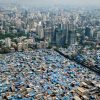
How Cities Can Turn COVID-19 Crisis into an Opportunity to Build Better
From shocking death tolls to widespread job losses, there is no understating the severity of the COVID-19 pandemic’s impact on the world’s cities. Health care systems, economies, and social lives have been upended by a virus for which the world was totally unprepared.
Strengthening Economic Institutions for a Resilient Recovery
Exceptional times call for exceptional action. In response to COVID-19, the IMF has moved with unprecedented speed and magnitude of financial assistance to help countries protect lives and livelihoods. Economic stabilization and a sustainable recovery, however, will require more than financial assistance. For recovery to be sustainable, policymakers will need to strengthen economic institutions that enable resilient, inclusive policies.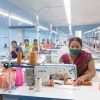
COVID-19 & its Impact on Textile & Garment Supply Chains in Developing Nations
In the first quarter of 2020, the coronavirus pandemic led to a 3% drop in global trade values. COVID-19 could trigger the biggest economic contraction since World War II, affecting all industries from finance to hospitality.
The Sahel – ‘in Every Sense of the Word a Crisis’
The combination of rife insecurity, food insecurity and more than 7.5 million people in need of humanitarian assistance has left the Sahel a region in crisis, with the global coronavirus pandemic expected to exacerbate the situation.
The Need, Within the UN, for an Honest Conversation on Racism
I want to once again express to all colleagues my enormous appreciation, my enormous gratitude, for your fantastic professionalism, your flexibility and the way you have been able to fully deliver for the people we care for during this period.
UN Chiefs Silenced by Big Powers with Vetoes
The massive protests in more than 120 US cities over racial injustice and police brutality went global last week-- amidst presidential threats of military force on demonstrators in Washington DC.
Press Freedom Under COVID-19 Lockdown in Asia
Governments have made the media “a scapegoat” across Asia, targeting journalists who are simply reporting on the failures or shortcomings of their leadership during the coronavirus pandemic, press freedom experts have warned.

High Volatility
Six months after the outbreak, the new global scenario resulting from the impact of COVID-19 is gradually becoming much more defined. From the very beginning, we sensed that little good could result from a situation so surprising and unexpected. Now it is becoming increasingly clear that we are entering times of extreme volatility in the international sphere. Times of uncertainty and incandescence as we have not seen for years.
COVID-19: Reset Food Systems Now for a Better Future
The COVID-19 pandemic has highlighted the inherent fragility of food systems, Marta Antonelli told an international video conference organised by the Barilla Center for Food Nutrition (BCFN).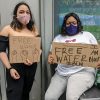
George Floyd: US’ Week of Broken Glass and Broken Dreams
The United States has been a story of broken dreams and broken glass this past week. Once again, an unarmed black man died at the hands of a white police officer, with George Floyd being pinned to the ground under a lawman’s knee in Minneapolis, Minnesota, as stunned passersby made cell-phone videos of the incident to post on social media.
World Comes Together with $1.35 billion for Yemen
World leaders gathered on Tuesday to pledge $1.35 billion in aid for Yemen, which currently undergoing what many is the world’s “worst humanitarian crisis”, with Saudi Arabia announcing a contribution of $500 million.
The Pandemic Underlines America’s Ingrained Racism
The murder of George Floyd by a police officer in broad daylight came amid a high point in the continuing rampage of the coronavirus throughout the country, killing over 100,000 and infecting nearly 2 million while more than 45 million have lost their jobs.
This Year of Living Dangerously
Indonesia’s founding President Sukarno delivered his annual Independence or National Day address on 17 August 1964 anticipating the forthcoming year as Tahun vivere pericoloso, the ‘year of living dangerously’. 2020 may well be the world’s turn, and not only due to the obvious Covid-19 threat to the world.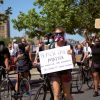
Is the Fight for Human Rights & Racial Justice Overriding the Coronavirus Risk?
The deadly coronavirus pandemic, which has claimed the lives of over 372,000 people worldwide, has reinforced the concept of “social distancing” which bars any gathering of over 10 or 20 people – whether at a social event, a wedding, a political rally or even a funeral.
Beyond the Crisis
Looking back to the start of 2020, the world has changed almost beyond recognition. To protect public health, the global economy was put into stasis. Shops closed, factories were mothballed, and people’s freedom of movement was severely curtailed. No country has escaped the health, economic, and social impacts of the COVID-19 crisis. Tragically, more than 260,000 people have died and millions have been infected. The IMF is projecting global economic activity to decline on a scale not seen since the Great Depression. It is truly a crisis like no other.
COVID-19 – UN Urges World Leaders to Act Now to Avert ‘Unimaginable Devastation’
Unless global leaders act now, the COVID-19 pandemic will cause unimaginable suffering and devastation around the world, the Secretary-General of the United Nations António Guterres said yesterday, May 28. He painted a picture of hunger and famine at historic proportions, with some 60 million people pushed into extreme poverty and half the global workforce -- 1.6 billion people -- left without work, and $8.5 trillion in global output lost.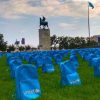
An Appeal to UN’s Budget Committee: It’s no Time to Cut Back on Child Protection
On February 26 this year, 15 South Sudanese children were released from armed groups and handed over to civilian child protection actors, including UNICEF and UNMISS, UN’s peacekeeping operation in South Sudan, who were able to facilitate the children’s safe return to their families.« Previous Page — Next Page »


The Week with IPS

NEXT STOP - SDGs
Tracking global progress towards a sustainable world
Tracking global progress towards a sustainable world
