Languages
Tuesday, November 17, 2026



News and Views from the Global South
Global

Hegemony Shift in Times of COVID-19
We have long speculated on the moment when the shift of global leadership from the United States to China would take place. From Washington to Beijing for the political power, from New York to Shanghai for the economic one. It seems that we are witnessing it now.
Gender and COVID-19: Where Can Research Help?
As of April 8, there have been 1.5 million reported cases of coronavirus and over 83,000 deaths. Most of these deaths are of men. Italy, for example, has so far had 71 percent of all case deaths attributed to men while Spain, another major global hotspot, has seen 65 percent of all deaths being men.
COVID-19 and Hope for a Compassionate Future
The Coronavirus, COVID-19, makes its deadly round across the world. People fall sick and die, communities and entire nations end up in its deadly grip and try to cope with it. Everything is changing, and changing fast and we all have to deal with it together, even if many of us are being physically apart. Humans are social beings. Our mental and physical capacities are created around that fact and crave for support and compassion.
Kerala Covid-19 Response Model for Emulation
Within weeks, the Covid-19 epidemic was classified by the World Health Organization (WHO) as an epidemic of international significance, triggering a pre-agreed WHO response. By the end of the first week of April, more than 1.3 million people had been confirmed as infected, with over 65,000 deaths across the world.
Covid-19 & its Impact on the Work of Disarmament
Humanity has faced no challenge greater than COVID-19 since the Second World War. As this rapidly developing global health emergency places unprecedented strain on our medical, economic and social systems, we must work hard to prevent new risks for instability, unrest and conflict.
What Journalists Should Know About Coronavirus Cellphone Tracking
Governments all over the world have been considering cellphone surveillance to help track and contain the spread of the coronavirus.
**Correction**How the COVID-19 Pandemic is Affecting Women’s Sexual and Reproductive Health
A little over half of women across the globe are able to freely make choices about their sexual and reproductive health, according to a latest report based on data from 57 countries. However, as much of the world has gone into lockdown because of the coronavirus pandemic, with countries implementing social distancing and restricting the free movement of people, experts are concerned that even this small gain in sexual and reproductive health may suffer negatively.
The Economic Impact of COVID-19 on Developing Countries – Part 2
What is likely to be the impact of the COVID-19 pandemic on developing economies? In the first of this two part article we looked at possible short term disruptions and discussed actions by the private sector and Governments.
Reimagining Farming Post-Covid Pandemic
Together with medical services and transportation, farming and food production have been correctly identified as ‘essential services’ by all countries under lockdown. The Covid-19 pandemic has not yet made a dent in the food supply and so far, there are no reports of shortage of essential food and agricultural goods. All cities and towns are actively coordinating with government agencies, farms, businesses and transport companies to maintain the supply chain and ensure full availability of food for the population,
Human Rights and Compassion Must Guide Enforcement of COVID-19 Mitigation
Covid-19 infections continue to rise, bringing normal life to a virtualstandstill and causing countries to shut themselves off from the rest of the world.
Pandemic Crisis May Trigger Societal Restructuring
The Chinese word for crisis consists of two characters - “weiji”. Wei means danger and ji means opportunity. Every crisis is pregnant with danger and risks but also with opportunities – for some to make money, for others to learn valuable lessons, and for society to reorient or restructure its priorities, institutions and even the system.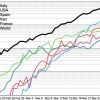
Coronavirus: Country Comparisons are Pointless Unless We Account for These Biases in Testing
Suppose we wanted to estimate how many car owners there are in the UK and how many of those own a Ford Fiesta, but we only have data on those people who visited Ford car showrooms in the last year. If 10% of the showroom visitors owned a Fiesta, then, because of the bias in the sample, this would certainly overestimate the proportion of Ford Fiesta owners in the country.
Martin Khor, Third Worldist
Martin Khor Kok Peng passed away just after the end of the first quarter of 2020. He leaves behind an unusually rich legacy. Atypically for people mainly working in the worldideas, he was also a very practical and pragmatic activist who successfully built and sustained several important initiatives which will live on after him.
U.N. Releases Report on Socio-economic Effects of Coronavirus
As the number of coronavirus cases continues to grow, concerns are simultaneously growing about the current and long-term effects this will have on certain demographics -- specifically, women, the youth, migrant workers, and many employees around the world.
In memoriam ‒ Martin Khor
We are greatly saddened by the passing of Martin Khor, a long-time friend and colleague, an undaunted fighter for the poor and underprivileged, a passionate believer in a more balanced and inclusive multilateralism, a rare intellectual and eloquent orator, an icon of the Global South worthy of veneration, greatly respected for his struggle for justice and fairness against the dominance and double-standards of big economic powers.
What More than COVID-19 to Jolt G20 into Collective Action?
My recent study on “The G20@10: Time to shift gears” 1 shows that, during the past decade, the main joint, collective action of the G20 has been to issue communiqués and other types of statements.
Can We Use Digital Technology to Cushion the Pandemic’s Blow?
As the world grapples with COVID-19, governments face a daunting challenge: limiting the adverse impact of a pandemic that has ground economic activity to a halt, affecting people at a scale rarely seen before.
Dangers and Lessons of Present Multiple Crises
The Covid-19 pandemic, erupting in the background of lethargic global economy, could turn out to be the singular biggest crisis in a century. First reported in Wuhan, China, the corona virus has reached almost all countries. It has infected close to 1 million persons and caused over 40,000 deaths at time of writing; and the figures keep climbing. It is a health catastrophe which if not checked in its track would be the most serious since the Spanish Flu of 1918 that killed over 50 million people.
The Economic Impact of COVID-19 on Developing Countries
What is likely to be the impact of the COVID-19 pandemic on developing economies? It is difficult to make predictions, because much will depend on the spread of the disease, especially in Africa, Latin America, Asia and the Middle East, and the measures various Governments will take in the coming weeks and months.
The Need for Empathy in the Time of Coronavirus
The experience and interpretation of the Coronavirus pandemic oscillates between the personal and the general spheres. The official discourse and measures taken by authorities have a direct impact on our lives, change our daily existence and foster worries for the future. A dark cloud of uncertainty hovers above us. What do decision makers know? What can they do? What can we do? Many of us are secluded in our own homes, others in wards or hospitals, or even alone and far away from the ones they love:
Walking the Talk on Climate Change after the Pandemic: Reorienting State-Owned Enterprises towards Sustainability
This year started with the news of the appearance of a new virus, COVID-19. The impact and severity of its effects in public health, mortality and the world economy are overwhelming. No public health system was prepared for this crisis, and yet governments are reacting deploying different policies to mitigate the crisis, and recover as fast as possible.« Previous Page — Next Page »


The Week with IPS

NEXT STOP - SDGs
Tracking global progress towards a sustainable world
Tracking global progress towards a sustainable world
