Languages
Wednesday, November 18, 2026



News and Views from the Global South
Global

The Global Economy of Pulses: Impressive Gains and the Way Forward
Pulses are highly nutritious and their consumption is associated with many health benefits. They are rich in proteins and minerals, high in fibre and have a low fat content. Pulses are produced by plants of the Leguminosae family. These plants have root nodules that absorb inert nitrogen from soil air and convert it into biologically useful ammonia, a process referred to as biological nitrogen fixation. Consequently, the pulse crops do not need any additional nitrogen as fertilizer and help reduce the requirement of fossil fuel-based chemical nitrogen fertilization for other crops. Expansion of pulse production, therefore, can play a vital role in mitigating the effects of climate change.
This Time Around ICPD25 Commitments Will Be Met Says UNFPA …
 The United Nations Population Fund, UNFPA Ethiopia country representative, Bettina Maas speaks to IPS at the ICPD25 Nairobi Summit and she says she is optimistic that this time around that the three critical commitments; bringing preventable maternal deaths, gender based violence and harmful practices, as well as unmet need for family planning to zero will be realized.
Will Artificial Intelligence Help Resolve the Food Crisis?
When UN Secretary-General Antonio Guterres made a global appeal for “zero hunger” on World Food Day last month, he provided some grim statistics rich in irony: more than 820 million people do not have enough to eat, he said, while two billion people are overweight or obese.
Young People at ICPD25: ‘ We Have the Right to Sexual and Reproductive Rights’
Every day in developing countries it is estimated that 20,000 girls under the age of 18 give birth. This amounts to 7.3 million births a year.
The UN at 75: Time to Give Citizens a Voice
Next year the United Nations will commemorate its 75th anniversary. The General Assembly determined that all the UN’s activities in 2020 shall be guided by the theme “The future we want, the United Nations we need: reaffirming our collective commitment to multilateralism”.
Campaign Targets UNESCO’s Tie-up with ‘Saudi Spies’
The United Nations faces renewed criticism over its partnership with Saudi Arabia’s Misk Foundation amid revelations that the charity is headed by the mastermind of a recent Twitter spying operation.
World Youth Call to Governments to Ban All Hindrances to LGBTQI Communities
Governments across the world must ban all state-implemented harmful practices against the Lesbian, Gay, Bisexual, Transgender, Queer and Intersex (LGBTQI) community delegates at the ICPD25 tells IPS.
ICPD25: Lessons From the East
The Japan Parliamentary Federation for Population represented by Mr Teruhiko Mashiko and its secretariat, the Asian Population and Development Association (APDA) has made a clear and concrete commitment to endorse the ICPD25 agenda. Mashiko tells IPS that Japan, as should every country driven by the well-being of its population, should create the best possible conditions to achieve the ICPD25 agenda.
A New Deal for Sustainable Development
Almost nine decades ago, newly elected US President Franklin Roosevelt introduced the New Deal in 1933 in response to the Great Depression. The New Deal consisted of a number of mutually supportive initiatives, of which the most prominent were: a public works programme financed by budget deficits; a new social contract to improve living standards for all working families, including creation of the US social security system; and financial regulation to protect citizens’ assets and channel financial resources into productive investments.
How can Taps, Toilets & Good Hygiene Help Ensure Sustainable & Resilient Agricultural Supply Chains?
Water underpins the global economy and agriculture is by far the world’s largest water consumer, accounting for 70% of freshwater withdrawals. Global water demands are projected to increase by 55% by 2050 and climate change will present further pressures on water accessibility.
Cairo Dream Requires $264 Billion to Deliver Women’s Call for Justice and Bold Leadership
For each of the 830 women dying each day from pregnancy complications and childbirth, an estimated 20 others suffer serious injuries, infections or disabilities. This is the reality that millions of women face, and informs the Nairobi Summit’s three critical commitments which are to bring preventable maternal deaths, gender-based violence and harmful practices, as well as unmet need for family planning, to zero. To achieve this objective money is needed.
Nairobi Summit to Redouble Efforts to Urgently Deal with Reproductive Rights for Women and Girls
More than 6 000 delegates in the population development sector are gathering in the Kenyan capital of Nairobi this week to renew the promise made to girls and women 25 years ago in Cairo.
The Slippery Slope to Autonomous Killing Machines
Would you trust an algorithm with your life? If that thought makes you uncomfortable, then you should be concerned about the artificial intelligence (AI) arms race that is secretly taking off, fueled by the arms industry.
Call to Action as Thousands Breathe New Life to the Cairo Promise at ICPD 25 Summit in Nairobi This Week
Every day 830 women die while giving life. At least 33,000 girls are forced into child marriage with 11,000 girls undergoing female genital mutilation. These are some of the cruel realities young women face every day. However, there is renewed hope that delegates expected to attend the International Conference on Population and Development (ICPD) in Nairobi this week will re-energise and breathe new life to the Cairo Promise.
UN Peacekeeping Should Not Violate Charter or Principles of Sovereignty of Member States
Given the political, economic and social exigencies of contemporary peacekeeping, it is important that the Department of Political and Peacebuilding Affairs (DPPA) remains engaged in the process.
Can India’s Solar Gift Help a Cash-Strapped UN?
While the UN grapples with weighty global matters, can an Indian gift solve an unlikely matter of great concern to journalists and staffers – a partial shutdown of an escalator as part of the world body's austerity measures?
The Nairobi Summit Is about the Future of Humanity and Human Prosperity
As we count down the remaining days to the opening of the Nairobi Summit or the International Conference for Population and Development(ICPD), I am confounded by how much humanity has managed to simultaneously empower more women than at any other time in history, while at the same time failing to see that ‘women’s issues’ are actually ‘everyone’s issues’.
Urgent Need to Replace Competition with Cooperation in the Aral Sea Basin
The water resources in Central Asia’s Aral Sea Basin support the lives and livelihoods of about 70 million people — a population greater than Thailand, France, or South Africa.
Europe’s Green Deal is Turning Red
Global temperatures are set to rise by a catastrophic 3°C by the end of the century unless we take major action. The next 10 years in particular are crucial.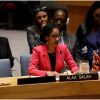
The Fight for Bread Became a Fight for Freedom
My name is Alaa Salah. I am 22 years old and I grew up in Khartoum. Before the revolution, I was a student of architectural engineering. I did not grow up around politics, but in an ordinary middle-class family—my mother is a designer and my father owns a construction company.
Trade Liberalization for Development?
The International Monetary Fund (IMF), the World Bank and the World Trade Organization (WTO), all dominated by rich countries, have long promoted trade liberalization as a ‘win-win’ solution for “all people—rich and poor—and all countries—developed and developing countries”, arguing that “the gains are large enough to enable compensation to be provided to the losers”.« Previous Page — Next Page »


The Week with IPS

NEXT STOP - SDGs
Tracking global progress towards a sustainable world
Tracking global progress towards a sustainable world
