Languages
Monday, November 9, 2026



News and Views from the Global South
Headlines

COP16 Agrees to Raise Funds to Protect Biodiversity
The second round of the UN Biodiversity Conference, COP16, concluded in the early hours of Friday, February 28 in Rome, with an agreement to raise the funds needed to protect biodiversity.
Looming Tariffs Threaten Food Supplies
Who bears the brunt in trade wars? The answer is absolutely everyone. Not just the countries enacting or retaliating with tariffs and export bans, and not just the citizens of those countries. It’s everyone.
U.S. Passes on UN Ukraine Resolution amid the Humanitarian Crisis
From late 2024 to early 2025, the humanitarian situation in Ukraine has taken a turn for the worst, with poverty, violence, displacement, and damage to critical infrastructures having grown in intensity. Following the 2022 invasion of Ukraine by Russia, tensions have grown among member states of the United Nations (UN) on how to resolve the Russo-Ukrainian War.
The Impact of US Funding Freeze on Civil Society Around the World
The U.S. administration has the prerogative to review and adjust public expenditure policies, including foreign aid. However, this power must be exercised responsibly, adhering to national and international legal frameworks, including the principles of human rights law.
African Leaders Challenged To Unite Against Energy Transition Mineral Oppressors
Renewable energy and climate change activists have challenged African heads of state to take a united stance to safeguard essential mineral resources, particularly in the Democratic Republic of the Congo (DRC) and other parts of the continent, which are selfishly exploited by foreign miners with disregard for poverty-stricken local communities.
20 Years of the WHO FCTC: It’s Time to Make Big Tobacco Pay
The world took a historic step in the fight against tobacco when the World Health Organization Framework Convention on Tobacco Control (WHO FCTC) came into force—the first legally binding global health treaty of its kind.
Hortolandia Emerges as an Energy and Environmental City in Brazil
Almost everything seems new or under construction in the southern Brazilian city of Hortolandia, from its wide avenues and cable-stayed bridge to its large buildings and riverside parks.
Governments Are Having A Hissy Fit Over It
Yeah, governments are having a hissy fit over it. And their hissy fit is not over the usual concerns of governments such as defense, the economy, trade, inflation, unemployment, crime, or terrorism.
Life-Changing Quarry Mining Shatters Lives in Zimbabwe
On Christmas Day in 2022, 27-year-old Thabani Dlodlo’s eight-year-old son drowned in a flooded pit dug up by quarry miners in the vicinity of Pumula North, a high-density suburb in Bulawayo, Zimbabwe’s second-largest city. As if that was not enough, just a week after New Year’s Day the following year, Dlodlo’s neighbor, 36-year-old Sethule Hlengiwe, also lost her six-year-old daughter after she drowned in another pit flooded with rainwater near her home in Bulawayo.
How AI Can Help Both Tax Collectors and Taxpayers
New technologies have the potential to improve the relationship between governments and citizens. Tax portals, customs IT systems and online services have simplified interactions with public authorities, reduced bureaucratic hurdles, and increased transparency. Now, generative artificial intelligence (GenAI) is emerging as the next transformative force.
Mexican Electric Vehicles Struggle to Accelerate
Mexico has seen several attempts at assembling electric vehicles (EVs), powered by rechargeable batteries, which have faced challenges related to industrial scale, supply chains, and competitiveness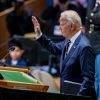
DAWN Calls on ICC to Investigate U.S. Officials for War Crimes in Gaza
On February 24, the human rights organization Democracy for the Arab World Now (DAWN) called on the International Criminal Court (ICC) to investigate former U.S. President Joe Biden, Secretary of State Antony Blinken, and Secretary of Defense Lloyd Austin, among other U.S. government officials, for aiding and abetting Israeli war crimes that deliberately infringed on human rights in the Gaza Strip. This poses significant implications for the future of U.S. foreign policy and the role of impunity in world conflicts.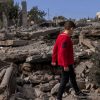
Outlook for 2025: Strengthening the Foundations of Children’s Futures
In 2025, the world is facing a new and intensifying era of crisis for children. Climate change, economic instability, and conflict are hitting harder and more often, intersecting in ways that make the challenges of addressing them even more severe.
America First Deepens World Stagnation
Donald Trump’s Make America Great Again (MAGA) appeal captured US mass discontent against globalisation. In recent decades, variations of America First have reflected growing ethnonationalism in the world’s presumptive hegemon.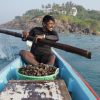
Mussel Divers in Kerala Face Livelihood Loss, with Species Habitat Under Threat
Ibrahim Basheer plunges into the sea and disappears. He remains gone for a couple of minutes before resurfacing for a deep breath of air, repeating this for the next half an hour. When he finally climbs aboard his boat, the net sack around his neck is filled with mussels—his catch for that diving trip. He rests for a short while before diving into the sea again—needing one more such trip to fill the basket he has brought along.
Civil Society at the Finance in Common Summit Calls for Community-led, Equitable, and Human Rights-based Development
As public development banks gather for the Finance in Common Summit (FiCS) in Cape Town, South Africa, civil society and community activists from across the world are demanding a shift to a community-led, equitable, and human rights-based development approach, that prioritise people and planet over profit, and a reform of the global financial architecture.
The Caribbean Mourns Loss of a Singular Writer
Jamaican writer Velma Pollard provided a special kind of sunlight in the Caribbean literary space. Known across the region for her warm personality and welcoming nature, she also defied simple classification as she shone beyond genre. The work she has left behind encompasses short stories, poetry, academic writing, and novellas. She was also a keen naturalist photographer.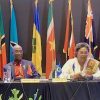
CARICOM Leaders Take Steps to Tackle Crime, Climate, Trade and Food Crises
CARICOM leaders wrapped up a crucial meeting on February 21, reaffirming their commitment to tackling pressing regional challenges with unity and resolve. From crime and security to education, trade and climate change, the leaders highlighted the need for decisive action amid global uncertainties.
Global Heating in The Coldest Place on Earth
It was 7:30 a.m. I got ready the fastest I could, adrenaline kicking in, curiosity and excitement peaking. I rushed out of my cabin, opened the big exit door, and there in front of me was the first visual of the majestic white continent - Antarctica.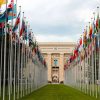
Is the UN’s Human Rights Agenda in Jeopardy?
The UN’s human rights agenda is in danger of faltering since the Geneva-based Office of the High Commissioner for Human Rights (UNHCHR) is planning to “restructure” the office, under the moniker OHCHR 2.0. But this proposal, if implemented, would result in the abolition of the Special Procedures Branch, established by the Human Rights Council (HRC), to report and advise on human rights from thematic and country-specific perspectives.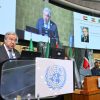
Humanitarian Groups Face Challenges in Reaching the Sudanese Displaced Population
In the final quarter of 2024 ,there has been an escalation in the Sudanese civil war, with armed clashes between the Rapid Support Forces (RSF) and the Sudanese Armed Forces (SAF) having grown in brutality. Heightened insecurity has pushed millions of people into displacement, hunger, and poverty. Additionally, the continued hostilities have made it difficult for humanitarian organizations to scale their responses up.« Previous Page — Next Page »





