Languages
Sunday, October 25, 2026



News and Views from the Global South
Health

Statement on the G7 Hiroshima Summit, the Ukraine Crisis and “No First Use” of Nuclear Weapons
The Ukraine crisis, which in addition to bringing devastation to the people of that country has had severe impacts on a global scale—even giving rise to the specter of nuclear weapons use—has entered its second year. Against this backdrop and amid urgent calls for its resolution, the G7 Summit of leading industrial nations will be held in Hiroshima, Japan, from May 19 to 21.
New Mosquito Species Could Derail Fight Against Malaria
‘Urban’ Kenya has been alerted because new mosquito species, Anopheles stephensi, threatens to derail decades of effort made in the fight against malaria.
Can a Pledge to End TB Stick This Time Around?
This week, the United Nations will host two days (May 8-9) of preliminary talks to plan a larger conference on tuberculosis (TB) in September. These preliminary talks will be held in New York City, the epicenter of the last significant surge of TB cases in the United States (U.S.) thirty years ago.
How the Rise of Timor-Leste’s Aquaculture Sector Is a Blueprint for Other Small Island Nations
For Timor-Leste, as with most other islands in the Pacific, fortunes are to be found in fish – an equity food available to all regardless of status.
Tuberculosis Risk Factors Exacerbated by Climate Change
While there is no established causal relationship between climate change and tuberculosis (TB), studies have begun to highlight the potential impact its effects could have on the spread of the disease.
Rising to the Challenge: The UN Road Safety Fund in a Polycrises World
Crises may be a centuries-old phenomenon, but so too is human resilience.
Mercury Project Puts Great UNEP Treaty at Risk
The Minamata Convention on Mercury, a stellar success story to date, has been favorably compared to the prototype success story for a treaty on toxins: the Montreal Protocol. Both had a single focused mission; both gained universal support across the globe; both matched technological innovation with environmental science to discard old polluting methods.
The Last Mile to Malaria Elimination: Confronting Gender Inequalities & Power Dynamics
For centuries, malaria has remained one of the deadliest diseases, inflicting great suffering on families and perpetuating the cycle of poverty in many communities and nations. The African region currently accounts for 95% of malaria cases and 96% of malaria deaths globally, with women and girls disproportionately affected by the disease.
Politics Behind the Removal of Mughal History From Textbooks Say Academics
The removal from school textbooks of chapters covering the Mughal period of Indian history spanning three centuries has raised a storm of protests from academics.
Superbugs Among Top 10 Threats to Whole Cycle of Life
Research after research, world's scientists renew their loud alerts against the high dangers of human-driven ‘superbugs' - bacterias and pathogens that no longer respond to antimicrobials, making infections harder to treat and increasing the risk of disease spread, severe illness and death.
Neglected Tropical Disease Mycetoma Research Gains Momentum
The disease burden and distribution of mycetoma—a neglected tropical disease—are not very well understood. However, it is known to affect people in Sudan, Senegal, Mauritania, Kenya, and Niger, as well as people in Nigeria, Ethiopia, India, and Cameroon. Cases have also been reported in Djibouti, Somalia, and Yemen.
Platitudes not Enough: Urgent Investment Needed in Health Workforce
As World Health Worker Week draws to a close on April 7, health organizations from around the world have been celebrating women’s vital role in the health workforce and sharing stories about the enormous value they bring to all areas of health and care.
WORLD AUTISM AWARENESS DAY 2023

This is David. He is becoming an exceptional chess player. This is Mai. She loves beaches and the ocean. This is Kwame.

Our Wonderful Differences Enriches Societies
When is too much Autism awareness still not enough? This thought recurs every April as we near World Autism Day on April 2, and parents reach out to me after reading enthusiastic and well-meaning news and journal articles – which are actually harmful and hurtful.
The LGBTIQ+ Community Still Oppressed in Venezuela
The vulnerability and struggles of the LGBTIQ+ community in Venezuela were once again highlighted when the Supreme Court finally annulled the military code statute that punished, with one to three years in prison, members of the military who committed " acts against nature.”
Ethiopian Government Must Prioritize Access To Quality Surgery in Post-War Reconstruction
There are about 5 billion people globally who cannot access surgery. In Ethiopia, for every 5,000 needed surgeries per 100,000 people, the country’s health system can only provide 192. Yet, this is Africa’s second largest population, with over 120 million people.
Quo Vadis Republic of Mauritius?
On 12th March 2023, The Republic of Mauritius celebrates 55 years of post-independence history. It would be an understatement to just say that there has been a lot of water under the bridge on our journey to self-determination!.. Indeed, we have made massive progress since we lowered the Union Jack and unfurled our own flag. It was and remains a moment of great pride whenever I see our flag in any international event, I participate in.
Beatriz v. El Salvador Case Could Set Precedent on Abortion in Latin America
An open hearing in the Inter-American Court of Human Rights in the Beatriz v. El Salvador case is raising hopes that this country and other Latin American nations might overturn or at least mitigate the severe laws that criminalize abortion.
If We Value Human Rights and the Rule of Law, Then We Must Fight for Climate Justice
Human life is sacred and every individual deserves an equal chance in life. We have a common desire, we all want to lead a free, fulfilling existence, with dignity, where our basic needs are met, with opportunities to advance and equal treatment under the law. These are fundamental human rights, protected by international law, which we all have a shared responsibility to protect.
Why Gender Transformative Leadership is Key to Ending TB– for Good
Despite being both curable and preventable, the TB pandemic is a global health crisis and a leading cause of death worldwide. COVID-19 brought into sharp focus how women bear the brunt of pandemics. In 2021, over three million women and girls fell ill with TB, resulting in 450,000 needless deaths.
The ‘Vampiric’ Draining and Poisoning of Lifeblood: Water
Shockingly, the human suicidal war on Nature not only continues unabated but is also set to become even more virulent. Just to start with, please be reminded that groundwater accounts for 99% of all liquid freshwater on Earth, according to the 2022 UN World Water Development Report.« Previous Page — Next Page »





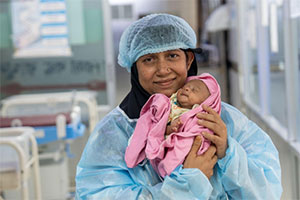 Bangladesh: Sarid, born one month early, receives specialized newborn care and grows stronger every day. Credit: UNICEF/UNI944397/Mojumder
Since the onset of the 2000s, global life expectancy has seen an overall rise, attributed to significant technological and scientific innovations in healthcare. Due to an increased understanding of different conditions as well as a rise in cooperation among healthcare experts around the world, there have been major strides made in ensuring that as few people die from chronic illnesses as possible. Despite the belief that healthcare is a fundamental human right, people from low- or middle-class backgrounds, marginalized groups, and underdeveloped countries have far more limited access to basic healthcare services.
The COVID-19 pandemic showed how marginalized communities are disproportionately affected by health crises, proving that we have much work to do in ensuring that no one dies of terminal conditions. While the global response to the coronavirus saw significant strides in immunization and vaccine development, the global outbreak of mpox in 2022 and its upsurge in parts of Africa in 2024 must remind us to remain vigilant.
Other major disease outbreaks in recent years have been linked to the destruction of infrastructure during warfare. Notably, in 2024, the Gaza Strip witnessed a return of the poliovirus since its eradication in the region 25 years ago. Israel’s blockade on Gaza has resulted in the collapse of the region’s sewage plants and desalination plants, and also destroyed healthcare capacities. The UN stated that this lack of clean water and sanitation would lead to an outbreak of cholera and other deadly infectious diseases. The 2026 OCHA Humanitarian Situation Report confirmed that the over two years of conflict in Gaza has produced a catastrophic health emergency, with millions remaining dependent on relief aid amid tight restrictions and no functioning public health system.
IPS is committed to providing full and comprehensive coverage on healthcare challenges around the world. IPS seeks to address the multifaceted causes of such challenges, including unprecedented pandemics, conflict-driven disease outbreaks, as well as socioeconomic barriers to equal healthcare access. IPS is also dedicated to reporting on innovations in the healthcare industry.

The Week with IPS

NEXT STOP - SDGs
Tracking global progress towards a sustainable world
Tracking global progress towards a sustainable world
