Languages
Wednesday, August 12, 2026



News and Views from the Global South
Health

Roe Overturned: What You Need to Know about the US Supreme Court Abortion Decision
After half a century, Americans’ constitutional right to get an abortion has been overturned by the Supreme Court. The ruling in Dobbs v. Jackson Women’s Health Organization – handed down on June 24, 2022 – has far-reaching consequences. The Conversation asked Nicole Huberfeld and Linda C. McClain, health law and constitutional law experts at Boston University, to explain what just happened, and what happens next.
Urgent Need to Enact Proposed Law to Secure Sexual and Reproductive Health in East Africa Countries
The Ministry of Health in Kenya recently reported that about 700 teenage girls got pregnant daily over a two-month period, in this year alone. What is more is that during this period, 98 adolescent girls between the ages of 10 and 19 contracted HIV every week in this time period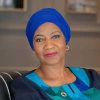
‘When it Comes to Gender Equality, Our Best is Not Good Enough’: says Dr Phumzile Mlambo-Ngcuka
 The Covid-19 pandemic has impacted lives all over the world. According to this report, gender is emerging as a significant factor in the social, economic and health effects of Covid-19. Women have been hit much harder socially and economically than men. The greatest and most persistent gender gap was seen in employment and uncompensated labour, with 26% of women reporting loss of work compared with 20% of men globally in September 2021.
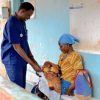
Stronger Healthcare Systems Critical for Africa’s Socioeconomic Transformation
Since the outbreak of the COVID-19 pandemic, healthcare systems globally have battled to deal with the repercussions unleashed by the disease. From the outset, Africa was considered particularly vulnerable due to several factors: limited healthcare provision in some areas, high prevalence of HIV and TB in a number of countries, and limited fiscal room to respond to the pandemic’s financial impacts.
The Sustainable Use of Wild Species is Important for Everyone
You probably use wild species far more often than you realise. For many people, especially in more developed economies, the use of wild species sounds like something quite removed from their everyday lives – something perhaps more relevant to other people, in other countries.
Polio Eradication Will Take Funds and Awareness
For forty days, Kunle Adeyanju – a Nigerian, Rotarian, polio eradication advocate and biker - rode for more than 12,500km from London to Lagos to raise funds for polio eradication.
Tobacco Consumption Slows in the West, Grows in Africa, say Researchers
Cigarette smuggling has emerged as one of the most lucrative enterprises between Zimbabwe and South Africa, with border authorities seizing contraband worth millions of dollars in recent years.
The Battle for Covid-19 Vaccines: the Rich Prevail Over the Poor
The 164-member World Trade Organization (WTO) has implicitly rubber-stamped a widely-condemned policy of “vaccine apartheid” which has discriminated the world’s poorer nations, mostly in Africa and Asia, depriving them of any wide-ranging intellectual property rights. As Max Lawson, Co-Chair of the People’s Vaccine Alliance and Head of Inequality Policy at Oxfam, said at the conclusion of the WTO’s ministerial meeting last week: “The conduct of rich countries at the WTO has been utterly shameful”.
Small-Scale Fishers in Central America Demand Social Security Policies
At the pier, Salvadoran fisherman Nicolás Ayala checked the pocket of his pants to make sure he was carrying the hypertension pills he must take when he is at sea on a 24-hour shift. He smiled because he hadn’t forgotten them.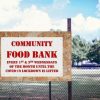
Ending Hunger in America: Here’s What the White House Conference on Hunger, Nutrition and Health Should Do to Be Inclusive
This September, the White House will convene a conference on Hunger, Nutrition, and Health. Leading up to the conference, the White House is organizing several virtual listening sessions across America to hear firsthand from people impacted by food insecurity and to collect ideas about how to end hunger and hunger-related diseases and disparities.
Elder Abuse: Human Rights Have an Expiration Date
1 in 6 people over 60 years of age –nearly 141 million people globally– suffers from abuse, according to World Health Organization (WHO) estimates.
How to Stop the ‘Hunger Pandemic’ During COVID-19
Johnny, living in the United States (US), goes to his school and gets free breakfast and lunch there. There may not be enough food for dinner at home. But he knows that he can get fed at school. Sadly, however, after the pandemic, schools were closed, which meant no breakfast and no lunch for him.
African Solutions to African Problems: Reframing Science Innovation
Africa is plagued by many epidemics — from tuberculosis and HIV/AIDS to malaria and wild polio — but the continent has also worked for decades to fight these threats. The key to beating these deadly diseases is turning inward to existing expertise and finding locally driven solutions.
Global Community Urged Not to Relent in Final Push to Eliminate Leprosy
When Yohei Sasakawa visited a remote village in Cameroon, he found 23 people living there.
Meaningful Dialogue Amplifies Youth Issues, Leads to Change
Young people are often the first to rebuild their communities. However, youths' diverse challenges cannot be addressed without meaningful dialogue, says Klaus Beck, Regional Director of UNFPA APRO ai.
Education Cannot Wait Interviews UNICEF Executive Director Catherine M. Russell
Catherine M. Russell became UNICEF’s eighth Executive Director on 1 February 2022. Ms. Russell brings to the role decades of experience in developing innovative policy that empowers underserved communities around the world, including high-impact programmes that protect women and girls, including in humanitarian crises. She has extensive experience building, elevating and managing diverse workforces and mobilizing resources and political support for a broad range of initiatives.

Developing countries and the Perfect Storm
Part II: What Developing Countries Need to Do
Developing countries are facing a combination of crises that are unprecedented in recent times. Over the last three years they have had to face the COVID-19 crisis, the food crisis, the energy crisis, the climate change crisis, the debt crisis and, on top of all this, a global recession. The crises have overlapped, and each has added to the problems created by the previous ones.

Over Two Decades of Impunity for Environmental and Health Disaster in Peruvian Village
"We are not asking for money, but for our health, for a dignified life," is the cry of the people of Choropampa, which lawyer Milagros Pérez continually hears 22 years after the environmental disaster that occurred in this town in the department of Cajamarca, in Peru´s northern Andes highlands, on the afternoon of Jun. 2, 2000.
Developing Countries and the Perfect Storm
Part I: What Should Developed Countries Do?
Developing countries – in Africa, in Asia, in Latin America and in the Middle East - are facing a combination of crises that are unprecedented in recent times. Over the last three years they have had to face the COVID-19 crisis, the food crisis, the energy crisis, the climate change crisis, the debt crisis and, on top of all this, a global recession. The crises have overlapped, and each has added to the problems created by the previous ones.

Davos Fails on Financial Transparency – And Everything Else
At this year’s World Economic Forum (WEF) at Davos which ended last week, the attention of the world’s financial and economic elite was captured by the war in Ukraine whose president Volodimir Zelensky used his address to call to “complete withdrawal of foreign businesses from the Russian market”, despite 380 of the largest multinational companies still operating in Russia.
COVID and Discrimination Aggravated Maternal Mortality in Latin America
Brazil had the dubious distinction of champion of maternal mortality in Latin America during the COVID-19 pandemic, with a 77 percent increase in such deaths between 2019 and 2021.« Previous Page — Next Page »


