Languages
Tuesday, November 17, 2026



News and Views from the Global South
Health
Children in Out-of-Home Care: Lessons from the Pandemic
As the world continues to struggle with the Covid-19 pandemic, the situation in institutions like prisons or care homes has shown how quickly overcrowded facilities can become a breeding ground for an infectious disease. But what about other congregate facilities like residential institutions for children, such as orphanages? What risks do they face? And how should governments be responding during - and after - this pandemic?
Sudan, Where Illegal Abortions remain Dangerous and Deadly
Omnia Nabil*, a Sudanese doctor, who worked in one of the largest hospitals in Khartoum, the country’s capital, was devastated to witness the deaths of 50 young women who had unsafe abortions during a space of just three months.
Agriculture: Rooted in Racism
There has been far less social progress in the United States in the last 155 years than many people would like to believe. In 2020, racism still seeps its way into every aspect of life; from unconscious bias and micro-aggressions in everyday interactions to domestic and international policy and enforcement.
The Foundation to Build Back Better: Education
To realize the concept of ‘build back better,’ we need a foundation. That foundation is education. This is an incontestable truth.
Helping Bangladesh Recover from COVID-19
One of the most densely populated countries in the world, Bangladesh exemplifies the triple blow that many emerging market countries have suffered from COVID-19: domestic slowdown caused by the disease and the efforts to contain its spread; a sharp decline in exports, particularly in the ready-made garment sector, and a drop in remittances. Its once robust economy has dramatically slowed in recent months.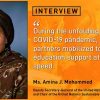
Education Cannot Wait Interviews Amina J. Mohammed, Deputy Secretary-general of the United Nations
Ms. Amina J. Mohammed is the Deputy Secretary-General of the United Nations and Chair of the United Nations Sustainable Development Group. Prior to her appointment, Ms. Mohammed served as Minister of Environment of the Federal Republic of Nigeria where she steered the country’s efforts on climate action and efforts to protect the natural environment. Ms. Mohammed first joined the United Nations in 2012 as Special Adviser to former Secretary-General Ban Ki-moon with the responsibility for post-2015 development planning. She led the process that resulted in global agreement around the 2030 Agenda for Sustainable Development and the creation of the Sustainable Development Goals.
Food Insecurity Concerns for Latin America and the Caribbean
The multi-dimensional impacts of the coronavirus pandemic in Latin America could lead to a “hunger pandemic” if not addressed with urgency.
We Should Not Aim to Return to Normal
The world before COVID-19 looks very attractive right now. In light of the disease, mass unemployment and social distancing, a return to pre-pandemic normality seems appealing. Yet we should remember what normal was.
Meritocracy Legitimizes, Deepens Inequality
How often have you heard someone lamenting or even condemning inequality in society, concluding with an appeal to meritocracy? We like to think that if only the deserving, the smart ones, those we deem competent or capable, often meaning the ones who are more like us, were in charge, things would be better, or just fine.
Women Leadership Is Key to Successful Post-COVID-19 Era, Says Cherie Blair
The impact of COVID-19 lockdowns falls heavily on the shoulders of women even in the global north. Women take the brunt of housework and caretaking duties, homes schooling, working from home and perhaps looking after elderly parents, says Cherie Blair.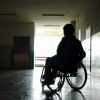
COVID-19 has Further Marginalised Persons with Disabilities
Since the beginning of the year, more than 200 nations across the globe have been affected by COVID-19. Many are still reeling under the devastating effects of the pandemic, with both public health and the global economy having taken a major blow.
Reviving the Economy, Creating the ‘new Normal’
The Covid-19 pandemic has significantly impacted most economies in the world. Its full impacts will not be felt, let alone measured, until it runs its course. Many countries are still struggling to contain contagion, while the costs on both lives and livelihoods will undoubtedly have long-term repercussions.
Delaying Death Amid the Coronavirus Pandemic
While the end of life remains the inescapable fate of every man, woman and child, death can be delayed as has been demonstrated repeatedly throughout human history. Amid the current coronavirus pandemic, a paramount objective is delaying death from Covid-19 for many millions of people across the globe.
Human and Societal Behaviour: How Pandemics Have Shaped Them
The departing German envoy in Singapore, Ambassador Ulrich Sante, in a recent published article in the Straits Times shared some of his thoughts with the readership including on the impact on the community of the COVID-19 Pandemic. Among other things he has noted that it has implanted in us what in German is called Lebensangst, literally meaning ‘fear of life’ but in a broader sense, the loss of trust in resilience, and coldness. He has impassionedly argued: “We need to regain trust in each other again, to show warmth and affection and not treat everyone as potential messengers of death. Social distancing serves its purpose, but it cannot be a recipe for all time. It has the power to lead to social division, perhaps the most serious danger our societies face these days”. He is right. There is nothing to replace a light touch or a gentle caress to bring humans closer together. The handshake and the embrace were tools devised as humanity progressed towards civilized conduct, as these acts were performed to demonstrate that those hands carried no weapons.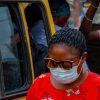
African Development Bank COVID-19 response: moving from commitment to action
The African Development Bank has responded swiftly to the needs of its member countries during the ongoing COVID-19 pandemic.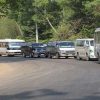
Delivering Humanitarian Assistance in Cox’s Bazar During COVID-19
The novel coronavirus has affected the lives of millions worldwide at its very onset. The situation in Bangladesh is no different. Wearing masks and washing hands frequently have become the new normal. The first laboratory confirmed COVID-19 case was identified in Cox’s Bazar on 23 March. Unforeseen circumstances often lead to unprecedented innovative actions as is exemplified by a Humanitarian Access Project.
Racism and Dominance
The #MeToo movement triggered worldwide protests that hopefully was instrumental in making people better aware of a continuous and often hidden mistreatment of women. Maybe can the current I can’t breathe movement make people realize that institutional racism is far from extinct.
Impact of COVID-19 on Women in South Asia
Prior to the onset of the coronavirus crisis South Asian women participated only sparingly in the labor market. Even though South Asia was and still has the potential to become one of the fastest growing regions in the world (post COVID19) female labor force participation rates were low at 23.6% compared to 80% for men (World Bank figures).
Target Boys to Break Menstruation Taboos
An all-male panel assembled to discuss menstrual health on International Menstrual Hygiene Day sparked outrage on social media and a flurry of memes of all-female panels discussing male issues.China’s “Two Sessions”, and the Hiccups in Hong Kong
The eyes of much of the world were focused on Beijing during the last week of May. That was because China had scheduled for that time-perod what is generally collectively termed “Two Sessions” or Lianghui in Mandarin. These are back-to-back annual parliamentary meetings of the Chinese People’s Political Consultative Conference (CPPCC) and the National People’s Congress (NPC). The event usually take place in March, but this year had to be pushed back to May because of the COVID virus. Again, ordinarily, these last ten days, but this year, for the same reason, the period was compressed to a week.
Strengthening Economic Institutions for a Resilient Recovery
Exceptional times call for exceptional action. In response to COVID-19, the IMF has moved with unprecedented speed and magnitude of financial assistance to help countries protect lives and livelihoods. Economic stabilization and a sustainable recovery, however, will require more than financial assistance. For recovery to be sustainable, policymakers will need to strengthen economic institutions that enable resilient, inclusive policies.« Previous Page — Next Page »


 Bangladesh: Sarid, born one month early, receives specialized newborn care and grows stronger every day. Credit: UNICEF/UNI944397/Mojumder
Since the onset of the 2000s, global life expectancy has seen an overall rise, attributed to significant technological and scientific innovations in healthcare. Due to an increased understanding of different conditions as well as a rise in cooperation among healthcare experts around the world, there have been major strides made in ensuring that as few people die from chronic illnesses as possible. Despite the belief that healthcare is a fundamental human right, people from low- or middle-class backgrounds, marginalized groups, and underdeveloped countries have far more limited access to basic healthcare services.
The COVID-19 pandemic showed how marginalized communities are disproportionately affected by health crises, proving that we have much work to do in ensuring that no one dies of terminal conditions. While the global response to the coronavirus saw significant strides in immunization and vaccine development, the global outbreak of mpox in 2022 and its upsurge in parts of Africa in 2024 must remind us to remain vigilant.
Other major disease outbreaks in recent years have been linked to the destruction of infrastructure during warfare. Notably, in 2024, the Gaza Strip witnessed a return of the poliovirus since its eradication in the region 25 years ago. Israel’s blockade on Gaza has resulted in the collapse of the region’s sewage plants and desalination plants, and also destroyed healthcare capacities. The UN stated that this lack of clean water and sanitation would lead to an outbreak of cholera and other deadly infectious diseases. The 2026 OCHA Humanitarian Situation Report confirmed that the over two years of conflict in Gaza has produced a catastrophic health emergency, with millions remaining dependent on relief aid amid tight restrictions and no functioning public health system.
IPS is committed to providing full and comprehensive coverage on healthcare challenges around the world. IPS seeks to address the multifaceted causes of such challenges, including unprecedented pandemics, conflict-driven disease outbreaks, as well as socioeconomic barriers to equal healthcare access. IPS is also dedicated to reporting on innovations in the healthcare industry.

The Week with IPS

NEXT STOP - SDGs
Tracking global progress towards a sustainable world
Tracking global progress towards a sustainable world
