Languages
Friday, November 20, 2026



News and Views from the Global South
Humanitarian Emergencies
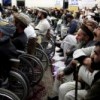
Armed Conflicts Claim Unprecedented Number of Civilians
Afghanistan, once described as the graveyard of empires, is ranked number one as the country with the most "significant rise" in civilian deaths last year, turning it into a veritable killing field, according to a new report by the London-based Minority Rights Group International (MRG).
MEDIA: Uniting in the Face Of “Unnatural” Disasters
"In my opinion, there is no such thing as a natural disaster," says Sylvia Richardson, a volunteer broadcaster, mother of two, assistant librarian, and the new vice president of the North American region of the World Association of Community Radio Broadcasters (AMARC).
Developing Nations Protest Move to Slash U.N. Budget
The Group of 77 (G77), the largest single coalition of developing countries, has issued a strong letter of protest against a proposal to cut some 155 million dollars from the U.N.'s 2012-2013 biennium budget beginning next January.U.S.: 2011 Foreign Aid Cuts Not as Great as Feared
While the State Department's overall 2011 international affairs budget was cut sharply from President Barack Obama's initial request, humanitarian and development groups are expressing some relief at the final result given the current political climate.U.N. Chief Proposes Budget-Cutting Austerity Drive
Armed with a sharp knife, U.N. Secretary-General Ban Ki-moon is on an austerity drive seeking deep cuts, amounting to about 155 million dollars, in the U.N.'s 2012-2013 budget, which comes into effect next January.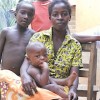
Agencies Grappling With Liberia Refugee Crisis
The yard at Peter Saye's is full: of kids, of cooking pots, of chickens, goats, and piles of belongings. Women carry firewood and stir coals, plait hair and snap at the children scampering around in the dust. There are nearly 100 refugees sheltering here from the violence across the border in Côte d'Ivoire.U.N. Staff Killed in Afghanistan Quran Protests
Afghan officials say at least 11 people have been killed at a United Nations operational centre in the northern city of Mazar-i-Sharif when protests over the burning of the Quran by an American preacher turned violent.Women Turn Spotlight on Haiti’s Silent Rape Epidemic
Some 14 months after Haiti's earthquake, activists say there is an ongoing epidemic of rape and gender-based violence (GBV) in the country's more than 1,000 squalid displaced persons camps, where nearly a million people are still awaiting permanent housing.
LIBERIA-COTE D’IVOIRE: Border Villages Sharing the Little They Have
This Butuo man only knows one phrase in French: Viens manger. Come eat. That's what they said to him years ago, when he was one of hundreds of thousands who fled to Côte d'Ivoire to escape the brutal 14-year civil war in Liberia.
U.N. Body Authorises Military Intervention in Libya
As Libyan leader Muammar el-Gaddafi's fighter planes and helicopters continue to mercilessly pound civilians and rebel groups inside Libya, the U.N.'s most powerful political body voted to militarily intervene in the besieged North African country in an attempt to prevent and neutralise the attacks.Japan Nuke Disaster Could Be Worse Than Chernobyl
A global nuclear disaster potentially worse than Chernobyl may be under way in Japan as hundreds of tonnes of highly radioactive spent nuclear fuel are open to the sky, and may be on fire and emitting radioactive particles into the atmosphere.
BANGLADESH-LIBYA: Garment Industry Pledges to Employ Evacuated Labourers
Bangladesh's garment factories and overseas recruiting agencies have pledged to employ a substantial number of Bangladeshi expatriates returning from politically volatile Libya, following the violent crackdown on opposition forces by Muammar Gaddafi's regime there.Japan Races to Cool Stricken Reactors
Workers battling to contain the crisis at Japan's quake- stricken Fukushima nuclear plant were briefly moved to a bunker because of a rise in radiation levels, local media have reported.
Aid Agencies Rush to Japan’s Humanitarian Front
Day five of Japan's post-earthquake, post-tsunami life dawned dismally Tuesday, with soaring radiation levels from the Fukushima Daiichi power plants and a relentlessly rising death toll in the four worst-affected prefectures.Second Blast at Japan Nuclear Plant
A second explosion has rocked Japan's stricken Fukushima Daiichi nuclear power complex, sending a plume of smoke into the air and touching off fresh concerns of a radioactive leak in the quake and tsunami-hit country.
Q&A: Needing Surgery Shouldn’t Be a Death Sentence
Surgery saves the lives of millions of people around the world, but only a tiny percentage of them live in low- and middle-income countries (LMICs), where a shortage of skills, supplies and infrastructure can turn easily treatable accidents and illnesses into lifelong disabilities and even death.MAGHREB: For Migrants, Crisis Worsens Economic Situation At Home
The mass exodus of immigrant workers from Libya is aggravating the social and economic situation in the migrants' home nations - from Sudan and Chad in sub-Saharan Africa, to Bangladesh in Asia - according to labour and economic experts.
LIBYA: Aid Groups Struggle with Rising Tide of Refugees
The international community is ramping up efforts to alleviate the growing humanitarian crisis in Libya, which has affected over 200,000 people since the Muammar Gaddafi regime first began a violent crackdown on opposition forces some three weeks ago.
Growing Humanitarian Crisis in Cote D’Ivoire
The U.N. has announced that some 200,000 people have already fled the Abobo neighbourhood, in the north of Abidjan. Each morning for a week now, luggage on their backs, bundles on their heads, the sick riding in wheelbarrows, new borns cradled in their arms, thousands of people have fled Abobo on foot.LIBYA: Thousands of Foreign Labourers Trapped in Turmoil
As violent unrest continues unabated in Libya, with the potential to descend into what U.S. Secretary of State Hillary Clinton called a "protracted civil war" in statements to lawmakers here this week, international rights groups are raising the alarm over the resulting humanitarian crisis and the particularly desperate plight of stranded immigrant labourers.Pregnancies Don’t Wait for Emergencies to End
When disaster strikes, the initial humanitarian response tends to focus on basic commodities like food and shelter. But as the crisis or conflict drags on, other critical needs often go unmet – such as prenatal care for pregnant women, and emergency contraception for victims of sexual assault.« Previous Page — Next Page »


 MONUSCO Peacekeepers and FARDC Soldiers Patrol Fataki Area. Credit: UN Photo/Jorkim Jotham Pituwa
Conflict, human rights violations, natural disasters, and famine have been at the forefront of concerns for humanitarian organizations. The escalation of humanitarian crises has led to over 239 million people in need of humanitarian assistance at the start of 2026, as estimated by OCHA’s Global Humanitarian Overview. The 2025 humanitarian appeal received only $12 billion, the lowest funding in over a decade, which has left 24 million fewer people reached in comparison to 2024. Conflict has remained the primary driver of crisis.
Humanitarian emergencies massively impact progress towards the Sustainable Development Goals (SDGs), adversely affecting economic development, inequality, education, planetary well-being, and poverty. Millions of people are faced with reduced access to essential services, including shelter, food, healthcare, and access to clean drinking water. UN Organizations such as UNHCR and the United Nations Children’s Fund (UNICEF) are committed to providing direct relief to affected communities when state governments cannot.
The United Nations 2024 Summit of the Future discussed measures that will be taken to reduce global inequality and promote peacekeeping efforts around the world. The recent UN Climate Change Conference (COP30) in Belém, Brazil, agreed to mobilize $1.3 trillion annually for climate action by 2035, operationalize the loss and damage fund, and triple adaptation finance. However, a fossil fuel transition commitment was not secured, despite climate change and the greenhouse effect being major contributors to humanitarian crises worldwide.
Countries across the world have also rallied to end humanitarian crises, as witnessed in conflicts such as Palestine and Ukraine. IPS is committed to providing relevant and in-depth reports of humanitarian emergencies around the world and their implications.

The Week with IPS

NEXT STOP - SDGs
Tracking global progress towards a sustainable world
Tracking global progress towards a sustainable world

