Languages
Saturday, June 13, 2026



News and Views from the Global South
Humanitarian Emergencies

Conflict Deprives Children of Education in Northern Syrian IDP Camps
Twelve-year-old Walid Al-Hussein, displaced from the city of Kafranbel to a camp for internally displaced people (IDP) in northern Idlib on the border with Turkey, has given up his dream of becoming a lawyer. "The distance of schools from our home (in the camp) made me leave education and give up my dream and my mother's dream of becoming a lawyer who defends the rights of the oppressed," Al-Hussein told IPS.
1,000 Days—Afghan Girls’ Voices Campaign Enters Second Phase
The global community is marking a tragic milestone for human rights, children's rights, and girls' rights, as it has been 1,000 days since girls were banned from attending secondary school in Afghanistan. The ban has wiped out decades’ worth of education and development gains, as approximately 80 percent of school-aged Afghan girls and young women are out of school.
UN, World Leaders Ramp Up Plans for Gaza Ceasefire and Recovery
This week has seen noteworthy steps from the international community to put an end to the ongoing hostilities in the Gaza Strip since the latest war between Hamas and Israel began in October last year. This week began with the international community converging at a global conference, “Call for Action: Urgent Humanitarian Response for Gaza.” King Abdullah II of Jordan, President Abdel Fattah el-Sisi of Egypt, and UN Secretary-General António Guterres organized the conference, which took place in Amman, Jordan, on June 10.
African Activists Call on the West to Finance Climate Action
As the technical session of the global climate negotiations enters the final stretch in Bonn, Germany, climate activists from Africa have expressed fears that negotiators from the developed world are dragging their feet in a way to avoid paying their fair share to tackle the climate crisis. “I think we will be unfair to the snail if we say that the Bonn talks have all along moved at a snail pace,” quipped Mohammed Adow, the Director, Power Shift Africa.
Climate Finance: The Planet is Speaking, Listen and Respond with Justice
As the planet groans under record-breaking temperatures and extreme weather events, Africa, which is responsible for only two to three percent of global emissions, stands out disproportionately as the most vulnerable region in the world. António Guterres, the United Nations Secretary-General’s special address on climate action titled ‘A Moment of Truth’ said 2024 was the hottest May in recorded history, and that this marks twelve straight months of the hottest months ever. For the past year, every turn of the calendar has turned up the heat.
Quiet Revolution Underway as IFAD’s Innovative Solutions Rise to Global Rural Challenges
Technology and innovation are at the center of the International Fund for Agricultural Development’s strategy to fulfill its global mission to eradicate poverty and hunger in the developing world, IFAD’s President Alvaro Lario told IPS in an exclusive interview.
World Environment Day: UN Secretary-General Reckons with ‘A Moment of Truth’ on Climate Action
Coming at a time of record-breaking global temperatures over the last twelve months, the UN chief calls on world leaders, including the G20 and G7 members, to commit to their climate action goals as laid out in the Paris Agreement. Experts across multiple industries are also encouraged to do their part to mitigate the impact of the climate crisis.
Bringing Drought and Floods, El Niño Hits the Most Fragile in Southern Africa
Kaponde Likando does not know how his family will survive until the next farming season. “We are not going to have anything (to harvest),” said the 60-year-old from Chingobe village in southern Zambia after his maize, sorghum, groundnut and sweet potato crops failed. “This has been the very opposite of what we expected.”
Commonwealth Secretary-General Calls for Concrete Finance Commitments for Small Island Developing States
Commonwealth Secretary-General Baroness Patricia Scotland is calling for concrete commitments to climate finance that will acknowledge the multi-dimensional vulnerability faced by the world’s small island developing states (SIDS).
President Biden Needs to Do More than Propose a Ceasefire Plan That Israel Already Rejected a Month Ago
Throughout his long career, but especially these past heart-wrenching eight months, President Biden has consistently placed his ironclad loyalty to Israel over his fidelity and duty to the United States. The consequences this week have been catastrophic for the Palestinian people, made Israelis even less secure, and betrayed American national security and democratic integrity.
Plastic Soup, Plastic Islands: How Small Island Developing States can end Plastic Pollution
Scattered over the vast area of our oceans, Small Island Developing States (SIDS) are often pictured as blue, serene and beautiful paradises. However, we are risk losing the beauty of these islands, due to the triple threats of climate change, loss of biodiversity, and pollution, especially marine plastic debris.
UN, International Partners Coordinate Aid to Papua New Guinea Landslide Disaster
As the communities of Enga province in Papua New Guinea contend with the landslide that has devastated the residents of Yambani, the United Nations and its partners have been active on the ground addressing the immediate humanitarian needs, according to agencies.Papua New Guinea’s prime minister, James Marape, says “extraordinary rainfall” and weather pattern changes were responsible for multiple disasters in the Pacific Island nation this year, including the landslide last Friday.
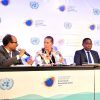
Uniting for Climate Action: UN, World Bank and UNDRR Leaders Push for Climate Finance, Justice and Nature-Based Solutions for SIDS
As leaders of Small Island Developing States (SIDS) meet for the 4th International Conference on SIDS in Antigua this week, top United Nations and World Bank officials are calling for urgent action to help SIDS tackle their unique challenges and plan for the next decade.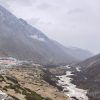
Explainer: Why GLOFs Are Growing Concern in the Himalaya
Phu Chhettar Sherpa, who worked as an icefall doctor (a Sherpa who fixes ropes for climbers) for seven years from 2015 to 2021 on Mt. Everest, vividly recalls his fear of possible flash floods after the huge earthquake in Nepal in 2015.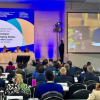
Small Island Nations Demand Urgent Global Action at SIDS4 Conference
“This year has been the hottest in history in practically every corner of the globe, foretelling severe impacts on our ecosystems and starkly underscoring the urgency of our predicament. We are gathered here not merely to reiterate our challenges, but to demand and enact solutions,” declared Antigua and Barbuda Prime Minister Gaston Brown at the opening of the Fourth International Conference on Small Island Developing States on May 27.
Countdown to Critical Conference for Small Island Developing States
Delegates from small island developing states (SIDS) worldwide are meeting in Antigua and Barbuda to strategize for the next decade.
International Court of Justice Orders Israel to Halt its Military Offensive in Rafah
The International Court of Justice (ICJ) ordered Israel to immediately halt its military offense in Rafah. "In conformity with obligations under the Genocide Convention, Israel must immediately halt its military offensive and any other action in the Rafah Governorate which may inflict on the Palestinian group in Gaza conditions of life that could bring about its physical destruction in whole or in part," the court said in it's revised order, which was passed by 13 votes to 2. South Africa approached the court on May 10, 2024 for a modification of provisional measures as prescribed by the court. The court also ordered that Israel must take effective measures to ensure the unimpeded access to the Gaza Strip of any commission of inquiry, fact-finding mission, or other investigative body mandated by competent organs of the United Nations to investigate allegations of genocide. Israel was also ordered to ensure that humanitarian aid should be “unhindered provision at scale by all concerned of urgently needed basic services and humanitarian assistance,” and that Israel should maintain open land crossing points, in particular the Rafah crossing. The full order can be read here. IPS UN Bureau Report
International Community Urged to End Impunity for Violence Against Healthcare in Conflicts
Governments and international agencies must do more to end impunity for violence against healthcare, campaigners have urged, as a new report shows that attacks on healthcare during conflicts reached a new high last year.
Latin America and the Caribbean Hit with Record-Breaking Heat and Other Climate Effects in 2023
Every year for the last four years, a collaborative effort involving scientists and other experts has assessed the state of the climate in Latin America and the Caribbean. The findings have revealed increasingly alarming trends for the world’s second-most disaster-prone region.
Amid Record Displaced Persons, Migrant Remittances Spike—New IOM Report
While there have been a record number of displaced people worldwide, according to a new report by the International Organization for Migration (IOM), migrant remittances are promoting human development.
1.8 Million More Palestinians Doomed to Poverty if Gaza War Persists
Nearly seven months into the Gaza war, the UN warns that to rebuild and restore the buildings lost in this period, it would take several decades, and to revitalize Palestine’s economy, it would be a great undertaking. Meanwhile, the great losses in housing and public services and the economic stall only threaten to push even more Palestinians into poverty.« Previous Page — Next Page »