
Saturday, November 14, 2026



News and Views from the Global South
Indigenous Rights
BRAZIL: Landowning-Military Front Against Indigenous Policy
The battle to defend Brazil’s Amazon region "began in Roraima," according to Paulo Cesar Quartiero, a central figure in land conflicts in the indigenous border territory of Raposa Serra do Sol (RSS) which are prompting politicians and military officers to organise an opposition front.
RIGHTS-PERU: Unburying the Evidence of Biggest ‘Dirty War’ Massacre
It was not hard to find the remains of the victims, some of whose bones were actually exposed to the elements. But it took 24 years for the people of the highlands village of Putis in southern Peru to get a response to their insistent requests for exhumation and identification of the remains.BOLIVIA: Indigenous Demands Overshadowed by Autonomy Movement
The autonomy movement in Bolivia’s wealthier eastern provinces has overshadowed the demand for empowerment and greater participation in political decision-making for indigenous people, who are worriedly observing the confrontation between the government of President Evo Morales, an Aymara Indian, and the rightwing opposition.DEVELOPMENT-BOTSWANA: Of Tourists, Bushmen – and a Borehole
A planned lodge development at the settlement of Molapo in Botswana's Central Kalahari Game Reserve (CKGR) has become a source of controversy.PERU: Indigenous Groups Challenge Private Investment Decree
More than 5,000 indigenous and peasant communities in Peru launched a petition drive this week with the aim of getting President Alan García’s decree promoting private investment in communally owned land declared unconstitutional.
BIODIVERSITY: Biological Patents Yield Unequal Benefits
The medicinal or nutritional properties of many plants can give rise to enormous economic benefits, which put patents for naturally existing plants at the centre of an ethical, commercial and legal debate.RIGHTS-CHILE: Amnesty Report Highlights Impunity
The Amnesty International Report 2008 on the state of the world’s human rights, released Wednesday, expresses disappointment in Chile’s delay in seeking truth, justice and reparations for the victims of crimes committed during the dictatorship of General Augusto Pinochet (1973-1990).
CULTURE-PAKISTAN: Afghan Refugee Poets Behind Pashto Revival
Afghanistan’s tumultuous history of the last three decades is behind the incredible popularity of poetry in Pashto, the language of the majority Pakhtoons in Pakistan’s North West Frontier Province (NWFP).PERU: Indigenous Organisations Aim for the Presidency
Peru’s indigenous associations are pursuing a political project of their own, and hope to win power in the 2011 presidential elections in order to defend their collective rights.BOLIVIA: Local Indigenous Leaders Beaten and Publicly Humiliated
Bolivia may have its first-ever indigenous president, but racism is alive and well in this country, as demonstrated by the public humiliation of a group of around 50 indigenous mayors, town councillors and community leaders in the south-central city of Sucre.
ENVIRONMENT: Lousy Salmon Causes an Upset
Sea lice from Norwegian-run salmon farms are killing off vital wild salmon stocks in Canada and Chile, according to a delegation that visited Oslo last week. It accuses Norway's government of complicity.BIODIVERSITY: Indigenous Peoples Fight Theft
Amongst the suits in the luxurious hotel hall, Sebastian Haji immediately catches the eye. He is small, dark-skinned, and wears a crown of feathers on his head.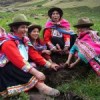
PERU: Women – The Guardians of Potato Biodiversity
In South America’s Andes mountain region, indigenous women have traditionally been responsible for selecting, conserving and managing seed potatoes from the countless native varieties of the crop, thus ensuring diversity and continued production while contributing to food security among their people.RIGHTS-INDIA: Top Activist’s Detention Blot on Democracy
Protests are mounting all over the world against the year-long detention of Dr. Binayak Sen, a distinguished Indian human rights and health activist, under draconian laws in the central state of Chhattisgarh.LATIN AMERICA: European Corporations on Trial
Twenty European corporations are being tried for human rights violations before an ethical tribunal at the Peoples’ Summit, organised for the third time by the Bi-Regional Network "Enlazando Alternativas" (Linking Alternatives) in Lima. The organisers announced that they hope to take some of these cases to ordinary courts of justice in Peru.PERU: All-Out War on Remnant of ‘Shining Path’ Guerrillas
The armed forces have launched a major offensive against the most combative remaining column of Sendero Luminoso (the Maoist Shining Path guerrillas) which is operating in the jungle valleys of the Ene and Apurimac rivers in southeastern Peru, where most of the country’s coca leaf and cocaine is produced.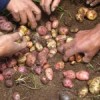
PERU: Highlands Families Work to Save Their Birthright – the Potato
A plate of parboiled potatoes of various sizes, shapes and colours welcomes the visitor to Huama, a town in the southern Peruvian Andes, at an altitude of 4,500 metres.ENVIRONMENT-BRAZIL: Controversy Over Indigenous Land and Biofuels
The legal status of an indigenous territory in the far north of Brazil, and biofuels, are two hot potatoes at the Third National Conference on the Environment being held in the capital city, which is focusing on climate change.CHINA: Talks With Dalai Lama's Envoys Leading Nowhere
With Tibetan unrest smouldering and international pressure building up on Beijing to negotiate with the exiled Tibetan spiritual leader, the Dalai Lama, Chinese officials have met with his envoys and pledged more talks in the future.DEVELOPMENT: NGOs Pressure AsDB to Strengthen Safeguards
Behind-the-scenes lobbying by non-governmental organisations (NGOs) paid off by the end of the annual meeting of the Asian Development Bank (AsDB) concluding here Tuesday. Leading financial officials from a host of European countries came out in favour of the strong "safeguard policies" that activists are championing.
CLIMATE CHANGE: Indians Speak Out Against Carbon Markets
International policymakers are facing fierce criticism from leaders of the world's 370 million indigenous peoples over plans to use carbon markets as one of the tools to mitigate climate change.« Previous Page — Next Page »


The planet's roughly 350 million indigenous peoples took notable steps on the international stage in the last decade. They got the world's governments to agree to create a body to represent them at the United Nations, the Permanent Forum on Indigenous Issues, and to appoint a special rapporteur responsible for their human rights. In 2007 a Universal Declaration on the Rights of Indigenous Peoples was approved by the UN. Yet the living conditions of most "tribal", "aboriginal", "native" or "first" peoples remain precarious. IPS, with its network of contributors at the UN and linked to indigenous communities worldwide, is committed to tracking the world community's efforts to do justice to the rights and aspirations of these peoples, with a special current focus on Latin America's 40 million rural indigenous peoples.

The Week with IPS

Tracking global progress towards a sustainable world
