Languages
Friday, September 4, 2026



News and Views from the Global South
Labour

Reflecting Back and Imagining Forward
What a challenging year 2020 has been! A year of living dangerously – “Tahun vivere pericoloso”- perhaps these words of late President Soekarno of Indonesia are the best description. Fortunately, I managed to remain sane, reading and writing op-eds (mostly about the pandemic, here, here).
The World in 2021
The year 2020 is ending with the world caught up in an unprecedented human and economic crisis. The pandemic has contaminated 75 million people and killed 1.7 million. With the lockdowns, the global economy has suffered the worst recession in 75 years, causing the loss of income for millions of people. In such a bleak environment, what will the new year bring? Whilst uncertainty is the only certainty, eight points are likely to be key in the year ahead: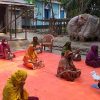
The Impact of COVID-19 on Child Marriage and Other Gender-Based Violence
I recently visited rural areas of Bangladesh amid the COVID-19 pandemic and returned to Dhaka with a new understanding of the impact that COVID-19 is having on child marriage, a harmful practice that is a global challenge. The fundamental shift that I saw was that child marriage, which has typically been encouraged by struggling parents, is now being encouraged by struggling girls. This worrisome trend underscores a new burden of the pandemic on the poor.
How Africa can Lead the World in the COVID-19 Recovery
Africa, compared to Asia, Europe and the US, has largely escaped the devastating death toll of COVID-19, accounting for a fraction of the world’s 63 million cases.
Discriminatory Laws Still Holding Women Back in the Middle East
Decades of aggressive efforts to create equal opportunities for women, shatter the glass ceiling and build a more inclusive society only ends up in failure, when the key stake holders refuse to acknowledge discriminatory laws, socio-cultural and religious set ups that continue to threaten progress made by the female work force.
R & D Expenditure: How to Raise It and Why
Economic growth is the time-tested method of raising living standards and, if not accompanied by large increases in inequality, lowering poverty. Since World War II, economic growth has lifted hundreds of millions of people out of poverty, including in South Asia.
Women’s Bodies, COVID-19 and Male Chauvinism
COVID-19 has in some nations been converted into a noxious, political issue. One of many worrying examples is the rhetoric of Brazil´s president. On 10 November, when Brazil´s COVID-19 death toll surpassed 162,000 victims – the numbers have continued to raise and are now 179,032 second only to USA´s 296,745 – Jair Bolsonaro minimized the effects of COVID-19 by stating: ”All of us are going to die one day. There is no point in escaping from that, in escaping from reality. We have to cease being a country of sissies.” Bolsonaro actually said maricas, which like sissies is slang for gay people. Both expressions originally indicated ”small girls” – marica is a diminutive of Maria and sissy of “kid sister”. Bolsonaro thus defined homosexuality as effeminacy by associating gay men with affectation and cowardice. By connecting disease, fear, and femininity the Brazilian president not only ignored the strength and courage women throughout history have demonstrated by enduring childbirths and caring for others, it also shows a strong disregard for gender equality and the rights of women and gay people.
La Niña Weather Phenomenon Could Endanger Colombia’s Food Security
After ten years without a strong La Niña weather phenomenon in Colombia, the climate pattern, coupled with the COVID-19 pandemic, could create a vacuum in food production and supply. Multilateral organizations, along with the Colombian government, are trying to implement measures to reduce malnutrition risk. Still, the population is already overwhelmed by a year of struggles that have deepened socio-economic differences.Lopsided nature of global fashion industry and why change is needed
The global apparel industry is broken and only urgent, drastic surgery can fix it. I am not talking about another initiative or another public relations exercise. I am talking about deep, systemic change to be agreed by all involved—by brands, by suppliers, governments, unions and NGOs.
Digitisation Could Transform African Agriculture
Placing an online order for farming inputs saves Velebantfu Dlamini about USD12 in transport fees for a round trip of about 320 kilometres. The 26-year-old vegetable farmer from Nkhungwini in the Shiselweni Region, south of Eswatini, uses a portal to order from the National Agriculture Marketing Board (NAMBoard) Farm Store. NAMBoard then delivers his order leaving Dlamini with time to stay in the field and look after his crops.
Women Empowerment During COVID-19 Through Remote Learning – the Fuzia Perspective
This year, the world commemorated the 25th anniversary of the Beijing Declaration and Platform for Action, instead of celebration; however, its progress has been impeded by the COVID-19.
Millions of New Poor Are on the Way – Who Cares?
The recent meeting of the G20 – scheduled to take place in Riyadh but held virtually due to the Coronavirus pandemic – has been an eloquent example of how the world is drifting, in a crisis of leadership.
Can Africa’s Third Industrial Development Decade Deliver?
Industrialization and development go hand in hand. There is hardly a country in the world that has developed without building a strong manufacturing base. But for Africa – sometimes referred to as the continent of the future – the fruits of industrialization have often seemed just out of reach.
CARE Offers Policies That Engender Success for Young People in Agribusiness
Often cited as Africa’s greatest asset, its youth are also among the most vulnerable and volatile. A large and growing population of talented young people has the potential to drive economic growth and well-being of societies across the continent but, as the African Development Bank warns, current conditions of severe unemployment are translating into poorer living conditions, higher flows of migration, and greater risks of conflict – in short, a social disaster in the making.
Farmers Will (Again) Feed the World
Wealthier countries struggling to contain the widening COVID-19 pandemic amid protests over lockdowns and restrictions risk ignoring an even greater danger out there – a looming global food emergency.
My Voice, Our Equal Future! Joining the Chorus of Girls Who Are Speaking up for Change
Girls are change makers and world shapers! When girls speak up, they are a powerful force to be reckoned with.
Mexican’s Labor Rights Closely Watched… by the US
As many have observed worldwide, the outcome of the US presidential elections has been, as expected - full of hope and fear. Many people had the bad feeling that if Trump were to be re-elected, the uncertainty, already enormous due to the pandemic and its effects, would jeopardize the economic recovery worldwide. The triumph of Democrat Biden does not guarantee great solutions, but at the least offers a little more of transparency, certainty, and stability.
Reversing the Rohingya Crisis: One Woman at a Time
“This is a crisis without a quick fix that could take years to resolve unless there are concerted efforts to address its root causes”, says Manuel Fontaine, UNICEF Director of Emergency Programmes.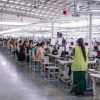
Working Class Bears Disproportionate Burden of COVID-19 Economic Fallout
Back in May 2019, we were visiting a large garment factory in Arsikere, Karnataka, when we asked some of the workers, “What would you do if you got Saturdays off?” Their responses to this simple question summed up their priorities. A majority said they would spend time with family or friends and take care of their children. Many said they would use this time to relax or do household chores. Only a few said they’d look for additional pay.
Secretive Mega-Trade Deal Rules Could Harm Asia’s Covid-19 Recovery
Fifteen countries will sign a mega-trade deal at the ASEAN conference this weekend imposing secretive restrictions on how governments help workers through the pandemic, trade union leaders and parliamentarians have warned.What does the second wave of Covid-19 mean for the apparel industry?
During the past few months, I had worked on a documentary for the BBC which looks at the impact of the coronavirus pandemic on the apparel industry of Bangladesh. That documentary caught me at an exceptionally low ebb. I was struggling amid the cancellation of orders and some brands being unwilling to pay for orders which had already been shipped.« Previous Page — Next Page »


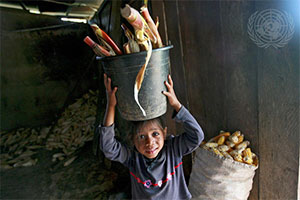 Timorese Girl with Fresh-Picked Corn. Credit: UN Photo/Martine Perret
A global common denominator is the need for a decent job. The economic realities of each country determine just how difficult it is to find one. Despite the labour movement's achievements, serious challenges persist: gender discrimination, child labour, worker migration, the digital divide and AI automation, evaporating pensions, unsafe workplaces, corporate pressure against union organising, negative impacts of trade agreements, and the precariousness of informal employment. The 2025 UN SDG Report identifies jobs and social protections as one of the six priority areas requiring urgent action, with progress either stalled or reversing in many developing nations.
In recent years, the fight to protect labour equality has taken on new dimensions with the rise of Environmental, Social and Governance standards. With the Social aspect aiming to promote equality and human rights, ESG principles have strengthened labour advocacy within corporate and governmental regulatory landscapes. In particular, ESG has become much more institutionalized in emerging economies such as Brazil and China. IPS follows the world’s workers as they confront these challenges - their setbacks and their successes.

The Week with IPS

NEXT STOP - SDGs
Tracking global progress towards a sustainable world
Tracking global progress towards a sustainable world
