Languages
Thursday, September 3, 2026



News and Views from the Global South
Labour

Peace in Yemen, But not Without Women’s Role in Peacebuilding
The armed conflict in Yemen which has lasted six years, has killed and injured over thousands of civilians, displaced more than one million people and given rise to cholera outbreaks, medicine shortages and threats of famine. By the end of 2019, it is estimated that over 233,000 Yemenies have been killed as a result of fighting and the humanitarian crisis. With nearly two-thirds of its population requiring food assistance, Yemen is also experiencing the world's worst food security crisis. The United Nations has called the humanitarian crisis in Yemen “the worst in the world”.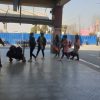
History of Female (Im)Mobility in Nepal
A proposal by Nepal’s Immigration Department requiring consent from a guardian and local government for women under the age of 40 travelling to the Gulf or Africa has sparked public fury, and is taken as yet another proof of a misogynist, bungling bureaucracy.
Valérie Allain – Women in Science (2021)
 "Working in Science, like any other career, is fit for women too… Just go for it, nobody can stop you", Valérie Allain, Senior Fisheries Scientist at the Pacific Community (SPC).
Labour Rights Have Worsened in India Post-Lockdown
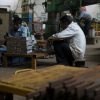
As the Indian economy officially heads into a recession and news of layoffs and unemployment reaches us with increasing frequency, we at Gram Vaani turned to workers to hear their side of the story. Industrial sector workers, largely engaged in the automotive and garments factories in the Gurgaon-Manesar belt, spoke to us about the turn that their lives have taken due to the COVID-19 crisis.
Water Graves: Nightmare for Mexican Fishermen
All of Erizo's nightmares are the same. Since his return from the ocean - almost unrecognizable - every bad dream is identical. A wave punches his little boat and throws him into the deep sea where everything is so dark that he can't even see his own hands.
A Grey Cloud Over Lebanon: Mental Health Burdens
Humankind is no stranger to the destabilizing events of 2020. The state of the global economy and the outbreak of the COVID-19 pandemic hit the headlines. In this ever escalating global crisis, Lebanon, has been facing what can only be described as unimaginable hardships. For the past year the country has seen challenges which have resulted in an utter state of hopelessness and rapid deterioration in mental health of many of its citizens.
Internationally COVID-19 Extracted a Heavy Toll on Older People
Internationally COVID-19 extracted a heavy toll on older people – raising concerns in the Asia Pacific region where more than half of the world’s ageing population live.
“Saving Journalism: A Vision for the Post-Covid World”
In the midst of the COVID-19 pandemic, journalists everywhere are feeling the consequences; job cuts, layoffs and closures have swept the world.
An American Horror story
Occasionally some of us might suffer from a feeling of maximal overload, overwhelmed by COVID-19 and the reign of Donald Trump. It can maybe be conceived as far too euro-centric to be concerned about the disastrous situation in the U.S., with media stuffed to the brim by news about Donald Trump while the global environmental crisis is steadily getting worse and war, injustices and famine continue to agonize people in places like Darfur, Yemen, Afghanistan, and Syria.
President Biden Refuses to Make our Climate Crisis Worse
I wasn’t going to stop for the school bus stuck in the mud outside of Fort McMurray, Alberta in the heart of the Canada’s tar sands industry but my kids insisted. It had been raining most of the week and the grassy field was soaked and slick. We stopped and got out and looked at the 12,000 kilogram bus uselessly spinning its wheels, digging deeper into the mud. Someone got the driver to stop, essentially saying you’re making a bad problem worse.
“Teach Us How to Become Carpenters” – South Sudanese Want to Shape Their Future
Located in Jonglei state, one of the most underdeveloped regions of South Sudan, Likuangole is a town badly hit by floods and often battered by conflict. Despite the lack of secondary schools and industry, its residents aspire to transform their lives. But real investment is needed to spur development.
Personal Testimonies, Pledges Mark the Start of the ‘Fair Share to End Child Labour’ Campaign
Selimatha Salifu of Ghana is a former child labourer who has vowed to do her part to bring attention to the plight of the world’s over 150 million child labourers. Raised in a fishing community, she recalls her days buying fish to sell, working from daybreak till nightfall to contribute to her family. She credits the General Agriculture Workers Union for rescuing her and ensuring she enrolled in school.
Trump Is Gone, Trumpism Lives On
Impeachment or no impeachment, Trump is out of the White House. Trump goes with an approval rating of 34%, far behind his predecessor Barack Obama’s 60%. A majority, 54%, said Trump ought to be removed from office before January 20, according to a new CNN poll, for his role in the January 6 events, when Trump incited his supporters to storm the US Capitol.
Jamaica Failing to Cope with Plastic Waste
For decades, every time it rains heavily in Jamaica, a daunting deluge of plastic bottles and bags, styrofoam and other garbage trundles its way down a network of countless gullies and streams. If they don’t get snagged somewhere, they end up in the Kingston Harbour or close to the beaches ringing the tourist-heavy North coast.
Imprisoned Saudi Activist and Other Rights Defenders Seek Justice in 2021
Two events generated significant interest and global solidarity in the final days of December 2020. A court in Saudi Arabia handed down a five years and eight months sentence to activist Loujain Al-Hathloul for publicly supporting women’s right to drive. Nicholas Opiyo, Ugandan human rights lawyer and defender of persecuted members of the LGBTQI community and political opponents of the president was arbitrarily detained on trumped up charges of ‘money laundering.’ Nicholas Opiyo was granted bail on 30 December following an outpouring of global support for his activism for justice. In handing out the verdict to Loujain Al-Hathloul, the court partly suspended her sentence raising hope that she might be released from prison in a couple of months due to time already served.
Nothing to Learn from East Asia?
Covid-19 infection and death rates in the Western world and many developing countries in Asia and Latin America have long overtaken East Asia since the second quarter of 2020. Perhaps unsurprisingly, considering prevailing Western accounts of the Asian financial crises, there have been no serious efforts to draw policy lessons from East Asian contagion containment.
Dengue—an Epidemic Within a Pandemic in Peru
While the world is grappling with the third wave of the COVID-19 pandemic, Peru is still dealing with an epidemic that it has not been able to control—the mosquito-borne viral disease known as dengue.
Recovery: What Are We Talking About?
The new year has arrived, but the situation is worse than in the last months of 2020. The pandemic is still unleashed: the end of the year holidays, the official permissiveness, and the slowness of the distribution of vaccines seem to announce that the disease will continue to wreak havoc for several months in most of the world, particularly in America, Europe, and parts of Asia like India. It has therefore been required to redouble preventive measures: a new lockdown and the disruption of almost all economic and school activities. Therefore, the recovery looks still uncertain and distant.
2021: Year of Living Dangerously?
Goodbye 2020, but unfortunately, not good riddance, as we all have to live with its legacy. It has been a disastrous year for much of the world for various reasons, Elizabeth II’s annus horribilis. The crisis has exposed previously unacknowledged realities, including frailties and vulnerabilities.
This Is Not a Goodbye, Kenya – Asante na Kwaheri ya Kuonana
Happy New Year, Kenya. Several milestones in my personal and professional life have made Kenya a cherished place for me. I started my UNICEF career in Rumbek, South Sudan in June 2000, and my rest and recuperation breaks were in Nairobi. In fact Kenya was the first African country I had ever visited and, frankly, it was love at first sight.

How Women-centred Digital Platforms can Enhance Empowerment
A cherished snapshot of a happy mother and a smiling grandmother is universally associated with a good childhood. In the movies, TV, or media, a broken or depressed mother’s face is hardly seen. But the reality is somewhat different. The measures communities and society take to ensure that women and girls are protected and supported are often questioned.« Previous Page — Next Page »


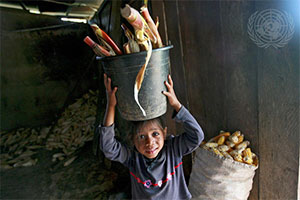 Timorese Girl with Fresh-Picked Corn. Credit: UN Photo/Martine Perret
A global common denominator is the need for a decent job. The economic realities of each country determine just how difficult it is to find one. Despite the labour movement's achievements, serious challenges persist: gender discrimination, child labour, worker migration, the digital divide and AI automation, evaporating pensions, unsafe workplaces, corporate pressure against union organising, negative impacts of trade agreements, and the precariousness of informal employment. The 2025 UN SDG Report identifies jobs and social protections as one of the six priority areas requiring urgent action, with progress either stalled or reversing in many developing nations.
In recent years, the fight to protect labour equality has taken on new dimensions with the rise of Environmental, Social and Governance standards. With the Social aspect aiming to promote equality and human rights, ESG principles have strengthened labour advocacy within corporate and governmental regulatory landscapes. In particular, ESG has become much more institutionalized in emerging economies such as Brazil and China. IPS follows the world’s workers as they confront these challenges - their setbacks and their successes.

The Week with IPS

NEXT STOP - SDGs
Tracking global progress towards a sustainable world
Tracking global progress towards a sustainable world
