Languages
Sunday, September 6, 2026



News and Views from the Global South
Labour

Is Development for the World Bank Mainly Doing Business?
The World Bank has finally given up defending its controversial, but influential Doing Business Report (DBR). In August, the Bank “paused” publication of the DBR due to a “number of irregularities” after its much criticized ranking system was exposed as fraudulent.
Economic Trends and What’s Important in Life
US third quarter GDP numbers released two weeks ago delighted stock markets and President Trump. Output had picked up by 7.4%, annualised as 33.1%, the largest quarterly economic growth on record, almost double the old record of 3.9% (annualised as 16.7%) in the first quarter of 1950, seven decades ago.
The United Nations, 75 Years Young: Engaging Youth Social Entrepreneurs to Accelerate the SDGs
This year, the United Nations is marking its 75th anniversary – a milestone of extraordinary economic and social progress in Asia and the Pacific. While the Organization enjoys a lifespan almost equal to the world’s improved average life expectancy, the future lies with those who have recently embarked on theirs: our young people.
Reaching Remote Women Through Inclusive Technology
The coronavirus pandemic has impacted the way people value working from home, career building, and their overall approach to utilising downtime. It has blurred out the lines between hobby, casual reading, and how time is spent away from work.
The Plight of Domestic Workers in Brazil
The inclusivity of Brazilian society is put to the test as the coronavirus pandemic highlights a labour sector ripe with historical and structural inequality: domestic work.
Human Trafficking Survivor Harold D’Souza: “The Perpetrators are More Aggressive Than Ever”
The fallout of the COVID-19 pandemic continues: as more people around the world lose their livelihoods, human trafficking is on the rise. Support services for survivors have been shut, and past gains to combat it have been reversed. Funding has dried up.
Enhanced Social Protection an Opportunity Asia Pacific Must Grasp
In the fight against COVID-19, success has so far been defined by responses in Asia and the Pacific. Many countries in our region have been hailed as reference points in containing the virus. Yet if the region is to build back better, the success of immediate responses should not distract from the weaknesses COVID-19 has laid bare. Too many people in our region are left to fend for themselves in times of need. This pandemic was no exception. Comprehensive social protection systems could right this wrong. Building these systems must be central to our long-term recovery strategy.
Is the IMF Encouraging World Financial Leaders to Walk Blindly Towards More Austerity?
This week the world’s Ministers of Finance and Central Bank Governors meet virtually at the 2020 Annual Meetings of the International Monetary Fund and the World Bank and decide on the fate of the world. This year’s gathering is particularly important, given that the world is confronting an unprecedented crisis. Governments are struggling to finance emergency care and urgent socioeconomic support to cope with the COVID19 pandemic.
High Tech, Low Labour?
In the glitzy Dolby Theater in Hollywood Heights, with stars dressed in hundred thousand-dollar garbs, Parasite—a film about inequality, class tension and the fault lines of capitalism—won big. I couldn’t help but recall South Korean director Bong Joon-ho’s earlier 2013 film, Snowpiercer.
Milton Friedman Versus Stakeholder Capitalism
Milton Friedman was arguably the most influential economist of the second half of the 20th century, associated with promoting ‘neo-liberal’, free-market, shareholder capitalism. Friedman’s monetarist economics is now widely considered irrelevant, if not wrong, especially with the low inflation associated with ‘unconventional’ monetary policies following the 2008-2009 global financial crisis.
Gendering Agriculture so Women Take the Lead in Feeding Africa
Africa’s hopes of feeding a population projected to double by 2050 amidst a worsening climate crisis rest on huge investments in agriculture, including creating the conditions so that women can empower themselves and lead efforts to transform the continent’s farming landscape.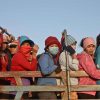
Social Audit Reforms and the Labor Rights Ruse
The recent refusal by five international auditing firms to inspect for labor abuses in Xinjiang was the right response to the severe human rights violations there. But this is a moment for the auditing and certifications industry, which assesses the compliance of work sites with human rights and labor rights standards, to rethink its approach to “social audits”—periodic workplace inspections—everywhere.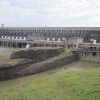
Looking for Jobs in Latin America – Can the Energy Transition Help?
Can the “energy transition” in Latin America help address the risks caused by greenhouse gases (GHG) on the climate, and the economic depression caused by the pandemic?
Supporting Migrants and Remittances as COVID-19 Rages On
Just as COVID-19 has disproportionately impacted some communities more than others, globally, the virus has had an oversized negative impact on migrant workers.
The Debt the Government Does Not Want to Recognize
The national occupation and employment survey prepared by INEGI, with figures updated to July 2020, shows an improvement that has occurred in the last two months. However, the employment situation, compared with the data existing before the pandemic still shows serious problems:
Financing Economic Recovery
As the socio-economic impacts of the COVID-19 pandemic spread across the length and breadth of Asia and the Pacific, finance ministries are continuing their relentless efforts to inject trillions of dollars for emergency health responses and fiscal packages. With continued lockdown measures and restricted borders, economic rebound seems uncertain.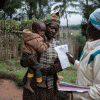
COVID-19: Lessons from the Losses
If countries considered Universal Health Coverage (UHC) a central policy in their health systems, the COVID-19 has surely demonstrated the need for its urgent and widespread roll out. The pandemic has upended world systems in a manner that no scientists or sophisticated global intelligence could have foreseen.
COVID-19: Without Help, Low-Income Developing Countries Risk a Lost Decade
While the COVID-19 crisis is sending shockwaves around the globe, low-income developing countries (LIDCs) are in a particularly difficult position to respond. LIDCs have both been hit hard by external shocks and are suffering severe domestic contractions from the spread of the virus and the lockdown measures to contain it. At the same time, limited resources and weak institutions constrain the capacity of many LIDC governments to support their economies.
A Pandemic Cannot Justify Child Labour
For the past five months, our screens have been flooded with distressing imagery of one catastrophe after another: From the impact of the COVID-19 pandemic on vulnerable communities, to cyclones in West Bengal, Odisha, and Maharashtra.
It Is Time to End the Controversial World Bank’s Doing Business Report
On 27 August the World Bank announced that it will suspend the Doing Business Report over data irregularities, until it conducts a review and audit. The halting of the report was welcomed by trade unions, academics and human rights groups.
Technology Meets Creativity on Women’s Empowerment Platform
Eight years ago, at the age of eleven, Fuzia co-founder Riya Sinha decided to start a writing club for school girls. Stemming from this initiative a few years later Sinha, along with co-founder Shraddha Varma, decided to start the online platform for women. Their story and Fuzia's DNA are intrinsically wrapped around each other – and highlight how even in the age of feminism where women’s voices tend to be drowned out, a platform for them can become a global success.« Previous Page — Next Page »


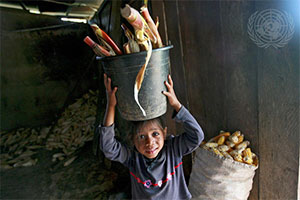 Timorese Girl with Fresh-Picked Corn. Credit: UN Photo/Martine Perret
A global common denominator is the need for a decent job. The economic realities of each country determine just how difficult it is to find one. Despite the labour movement's achievements, serious challenges persist: gender discrimination, child labour, worker migration, the digital divide and AI automation, evaporating pensions, unsafe workplaces, corporate pressure against union organising, negative impacts of trade agreements, and the precariousness of informal employment. The 2025 UN SDG Report identifies jobs and social protections as one of the six priority areas requiring urgent action, with progress either stalled or reversing in many developing nations.
In recent years, the fight to protect labour equality has taken on new dimensions with the rise of Environmental, Social and Governance standards. With the Social aspect aiming to promote equality and human rights, ESG principles have strengthened labour advocacy within corporate and governmental regulatory landscapes. In particular, ESG has become much more institutionalized in emerging economies such as Brazil and China. IPS follows the world’s workers as they confront these challenges - their setbacks and their successes.

The Week with IPS

NEXT STOP - SDGs
Tracking global progress towards a sustainable world
Tracking global progress towards a sustainable world
