Languages
Sunday, October 18, 2026



News and Views from the Global South
Labour

The Top Climate Leaders Are Now in The Global South
When world leaders now gather in Belém, Brazil for the UN climate conference, expectations will be modest. Few believe the meeting will produce any breakthroughs. The United States is retreating from climate engagement. Europe is distracted. The UN is struggling to keep relevant in the 21st century.
From Slogans to Systems: Five Practical Steps for Turning Social Development Commitments into Action at Doha and Beyond
Thirty years ago, world leaders gathered in Copenhagen and made a promise: people would be at the center of development. This November, Heads of State and Government will meet again in Doha, Qatar, for the Second World Summit for Social Development or WSSD2.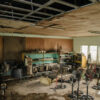
Children’s Education Must Be Put At The Forefront of Climate Discussions At COP30
In 2024, the climate crisis has disrupted schooling for millions of students worldwide, weakening workforces and hindering social development on a massive scale. With extreme weather patterns preventing students from accessing a safe, and effective learning environment, the United Nations (UN) and the Geneva Global Hub for Education in Emergencies (EiE Hub) continue to urge the international community to assist the most climate-sensitive areas in building resilient education systems that empower both students and educators.
Data Centre Investments Bad Deals
Opposition to data centres (DCs) has been rapidly spreading internationally due to their fast-growing resource demands. DCs have been proliferating quickly, driven by the popularity of artificial intelligence (AI).
When Taliban Shut Down the Internet, Women Lost their Lifeline to Aid, Education & Each Other
When the Taliban recently cut off the Internet and phone networks across Afghanistan, millions of women and girls were silenced. For those with connectivity, the blackout severed their last link to the outside world – a fragile connection that had kept education, work, and hope alive.
Are Youth-led Revolutions in South Asia a Cause for Concern?
In the Global South, where people under the age of 18 comprise more than 50 percent of the population, youth activism is increasing rapidly. Youngsters are more agile and volatile than older people, less restrained by family, prestige and work. However, many suffer from marginalisation, lack of employment, and poverty. Furthermore, insecurity and limited life experience make young people an easy target for manipulating and unscrupulous politicians, criminal networks, and religious fanatics.
African Voices at UNGA80: Building Sustainable and Self-Reliant Systems Through Innovation
On September 24, African-led organizations convened a high-level side event during the 80th session of the United Nations General Assembly (UNGA80) The event - African-led Innovation: Shaping Sustainable Futures With or Without Aid - was organized in partnership with eHealth Africa, Population Services International (PSI), Population Council, and Reach Digital Health. The dialogue amplified voices from African-led organizations and highlighted the importance of homegrown innovations for sustainability—regardless of the availability of foreign aid—amid shrinking donor funding and widening global inequalities.
Ending Child Marriage Needs a Culture of Accountability, Respect for the Rule of Law
Global leaders came together at the sidelines of this year’s UN General Assembly to commit to ending child marriage, calling on all world leaders to make concerted efforts to ensure accountability and enforce the laws that prohibit it.
The Rise of Androids Among Human Populations
Despite anxieties, concerns, and warnings, androids or humanoid robots that rely on generative artificial intelligence (GAI) and advanced robotics are increasingly being integrated into the modern lives of human populations. This integration raises serious challenges regarding humanity’s future in an era where androids are emerging rapidly.
Beware Independent Central Banks
US President Trump’s snide barbs against his appointee, US Federal Reserve Bank Chairman Jerome Powell, have revived support for central bank independence – long abused by powerful finance interests against growth and equity.
North Worsens Tropical Catastrophe
Greenhouse gas (GHG) emissions have risen over the last two centuries, with current and accumulated emissions per capita from rich nations greatly exceeding those of the Global South.
‘Angola produces large quantities of oil and diamonds, yet most people don’t see the benefits’
CIVICUS discusses recent protests in Angola with Florindo Chivucute, founder and executive director of Friends of Angola, a US-based civil society organisation established in 2014 that works to promote democracy, human rights and good governance in Angola.
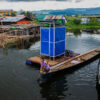
One in Four People Lack Access to Clean Drinking Water: UNICEF, WHO Warn of Deepening Disparities
Over the past decade, major strides have been made in expanding global access to water, sanitation, and hygiene (WASH) services, with billions of people around the world seeing improvements in overall health and well-being. Despite these gains, people largely from low-income countries and marginalized groups still lack access to clean water, leaving them vulnerable to disease and hindering social development and inclusion.
Togo’s Young Generation Challenges Six Decades of Dynastic Rule
In late June, thousands flooded the streets of Lomé, Togo’s capital, presenting the ruling dynasty with its biggest challenge in decades. The catalyst was constitutional manoeuvring by President Faure Gnassingbé to maintain his grip on power. In March 2024, his government pushed through constitutional amendments that transformed Togo from a presidential to a parliamentary system. This created a new position, the President of the Council of Ministers – effectively Togo’s chief executive – elected by parliament rather than by popular vote, and with no term limits. Gnassingbé assumed this new role in May, making it abundantly clear the changes were only about keeping him in power indefinitely.
The Right to Care: A Feminist Legal Victory That Could Change the Americas
On 7 August, the Inter-American Court of Human Rights delivered a groundbreaking decision that could transform women’s lives across the Americas. For the first time in international law, an international tribunal recognised care as an autonomous human right. Advisory Opinion 31/25, issued in response to a request from Argentina, elevates care – long invisible and relegated to the private sphere – to the level of a universal enforceable entitlement.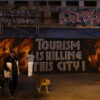
Overtourism: Civil Society Mobilising
It’s peak holiday season across Europe and North America, and people are hitting the beaches and crowding into city centres in ever-increasing numbers. They’re part of a huge industry: last year, travel and tourism’s share of the global economy stood at US$10.9 trillion, around 10 per cent of the world’s GDP.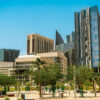
Green Jobs on the Rise in the Arab Region
In the Arab region, a thought-to-be oil oasis, green jobs constitute 29 percent of energy sector roles, and 23 percent of the oil and gas sector. These numbers signify a push towards sustainable business and practices, with the Arab region striving to get away from oil, in their advancement towards the completion of the SDGs on time for 2030.
Bridging the Digital Divide: How AI Risks Marginalizing Indigenous Peoples
Although the advancement of artificial intelligence (AI) yields numerous opportunities for progress—such as improved efficiency, enhanced decision-making, and innovative tools for climate reform—it also poses new risks for Indigenous peoples. With AI rapidly transforming the world, it is imperative that there are ethical and equitable frameworks that prioritize inclusivity and work to narrow the gaps in the digital divide.
International Day of the World’s Indigenous Peoples 2025

Artificial Intelligence is changing how we live, learn, work - and who gets heard. It holds promise for humanity but, without safeguards, it risks becoming a new tool of domination.
Bullying Southeast Asia with Tariff Threats
US President Trump has successfully used tariff threats to achieve economic, political and even personal goals. These threats, reminiscent of colonialism, have secured submission and concessions.
Mining on the Rise as Clean Energy Demands Shifts Global Commodity Exports
Two-thirds of the developing world, or ninety-five out of 143 economies, are dependent on commodities for export value, making up 60 percent of their merchandise exports. For the least developed world, this number rises to 80 percent, leaving entire nation's revenue vulnerable to price swings, fiscal shocks, and evolving trade compositions. Hidden behind the numbers lies a deeper transformation, one disrupting fossil fuel trade, triggering a higher reliance on mineral exports, particularly on mining essential for green technologies.« Previous Page — Next Page »





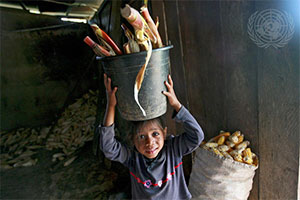 Timorese Girl with Fresh-Picked Corn. Credit: UN Photo/Martine Perret
A global common denominator is the need for a decent job. The economic realities of each country determine just how difficult it is to find one. Despite the labour movement's achievements, serious challenges persist: gender discrimination, child labour, worker migration, the digital divide and AI automation, evaporating pensions, unsafe workplaces, corporate pressure against union organising, negative impacts of trade agreements, and the precariousness of informal employment. The 2025 UN SDG Report identifies jobs and social protections as one of the six priority areas requiring urgent action, with progress either stalled or reversing in many developing nations.
In recent years, the fight to protect labour equality has taken on new dimensions with the rise of Environmental, Social and Governance standards. With the Social aspect aiming to promote equality and human rights, ESG principles have strengthened labour advocacy within corporate and governmental regulatory landscapes. In particular, ESG has become much more institutionalized in emerging economies such as Brazil and China. IPS follows the world’s workers as they confront these challenges - their setbacks and their successes.

The Week with IPS

NEXT STOP - SDGs
Tracking global progress towards a sustainable world
Tracking global progress towards a sustainable world
