Languages
Saturday, September 19, 2026



News and Views from the Global South
Latin America & the Caribbean

Venezuela’s Oil Industry Is Falling Apart
Corruption in the Venezuelan state oil industry, denounced by the government itself, and with former ministers and senior managers behind bars, is the latest evidence that, in the country with the largest oil reserves on the planet, the industry on which the economy depends is falling apart.
Using Data to Combat Prejudice Against Immigrants
What are the contributions of migrants to trade, to the economy of their countries of destination and origin? This is an angle that is generally ignored in the international debate on the subject, which usually focuses more on issues such as the incidence of foreigners in crime or unemployment.
Climate Change Threatens Mexican Agriculture
Azael Meléndez recalls the tornado that in May 2015 struck his hometown of San Gregorio Atlapulco, in Xochimilco, on the outskirts of Mexico City.
Central America Builds Interconnected Clean Energy Corridor
Countries in Central America are working to strengthen their regional electricity infrastructure to boost their exchange of electricity generated from renewable sources, which are cheaper and more environmentally friendly.
Debate on Glyphosate Use Comes to a Head in Argentina
In and around the city of Rosario, where most of Argentina's soybean processing plants are concentrated, a local law banned the use of glyphosate, the most widely-used herbicide in Argentina. But two weeks later, producers managed to exert enough pressure to obtain a promise that the ban would be overturned.
New ‘Anti-Hate Law’ Threatens Freedoms in Venezuela
Hate speech in the media or social networks in Venezuela is now punishable with prison sentences of up to 20 years, according to a new law issued by the government-controlled National Constituent Assembly (ANC).
Build Back Better: The Tiny Island of Dominica Faces New Climate Reality
McCarthy Marie has been living in the Fond Cani community, a few kilometres east of the Dominica capital Roseau, for 38 years. The 68-year-old economist moved to the area in 1979 following the decimation of the island by Hurricane David.
Indigenous People, Guardians of Threatened Forests in Brazil
Indigenous peoples, recognised as the best guardians of the world's forests, are losing some battles in Brazil in the face of intensified pressure from the expansion of agriculture, mining and electricity generation.
South-South Cooperation Key to a New Multilateralism
“There are new challenges to all states: among them, the real threat to multilateralism... South-South and triangular cooperation can contribute to a new multilateralism and drive the revitalisation of the global partnership for sustainable development.”
Lawmakers Impose Gender Parity in Argentina’s Congress, By Surprise
It was an unexpected move by a group of women in the lower house of the Argentine Congress. At one o'clock in the morning, during a long parliamentary session, they demanded the approval of a stalled bill for gender parity in political representation. There was resistance and arguments, but an hour later, the initiative became law by a large majority.
Women Activists are Targets of Gender-Biased Violence
Veiled and direct threats, defamation, criminalisation of activism, attacks on their private lives, destruction of property and assets needed to support their families, and even murder are some forms of gender violence that extend throughout Latin America against women defenders of rights.
Foreign Investment Expands in Cuba…Despite Everything
“Maybe many of us thought that this project was a dream six years ago, but not anymore. The geography has completely changed, because of everything that has been built and the investments that have been approved," said Nathaly Suárez, director of Construction Management at the Mariel Special Development Zone (ZEDM).
Conservative Onslaught Undermines Gender Advances in Latin America
A "conservative and fundamentalist onslaught" in Latin America against a supposed "gender ideology" is jeopardising advances in the fight against violence towards women, feminist activists complain.
White Elephants and the Urban Challenges of Brasilia
Two white elephants - a huge football stadium that draws almost no fans and an empty 16-building complex that was to be the new headquarters of the district government – reflect Brasília’s challenges as a metropolis, beyond its role as the capital of Brazil.
The World is Losing the Battle Against Child Labour
The IV Global Conference on the Sustained Eradication of Child Labour, which drew nearly 2000 delegates from 190 countries to the Argentine capital, left many declarations of good intentions but nothing to celebrate.
Coal Pollution Continues to Spread in Latin America
Despite growing global pressure to reduce the use of coal to generate electricity, several countries in Latin America and the Caribbean still have projects underway for expanding this polluting energy source.
SLIDESHOW: Two Models of Development in Struggle Coexist in Brazil’s Semi-arid Region
 Irrigated green fields of vineyards and monoculture crops coexist in Brazil’s semiarid Northeast with dry plains dotted with flowering cacti and native crops traditionally planted by the locals. Two models of development in struggle, with very different fruits.
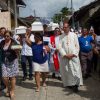
Victims of El Salvador’s Civil War Demand Reparations
Among the sea of names of victims of the Salvadoran civil war, engraved on a long black granite wall, Matilde Asencio managed to find the name of her son, Salvador.
Protein Plants Bolster Animal Feed in Cuba
Based on protein plants, pasture and fodder, Orlando Corrales produces cow and goat milk on a farm located next to a major road in the Cuban capital. "We do not use any industrial feed here," he says proudly.
Climate Change Summit a Step Further, Yes… But Where To?
The UN Climate Change Summit in Bonn is a step further, most experts say. Fine, but towards what?
Argentina Aims to Be a Leader in Mining, But Obstacles Abound
Argentina does not have the mining tradition of other South American countries, but this could begin to change. The government wants to draw 30 billion dollars in foreign investment to tap the great mining potential along the eastern slope of the Andes mountain range, stretching from north to south.« Previous Page — Next Page » *#*


The Week with IPS

NEXT STOP - SDGs
Tracking global progress towards a sustainable world
Tracking global progress towards a sustainable world

