Languages
Tuesday, November 3, 2026



News and Views from the Global South
Migration & Refugees

We Have Never Lived in a World Without Migration
I want to thank Director-General Lacy Swing for inviting me to address you today. My thanks also go to Ambassador Mauras, as Chair of the International Organization for Migration Council, along with Ambassador Quinn, as outgoing-Chair, for their work and commitment. Furthermore, I want to acknowledge the valuable work being done by Special Representative Arbour, and Deputy Director-General Thompson.
Violence Drives Further 1,800 Rohingya Refugees to Cross to Bangladesh as Pope Appeals for Tolerance
In just three months an estimated 624,251 Rohingya refugees have crossed into Cox’s Bazar, Bangladesh, fleeing violence and oppression in Myanmar’s Northern Rakhine State. Of these, over 1,800 have arrived in the past seven days. This brings the total population of Rohingya seeking safety in the district to over 836,000.
Migrant Promoters and Musicians Spread Message of “One Africa”
The crowd in the park gave out roars of approval as the next act was announced: Mothusi Bashimane Ndlovu, one of Zimbabwe’s most popular singers and actors, who took to the stage with a small axe in hand.
Statement by the Executive Director of the Geneva Centre regarding Bangladesh-Myanmar agreement on Rohingya refugees
In relation to the signing of the “Arrangement on return of displaced persons from Rakhine state” on 23 November 2017 by the governments of Myanmar and of Bangladesh, the Executive Director of the Geneva Centre for Human Rights Advancement and Global Dialogue H. E. Ambassador Idriss Jazairy has issued the following statement.
Why UN’s Global Compact on Refugees Must Address Needs of Young People
An estimated seven million refugees – about one-third of the global refugee population – are between 10 and 24 years old, yet this demographic is often overlooked in humanitarian and development responses. At a critical time in their lives, these young refugees experience the stress of displacement, which can impact their future development and success.
Young African Migrants Reroute their Dreams
When you are young, you dream big. Prospects abound and all seems be possible. In West Africa, dreams drive many young men and women out of their homes and away from their loved ones in search for better opportunities.
IOM Joins UN SG in Call to End Libya Migrant Slave Trade
IOM, the United Nations Migration agency, welcomes the remarks Monday of UN Secretary General António Guterres concerning recent news reports and video footage showing African migrants in Libya reportedly being sold as slaves. This statement, along with recent engagement by Libyan authorities to tackle criminality and curb the power of the smugglers, encourages IOM that progress will be made, indeed is increasing.
Keeping the Spotlight on Violence against Women and Girls
As cases of sexual harassment and assault continue to come to light every day, a different campaign to end such violence wants to keep the spotlight shining.
For Africa to Root out Modern Day Slave Trade, Youth Empowerment Is Crucial
If the thought of a man armed with a rifle and driving with whips a group of African men, women, and children to sell them at a slave market makes you marvel at what kind of greed motivated such revolting barbarity centuries ago, the shocking truth is that we are witnessing a 21st century repeat of that abhorrent practice on African soil.
Ethnic Violence in Ethiopia Amid Shadowy Politics
Ethnic animosity unleashed in Ethiopia has displaced hundreds of thousands as well as rendering all manner of usually sacrosanct loyalties obsolete.UNGA Resolution on Rohingya Crisis
It was long overdue, but we welcome the resolution adopted by the United Nations General Assembly, which condemned the military operations in Myanmar's Rakhine state against the Rohingya minority community.
Rejoicing in the Other and Celebrating Diversity Are Needed More than Ever to Address the Root-Causes of Intolerance
The Chairman of the Geneva Centre for Human Rights Advancement and Global Dialogue H. E. Dr. Hanif Hassan Ali Al Qassim deplored the rise of xenophobia, bigotry and marginalization - targeting refugees, migrants and internally displaced persons - that is taking effect in many regions of the world.
IOM Learns of ‘Slave Market’ Conditions Endangering Migrants in North Africa
Over the past weekend, IOM staff in Niger and Libya documented shocking events on North African migrant routes, which they have described as 'slave markets' tormenting hundreds of young African men bound for Libya.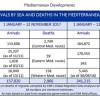
Mediterranean Migrant Arrivals Reach 157,020 in 2017; Deaths Reach 2,966
IOM, the UN Migration Agency, reports that 157,020 migrants and refugees entered Europe by sea in 2017 through 12 November, with about 75 per cent arriving in Italy and the remainder divided between Greece, Cyprus and Spain. This compares with 341,215 arrivals across the region through the same period last year.
UN Migration Agency Warns of Trafficking, Labour Exploitation, Sexual Abuse of Rohingya Refugees
Human trafficking and exploitation are rife among Rohingya refugees who have fled Myanmar to seek safety in Cox’s Bazar, Bangladesh, according to interviews and community focus groups conducted in the district’s makeshift settlements by IOM, the UN Migration Agency.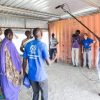
The Second Global Migration Film Festival Gets Underway
From Guyana in South America to Makati in the Philippines (and many other places in between) filmmakers from around the globe will soon showcase their skills as cinematographers at the Global Migration Film Festival. Organized by the UN Migration Agency, IOM and supported by UN Information Centers worldwide and with the financial support of DHL, the festival will take place in over 100 countries from 5 to 18 December 2017.
Aid Groups Sound Alarm on DRC Crisis
The Democratic Republic of the Congo (DRC) is on the brink of a humanitarian crisis and the international community must step in before it worsens, humanitarian agencies warn.
Hostile Terrain Slows Delivery of Lifesaving Aid to Rohingya Refugees
Since 25 August, an estimated 613,000 Rohingya refugees have arrived in Cox’s Bazar, Bangladesh, fleeing violence in Myanmar. The total refugee population in the area is now over 826,000.
UN Migration Agency Relocates 698 Displaced Households from Unplanned Camp in CAR
This week IOM, the UN Migration Agency, completed the relocation of 698 internally displaced households from the impromptu camp that formed around MINUSCA’s (Multidimensional Integrated Stabilization Mission in the Central African Republic) base following the 2016 attacks in Kaga Bandoro, Central African Republic (CAR). Over 20,000 people settled around the base after ex-Séléka members attacked the Evêché IDP camp, the Prefect’s office and the MINUSCA camp on 12 October 2016.
Ambassador Jazairy: “Myanmar’s Rohingyas are denied the right to have rights”
The Executive Director of the Geneva Centre for Human Rights Advancement and Global Dialogue (hereinafter “The Geneva Centre”) Ambassador Idriss Jazairy emphasized - during a lecture on 10 November at the Oxford Centre for Islamic Studies - that the denial of equal citizenship rights to the Rohingya population is breeding radicalization and inter-communal violence in Myanmar.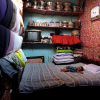
Nations without Nationality – An ‘Unseen’ Stark Reality
Here’s another ‘unseen’ stark reality—that of millions of people around the world who are deprived of their identity, living without nationality. Their total number is by definition unknown and their only ‘sin” is that they belong to an ethnic, religious or linguistic minority in the country where they have often lived for generations.« Previous Page — Next Page »





Human migration is a matter of global concern. Flows of migrants and refugees influence and change the social, economic and political dynamics of their destinations -- and the places they have left behind. IPS covers crucial issues such as migrant and refugee rights, irregular or undocumented migration, human trafficking, remittances, displaced persons and forced labour. And the positive: in many cases migration creates a new dialogue among civilisations. Migrants themselves become the building blocks of bridges connecting different cultures.

The Week with IPS

NEXT STOP - SDGs
Tracking global progress towards a sustainable world
Tracking global progress towards a sustainable world
