Languages
Sunday, November 8, 2026



News and Views from the Global South
Human Rights

The Increase in Nuclear Rhetoric on the Korean Peninsula is Deeply Concerning
At 10:42 PM local time on 21 November, the Democratic People’s Republic of Korea (DPRK) launched a rocket “Chollima-1" loaded with the reconnaissance satellite "Malligyong-1", from the Sohae Satellite Launching Station.
Young Musician’s Death Exposes Zimbabwe’s Collapsing Health System
A rising Afropop musician, Garikai Mapanzure, popularly known by his stage name Garry, has become the latest high-profile victim of Zimbabwe’s deteriorating health facilities. Garry, who was 25, died in mid-October after sustaining grave injuries in a horrific accident near his home in Masvingo, 295 kilometres from Zimbabwe’s capital, Harare.
What the EU Can Learn from Africa
Popular migration discourses in Europe often question the ability of African states to govern migration effectively. Media images of African migrants squeezed into dingy boats in the Mediterranean constantly reinforce these discourses.
Autocracy on the Rise, Warn Civil Society Groups, Seeking UN Expert on Democracy
The rise in authoritarianism worldwide has prompted a coalition of over 85 civil society organizations (CSOs) to call on the Geneva-based Human Rights Council to appoint a Special Rapporteur—an independent UN expert-- to protect democracy and reverse its decline. The joint appeal comes ahead of the 75th anniversary of the Universal Declaration of Human Rights which will be commemorated on 10 December 2023.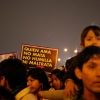
Latin America Still Has a Long Way to Go to Eliminate Gender Violence
"The Latin American and Caribbean region has made many advances in the fight against gender violence, but now we are facing reactions that show that our rights are never secure and that we must always be on the alert to defend them," said Susana Chiarotti, a member of Mesecvi's Committee of Experts.
Africa Will Not Cope with Climate Change Without a Just, Inclusive Energy Transition
A just transition should be viewed as an opportunity to rectify some of the wrongs where women are not prioritised in the energy mix, yet their experience of the impact of climate change is massive, says Thandile Chinyavanhu, a young South African-based climate and energy campaigner with Greenpeace Africa.
A Crisis of Humanity
The UN Secretary-General has defined the crisis in Gaza not just as a humanitarian crisis, but rather as a crisis of humanity. According to UN Secretary-General António Guterres: “Gaza is becoming a graveyard for children. Hundreds of girls and boys are reportedly being killed or injured every day.” This continued trend of violence and disregard for international humanitarian law and human life has enveloped our world.
The Cries of Gaza Reach Afghanistan
On the morning of 11 November, Mohammed Abu Salmiya, the Director of Gaza's largest medical center, Al Shifa Hospital, sent out an emotional S.O.S. to the world through a television news interview and through the remaining charge on his mobile phone. His plea for an immediate ceasefire on behalf of a hospital under siege and its 700 critically injured and ill patients, 36 premature babies, 400 staff, and the 2000 vulnerable civilians. These people sheltering within the hospital and its garden were heard as far away as Afghanistan yet totally ignored where it counted most- with the men in Israel's war cabinet and Washington; they were busy executing and aiding an illegal war of choice on an unarmed, defenseless hospital and one of the poorest and densely populated places in the world.
Innovative Gender Bond Series Uplifts Rural Women to Drive Climate Action in Asia
Rural women across Asia play a key role producing, processing, and trading agricultural products, and are often the primary users and managers of natural resources.
What Will Tomorrow’s World Order Look Like?
Ukraine, the Caucasus and the Middle East. The latest eruptions of violence mark the end of Pax Americana. The rise of new powers is shifting the global balance of power. Whether tomorrow’s world will be bipolar or multipolar still remains to be seen.
The World’s Right-Wing & Left-Wing Torturers
Jeanne Kirkpatrick, a former U.S. ambassador to the United Nations, once made the distinction between "friendly" right-wing authoritarian regimes (which were mostly U.S. and Western allies) and "unfriendly" left-wing totalitarian dictatorships (which the U.S. abhorred). Among the “dictators” the U.S. shunned in the 1970s and 80s were Zimbabwe's Robert Mugabe, Myanmar's General Than Shwe, Iraq's Saddam Hussein, Cuba's Fidel Castro, Libya’s Mummar al-Qaddafi, Syria’s Hafez al-Assad and North Korea’s Kim IL-Sung.
Will the UN Ever be Able to Eradicate Systemic Racism Within?
In the midst of the Israel-Hamas conflagration, a significant anniversary at the United Nations --October 24th was the 78th year since its founding--went unremarked by the larger world. But the work of--and significant problems with--the UN continues. Among the problems is embedded institutional racism. It's time that it be deeply addressed--not just by lip service.
Australia: Reconciliation Back to Square One?
Australia had the chance to take a step forward in redressing the exclusion of its Indigenous people – and chose not to. In a referendum held in October, voters rejected a constitutional amendment to establish an institution for Indigenous people to have a say on matters that concern them.
For Every Child, Every Right—Delivering Psychosocial Support for Crisis Impacted Children
As the global community marks World Children's Day, every child should be guaranteed their rights, including those in the Gaza Strip, where heavy bombardment and military operations by Israel have killed more than 11,000 people, 40 percent of them children.
The Carnage in Gaza Cries Out for Repudiation & Opposition. Maybe Poetry Can Help.
Two centuries ago, Percy Shelley wrote that “poets are the unacknowledged legislators of the world.” Yet elite power has routinely vetoed their best measures. Still, the ability of poetry to inspire and nurture is precious, including when governments are on protracted killing sprees.
COP28: Climate Summit in Closed Civic Space
The need to act on the climate crisis has never been clearer. In 2023, heat records have been shattered around the world. Seemingly every day brings news of extreme weather, imperilling lives. In July, UN Secretary-General António Guterres grimly announced that ‘the era of global boiling has arrived’.
US has Provided Over 130 Billion Dollars in Aid & Weapons to Israel– the Largest Ever
As one of America’s closest allies, Israel has remained heavily dependent on the US —politically, economically, and militarily—since its creation in 1948. US arms supplies, mostly provided gratis, are channeled via US Foreign Military Financing (FMF), Military Assistance Program (MAP) and Excess Defense Articles (EDA).
Pacific Games Channels Youth Aspirations in the Solomon Islands
The Pacific Games, the most prestigious sporting event in the Pacific Islands region, will open in the Solomon Islands in the southwest Pacific on 19 November. And it is set to shine a spotlight on the energy, hopes and aspirations of youths who comprise the majority of the country’s population.
The Carnage in Gaza: Here Are Steps to Rein In
The reason I wanted to speak to you was to outline something very specific about Gaza, of course, which is about the approach being taken and planned by the United Nations and other humanitarian agencies to provide aid to Gaza.
A Bigger and More Relevant Role for Youth Within the UN System – Part II
The UN Secretary General’s Policy Brief on Meaningful Youth Engagement in Policy and Decision-making Processes offers several ideas on how to ensure youths have a bigger and more relevant role within the UN System.
Forced Labor: Exposing Dark Web of Fisheries Labor Abuses
It is a terrifying life experience, cut off from the world and trapped in forced labour aboard fishing vessels, often in high seas or seas beyond the territorial waters of any state. The fishers are isolated under hazardous and horrific working conditions under limited regulatory oversight. More than 128,000 fishers were trapped in forced labour aboard fishing vessels in 2021 alone.« Previous Page — Next Page »





One world, one humanity, now one court to defend its rights. Another step towards universal human rights, but not remotely a step far enough. The United Nations adopted the Universal Declaration of Human Rights more than half a century ago, but that has done little to stop violations the world over, just as the Geneva Convention has not protected prisoners of war enough. Democracy itself and the freedom it presupposes has not been protective enough. This is the century to move from politicisation of human rights towards humanising political ways. IPS keeps an eye on that difficult path.

The Week with IPS

NEXT STOP - SDGs
Tracking global progress towards a sustainable world
Tracking global progress towards a sustainable world
