Languages
Monday, November 9, 2026



News and Views from the Global South
Human Rights

International Women’s Day, 2023
Unleashing Our Region’s Most Untapped Potential: Harnessing the Digital Age to Empower Women & Girls
New technologies and innovations are reshaping our world and its future, often at a dizzying pace. Yet women and girls continue to be left behind in this burgeoning digital universe. How, then, can we harness these developments to create a better future for all of us?

Earthquake Relief Efforts in Syria Shouldn’t Overlook Those With Disabilities
A few days ago, I saw a photo shared to Twitter of Sham, a young Syrian girl rescued from under the rubble in northwest Syria, sitting upright in her hospital bed, According to the Syrian Civil Defense, a volunteer humanitarian group also known as the White Helmets, Sham will lose both her legs because of injuries from the quake.
The Price Tag to Protect Freedom & Sovereignty Runs into Billions– & Counting
The overwhelming political, economic and military support for war-ravaged Ukraine seems never ending—even as the Russian invasion moved into its second-year last week. The US and Western allies have vowed to help Ukraine "as long as necessary" with no reservations or deadlines.
Venezuela Drafts Legal Stranglehold on NGOs
The Venezuelan parliament, in the hands of the ruling party, is moving towards passing a law to control non-governmental organizations (NGOs) so that, in practice, they could not exist independently.
Russia and Ukraine: Civil Society Repression and Response
Over the year since the start of Russia’s war on Ukraine, on one side of the border civil society has shown itself to be a vital part of the effort to save lives and protect rights – but on the other, it’s been repressed more ruthlessly than ever.
Participation in the Nigerian Elections Is Far More Important and Potent than Cynicism
On the morning of 24 September 1998, General Abdulsalam A. Abubakar, the then Military Head of State of Nigeria, took the stage at the United Nations Headquarters and informed the leaders assembled for the United Nations General Assembly debates and the world at large of his intention to return Nigeria to a democratically elected civilian government on 29 May 1999.
Welcome To the Vegetable Garden of Europe – ‘The Greenhouses of Death’
Chances are that the fruits and vegetables sold in European supermarkets have been picked and packed by a migrant worker in southern Spain. By the tens of thousands, they work there, in sweltering hot plastic greenhouses - often underpaid and without residence permit - in the vegetable garden of Europe. "Cheap vegetables, yes. But at what price?"
Nigeria in Search of a True Leader in Presidential Elections
From all indications, President Muhammadu Buhari will be handing over a fractured nation that is deeply divided along ethnic and religious lines when he formally hands over to his successor on May 29, 2023. This would-be successor will be inheriting a country mired in economic woes threatening its corporate existence if he’s not assuming the job prepared to address these problems headlong.
Nigeria’s Post-Election Reset Needs Youth-Centred Accountable Leaders
Youth have already transformed the narrative of the 2023 elections, and it would be crucial for Nigeria’s newly elected president to consider their issues as he takes on the enormous task of rebuilding the country, says CIVICUS’ Advocacy and Campaigns Lead David Kode. Speaking on the eve of the Presidential election, Kode told IPS there had been an 11 percent increase in registration since the 2019 elections, and youth have shown more interest in these elections than any other since 1999.
The Brutal War on Ukraine Must End
Today with heavy hearts we mark 365 days of a brutal against Ukraine. Through this illegal act of aggression, over 450 children have been killed and another 900 injured. The shelling and bombing has damaged 3,000 educational institutions, and completely destroyed 420 schools and learning centers. As many as 5.7 million children have had their education disrupted, with no end in sight.
Interview with Nobel Laureate Maria Ressa at the UNESCO Global Conference “Internet for Trust”

Interview with Maria Ressa, Nobel Peace Prize winner and UNESCO/Guillermo Cano World Press Freedom Prize laureate, at the UNESCO Global Conference #InternetForTrust. Learn more about the Conference: https://lnkd.in/dEaNBe7e

‘Ticking Time Bombs’ for the Most Defenceless: The Children (II)
While the world’s biggest powers and their giant private corporations continue to attach high priority to their military –and commercial– dominance, both of them being shockingly profitable, entire generations are being lost to deadly armed conflicts, devastating climate catastrophes, diseases, hunger and more imposed impoverishment.
In Zimbabwe, Economic Crisis Pushes Underaged Girls to Sex Work
After other adolescent girls her age have gone to bed at around 10 pm, Kudzai commutes to a shopping centre near her home in Penhalonga, a mining area 25 kilometres outside the third largest Zimbabwean city of Mutare, to look for men to solicit sex.
BRAC ‘Resets’ Program Aimed at Empowering Adolescent Girls in Africa
BRAC’s Empowerment and Livelihood Program (ELA) has benefitted tens of thousands of girls, and its recently released report shows an organization willing to adapt to the circumstances to continue to ensure adolescent girls and young women receive meaningful sexual and reproductive health rights support.
‘Ticking Time Bombs’ for the Most Defenceless: The Children (I)
Today, there are more children in need of desperate humanitarian assistance than at any other time since World War II.
Nicaragua: An Opportunity for Democratic Solidarity
On 9 February, Nicaragua’s dictator, Daniel Ortega, unexpectedly ordered the release of 222 political prisoners, including several former presidential candidates, opposition party leaders, journalists, priests, diplomats, businesspeople and former government supporters branded as enemies for expressing mild public criticism.
“An Israeli Senior Minister Asked Me To Commit Hate Crimes”
Harassing Palestinians, vandalizing their cars and houses, occupying their lands: Gilad Sade, a 36-year-old Israeli, recalls his day-to-day life when he belonged to a Jewish supremacist organization.
Tanzania Should Halt Plan to Relocate Maasai Pastoralists
Tanzania’s policies on conservation and its ongoing impacts on Maasai people in Ngorongoro district highlight how communities historically marginalized by oppression still wrestle with colonial policies.
UN Hobbled by Junta and Under Pressure Over Myanmar Aid Crisis
Nearly 18 million people – about one-third of Myanmar’s population – need humanitarian aid this year because of civil war and the post-coup economic crisis, according to the latest United Nations estimates.
UN Confronts Existential Challenge After Russia’s Invasion of Ukraine
Paralysed by its own Charter and structure, the world organisation that is charged with preventing wars confronts an existential challenge from Russia’s invasion of Ukraine.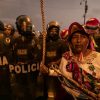
Privilege and Centralism in Lima Goad Protesters in Peru
The current political and social upheaval in Peru is not a temporary problem, but has to do with deeply-rooted inequality and social hierarchies, according to historian José Carlos Agüero.« Previous Page — Next Page »





One world, one humanity, now one court to defend its rights. Another step towards universal human rights, but not remotely a step far enough. The United Nations adopted the Universal Declaration of Human Rights more than half a century ago, but that has done little to stop violations the world over, just as the Geneva Convention has not protected prisoners of war enough. Democracy itself and the freedom it presupposes has not been protective enough. This is the century to move from politicisation of human rights towards humanising political ways. IPS keeps an eye on that difficult path.

The Week with IPS

NEXT STOP - SDGs
Tracking global progress towards a sustainable world
Tracking global progress towards a sustainable world
