Languages
Saturday, July 25, 2026



News and Views from the Global South
Human Rights
UN Report Details Grave Abuses Against those Trafficked into Scam Centres
A report published today by the UN Human Rights Office graphically details the lived experiences of some of the hundreds of thousands of people trafficked from dozens of countries around the world into working in entrenched scam operations mostly in Southeast Asia, as well as far beyond.
UN Report Warns of Escalating Human Rights Abuses Against Migrants and Refugees in Libya
A new UN report warns of the “brutal and normalized reality” for migrants, refugees and asylum seekers in Libya as they face exploitation and human rights violations.
Ode to U.S. Civil Rights Icon Rev. Jesse Jackson Sr: A Life That Carried the Rainbow
When the Rev. Jesse Jackson Sr. declared, “Keep hope alive,” it was not a slogan. It was a discipline. It was a moral posture. It was a promise to those America had locked out of its prosperity and pushed to the margins of its democracy. And for more than five decades, Jackson kept that promise – organizing, marching, preaching, negotiating, and standing in solidarity with oppressed peoples at home and abroad.
Players Score Dignity in India’s First Transgender Football League
Pyari Hessa, 26, balances long shifts as a loco traffic controller at a steel company in Jamshedpur with evening football practice on the same turf where professionals train.
Why Ending Child Marriage is Key to Advancing Africa’s Economic Development
Africa is home to approximately 160 million adolescent girls aged 10 to 19 (according to 2022 data by the United Nations Population Division). They embody the energy, creativity, and potential of the continent. It is undeniable that The Africa We Want, as envisioned in the African Union’s Agenda 2063, will not be realized without the full participation of this group which represents a key component of the continent’s current and future workforce.
‘Worrying’ War on Drugs Rhetoric Comes with Human, Financial Costs
Drug reform campaigners have called for an overhaul of global drug controls amid an increasingly complex and deadly drug situation in the world and as hardline anti-drug approaches are increasingly being used as cover for repression of civil society and human rights defenders.
From Grief to Guns: Baloch Women in Conflict
Fozia Shashani, 26, a member of the Baloch Yakjehti Committee, said it was “most painful” to hear reports that two Baloch women – Hawa Baloch, 20, and Asifa Mengal, 24 – had taken part in active combat as suicide bombers. The path, she said, was in complete contrast to her belief in peaceful resistance. Yet, she added, such extreme choices were the result of a state that had “failed its people.”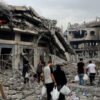
International Humanitarian Law is at Breaking Point – but not Beyond Repair
International humanitarian law is at a breaking point, as rampant impunity for serious violations is enabling even greater abuses against civilians and detainees.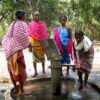
The Global Struggle for Equality for Women and Girls
The global struggle for equality for women and girls has been ongoing for centuries, with no single country having achieved full equality. In many countries, women and girls continue to face discrimination, harassment, unequal treatment, injustice, domestic violence, and a lack of security and safety.
From Pledges to Proof: UN Biodiversity Meeting Begins First Global Review of Nature Action
Governments convened in Rome on Monday (February 16) for a critical round of UN biodiversity negotiations, launching the world’s first global review of how countries are acting to protect nature.
IRAN: ‘Sustainable Change Will Depend on Domestic Organisational Capacity, Not External Force’
CIVICUS discusses the recent protests in Iran with Sohrab Razaghi, executive director of Volunteer Activists, a Netherlands-based diaspora organisation empowering Iranian civil society.

Extreme Heat Undermines Decent Work in North Eastern Kenya
By 9 a.m. on a Wednesday, Hawa Hussein Farah is already watching the temperature climb. Awake since 6 a.m., she has prepared her three children for school before walking them to class and heading to Suuq Mugdi, an open-air market in Garissa town, to buy the fruit she will sell.
Multilateralism Reaching Breaking Point
The latest World Economic Forum made clear the current crisis of multilateralism. Over 60 heads of state and 800 corporate executives assembled in Davos under a ‘Spirit of Dialogue’ theme aimed at strengthening global cooperation, but it was preceded by a series of events pointing to a further unravelling of the international system.
Africa at the Epicenter of Child Labour Crisis as Migration Fuels Exploitation
Although global rates of child labour have declined since 2020, the practice remains a serious and persistent violation of children’s rights, undermining their safety, social development, and long-term economic stability. These risks are intensified by structural pressures— poverty, climate shocks, protracted conflict, and unsafe migration— that continue to push vulnerable children into crisis, and in some cases, trafficking and exploitation. The United Nations Children’s Fund (UNICEF) warns that African countries remain among the most affected regions, underscoring the urgent need for coordinated policy action, cross-border cooperation, and sustained investment to protect children on the move and those at risk of labour exploitation.
Next UN Secretary-General Should Champion Human Rights
United Nations member countries will select a new UN secretary-general this year to succeed António Guterres in January 2027. The change in leadership comes at a time when human rights and democracy, as well as the international organizations created to uphold those principles and provide lifesaving assistance, are under unprecedented attack.
Bay of Despair: Rohingya Refugees Risk Their Lives at Sea
Dawn is breaking and the world’s biggest refugee camp stirs to life. Smoke rises from small cooking fires among rows of bamboo and tarpaulin shelters as children line up for food.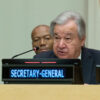
Fragile Progress in Gaza Humanitarian Response Undermined by Rampant Insecurity
Since the ceasefire agreement between Israel and Hamas in October of last year, humanitarian conditions in Gaza have notably improved — but aid agencies warn that progress is extremely fragile. Acute shortages of lifesaving medical care and psychosocial support persist, hunger remains widespread, with conditional cash assistance as the primary barrier preventing full-scale food insecurity, while Israeli attacks continue to undermine stability and humanitarian efforts.
A Pathway to Gender Equality in ASEAN
The COVID-19 pandemic reminded everyone how important care work is to daily life. When schools closed and hospitals filled up, often it was women and girls who stepped up at home. Their contributions made a big difference, yet these responsibilities often go unseen and unrewarded.
Bridging the Capital Gap: Strategic Public-Private Partnerships Invest in Young Agri-entrepreneurs
The global aid system is crumbling amidst chronic underinvestment in rural areas, posing a systemic threat to food systems everywhere. With 1.3 billion young people in the world today – the largest generation in history, and nearly half of them living in rural areas – investing in their entrepreneurial potential is key.
When Drought Steals Childhood: How Climate Shocks in Northern Kenya Are Testing the SDGs
Every morning before sunrise, 10-year-old Amina Adan walks away from school and toward a shrinking water pan on the outskirts of Rhamu, Mandera County. By the time her classmates would be opening exercise books, Amina was already balancing a yellow jerrycan almost half her size.
“Deepfake Abuse Is Abuse”: UNICEF Sounds Alarm as AI Fuels a New Global Child-Exploitation Crisis
New findings from the United Nations Children’s Fund (UNICEF) reveal that millions of children are having their images manipulated into sexualized content through the use of generative artificial intelligence (AI), fueling a fast-growing and deeply harmful form of online abuse. The agency warns that without strong regulatory frameworks and meaningful cooperation between governments and tech platforms, this escalating threat could have devastating consequences for the next generation.« Previous Page — Next Page »


One world, one humanity, now one court to defend its rights. Another step towards universal human rights, but not remotely a step far enough. The United Nations adopted the Universal Declaration of Human Rights more than half a century ago, but that has done little to stop violations the world over, just as the Geneva Convention has not protected prisoners of war enough. Democracy itself and the freedom it presupposes has not been protective enough. This is the century to move from politicisation of human rights towards humanising political ways. IPS keeps an eye on that difficult path.

The Week with IPS

NEXT STOP - SDGs
Tracking global progress towards a sustainable world
Tracking global progress towards a sustainable world
