Languages
Saturday, July 25, 2026



News and Views from the Global South
Human Rights

Heralding an Era of Religious Wars
In recent months, the language surrounding the escalating confrontation between the United States, Israel, and Iran has taken on a tone that should trouble anyone concerned with global peace.
International Women’s Day, 2026

Women and girls have never been closer to equality. And never closer to losing it.
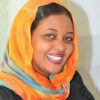
Sudan: World’s Worst Humanitarian Crisis
The ordinary sounds of Nahid Ali's home in Khartoum were completely drowned out by the sound of war which began on April 15 2023. Her baby was just 21 days old. The morning started as any typical day for a mother who had just given birth to her baby and needed to nurse her newborn while she took care of her other children. The gunfire began to erupt. The fighting began when two groups started to battle each other in the streets. The fighting which began in her area developed into a destructive countrywide war in Sudan which spread to her street within moments.

International Women’s Day 2026: For Girls in Pakistan’s Tribal Belt, Women’s Sports Come at a Cost
“I was very happy to see the way Aina Wazir was playing cricket,” says 28-year-old Noorena Shams, a professional squash player, when she saw the seven-year-old’s video. The clip, which spread rapidly across social media, drew widespread praise for the young girl’s remarkable talent.
The US/Israeli Bombing of Iran: A Case Study in Contempt for International Law
Operation “Epic Fury” manifests an epic tantrum by President Donald Trump, supported by his sycophantic minions, with dire consequences for the people in the region, peace and security worldwide, the global economy, and the post-World War II international legal order.
Imagery, Algorithms, and the Ballot: What Takaichi’s Victory Says About Youth Politics in the Digital Age
Sanae Takaichi’s electoral victory in February marks a historic turning point in Japanese politics. As Japan’s first female prime minister and the leader of a commanding parliamentary majority, she represents change in both symbolic and strategic terms. Conventional wisdom long held that younger Japanese voters leaned progressive, were sceptical of assertive security policies, and disengaged from ideological nationalism. Yet a segment of digitally active youth rallied behind a politician associated with constitutional revision, expanded defence capabilities, and a more unapologetic articulation of national identity. This shift cannot be reduced to a simple conservative swing. Rather, Takaichi’s rise reflects a deeper transformation in how democratic politics is constructed in the digital age: the growing power of imagery, digital mobilisation, and algorithm-driven branding in shaping political choice—particularly among younger voters.
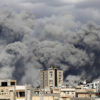
A New World Order Where Might is Right
As the build-up for a proposed “new world order” continues, a lingering question remains: will the country with the most powerful military reign supreme? The United Nations remains politically impotent. The UN charter is in tatters. The sovereignty of nation states and their territorial integrity have been reduced to political mockery. And the law of the jungle prevails—be it Palestine, Ukraine, Venezuela or Iran.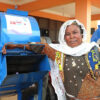
How UNDP & Global Partners are Tackling Root Causes of Violent Extremism in Ghana’s Borderlands
Across the world’s fragile borderlands where insecurity, climate stress, and marginalization intersect, communities often find themselves on the frontlines of violent extremism. Yet these same communities also hold the greatest potential for peace, when given the confidence, tools, and opportunities to shape their own future.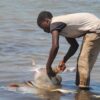
How Child Labour Persists Along Zanzibar’s Blue Economy
As the tide falls on Zanzibar’s western coast, 13-year-old Asha* moves across the reef, her gown flapping in knee-deep water. She carries a plastic basin and a knife. Since dawn, Asha has been prying octopus and scaling fish for drying and selling.
UN Leaders, Diplomats Warn of Middle East Instability Following Weekend Air-Strikes in Iran
The United States and Israel launched a joint military strike on Iran on February 28. Iran followed with military strikes on Israeli bases and on Arab Gulf states, including Bahrain, Oman, and the United Arab Emirates. The realized threat of a new war has caused alarm for the security situation in the Middle East and its impact on civilian populations.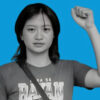
Philippines: ‘Preventing Similar Cases Requires Dismantling the Mechanisms That Treat Dissent as Crime’
CIVICUS discusses the criminalisation of dissent in the Philippines with Kyle A Domequil, spokesperson of the Free Tacloban 5 Network, a campaign supporting journalist Frenchie Mae Cumpio, human rights defender Marielle Domequil and their co-accused and advocating for their release.
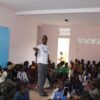
Maison des Talibés Confronts Abuse of ‘Talibé’ children in Senegal
When you walk through the streets of Senegal’s cities, you notice them almost immediately: young boys in worn clothes, clutching plastic cans or tin bowls, weaving between cars and pedestrians to ask for spare change or food. They are often barefoot, alone and hungry. These children are known as talibés.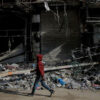
Over 25,500 Palestinians Killed: Absence of Accountability is Nothing Short of Shameful
The situation in the Occupied Palestinian Territory is a human-made disaster. The report before you sets out events between 1 November 2024 and 31 October 2025 that show Israel’s utter disregard for human rights in Gaza and the West Bank, and the serious violations also committed by Hamas and other Palestinian armed groups.
Massive US War Spending Hike Raises Debt, Taxes, Doubts
As US President Donald Trump pushes the world to war, arms spending has been rising worldwide. Wars secure more budgetary allocations, mainly benefiting the US-dominated military-industrial complex.
Why Ugandan Male Sexual Violence Survivors Suffer In Silence
When people ordinarily think about sexual violence, it's of the rape of women by men. In Uganda, as in other countries, activists say men are also victims of sexual violence perpetrated by women, though males remain silent.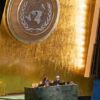
After a Brutal Winter, Millions of Ukrainians Face Deepening Displacement and Uncertainty
After surviving the harshest winter in a decade, millions of displaced Ukrainians are confronting a growing crisis marked by hardship and ongoing attacks as peace prospects remain distant.
Can “Human Fraternity” Move Peace?
As wars drag on and the international order grows increasingly unstable, Abu Dhabi has been offering a different kind of narrative. It sought to recognize early efforts at reconciliation, bring religious leaders into the same space, and place former adversaries under the same spotlight. At the heart of the February 4, 2026 Zayed Award for Human Fraternity ceremony was an attempt to make visible, in a public setting, the choice of moving in the direction of easing conflict.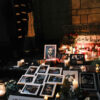
Iran: A Regime with Nothing Left but Force
The Islamic Republic of Iran has put down another uprising, with a ferocity that makes previous crackdowns seem restrained. The theocratic regime has survived, but it has done so by substituting violence for the economic security it cannot provide and the political legitimacy it no longer has. Its show of force is also an admission of weakness.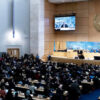
People’s Pursuit of Dignity, Equality and Justice is Unshakeable
A fierce competition for power, control and resources is playing out on the world stage at a rate and intensity unseen for the past 80 years. People are feeling unmoored, anxious and insecure. The gears of global power are shifting; the consequences are not clear. Some are signalling the end of the world order as we know it.
‘Nothing Compares to Human Lives Lost’ – Reflections on Ukraine War
“We have a saying here in Ukraine now – ‘young people meet at their friends’ funerals rather than at weddings.' It’s sad, but very true.”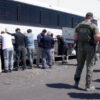
Immigrants Are What Made America Great
Trump’s immigration policy is destroying America’s greatness Immigrants are the backbone of America’s greatness— powering its economy, enriching its culture, and advancing its global leadership. Yet under the guise of making America great again, Trump's exclusionary, racist policies are dismantling that very foundation, stifling innovation and tarnishing the nation’s moral standing.« Previous Page — Next Page »


One world, one humanity, now one court to defend its rights. Another step towards universal human rights, but not remotely a step far enough. The United Nations adopted the Universal Declaration of Human Rights more than half a century ago, but that has done little to stop violations the world over, just as the Geneva Convention has not protected prisoners of war enough. Democracy itself and the freedom it presupposes has not been protective enough. This is the century to move from politicisation of human rights towards humanising political ways. IPS keeps an eye on that difficult path.

The Week with IPS

NEXT STOP - SDGs
Tracking global progress towards a sustainable world
Tracking global progress towards a sustainable world
