Languages
Saturday, November 14, 2026



News and Views from the Global South
Human Rights

COVID-19 Pandemic Vulnerable to Exploitation by Proliferators, Terrorists & Criminals
Even during this pandemic, perhaps especially during this pandemic, the global institutions to help prevent the spread of biological and chemical weapons to proliferators or terrorists must continue their work.
Q&A: COVID-19 Means we Must Innovate Data Collection, Especially on Gender
The current coronavirus pandemic can offer insight into how to shake-up traditional methods of data collection, and might provide an opportunity to do it in more innovative ways, in turn enhancing progress towards gender equality.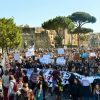
How Coronavirus Makes us Rethink Youth Protests
As social distancing, quarantines and lockdowns have spread across the globe to slow the spread of coronavirus, they have imposed some of the greatest worldwide restrictions on public gatherings in living memory. These restrictions may be necessary for public health, but they require the most anxious scrutiny to prevent them being misused to quash legitimate political expression and discriminate against protesters, including children and young people who mobilise.
Financial Scams Rise as Coronavirus Hits Developing Countries
In the Philippines, Peru, India, Kenya, South Africa and many other developing countries, poor people who are already struggling with the health impact of the coronavirus pandemic have been targeted by online fraudsters trying to take unfair advantage of them.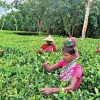
May Day: Large number of children work in tea estates
After her mother passed away, her father remarried and moved elsewhere, and so attending school became a luxury for 12-year-old Sheuly Munda.Press Freedom and Tackling Disinformation in the COVID-19 context
On the occasion of World Press Freedom Day 2020, join UNESCO for a dynamic online discussion on the importance of press freedom and independent journalism to provide reliable, life-saving information during the COVID-19 pandemic. Topics to be covered include:- • Fighting disinformation and rumours
• Journalists on the front lines: ensuring their health and safety
• The role of governments: protecting press freedom and independent journalism
• The role of social media and technology: supporting journalism and fighting disinformation
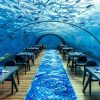
Impact of COVID-19 on Tourism in Small Island Developing States
The COVID-19 pandemic and the measures put in place to contain its diffusion are taking a heavy toll on the tourism sector. According to the United Nations World Tourism Organization (UNWTO), the COVID-19 pandemic will result in a contraction of the tourism sector by 20% to 30% in 2020.
Blocking media access during Covid-19
Press freedom in Bangladesh has been in decline long before the coronavirus came to our shores. Over the last decade, thanks to increasingly repressive media laws and highhanded measures adopted by the authorities, the health of journalism has been deteriorating in such a way that even the stalwarts of the fourth estate began to worry if the damage could ever be reversed. Yet, an outcome few would have expected during the Covid-19 crisis—which was expected to unite the people and their leaders against humanity's most dreaded enemy in decades—is the tightening of the noose around free flow of information, which holds the key to this unity. It's a self-defeating strategy that hurts not only the general people and the media, but those tightening the noose as well.
Freedom of the Press as a Guarantee for Human Dignity and Well-Being
United Nations has designated at least 170 specific days of the year as occasions to mark particular events or topics to promote the objectives of the Organization. 2 This might be considered as yet another sign of a supersaturation caused by the internet revolution. However, it cannot be denied that certain issues need to be globally recognized and amended. UNESCO has declared that the 3rd of May will be a day to remind us that media are in several parts of the world under attack, their independence are denied, critical thinking is considered as a threat and journalists seeking the truth are harassed, threatened, roughed up, or even killed. I would like to add that it is also an opportunity to acknowledge that communication, critical thinking, and imagination are essential parts of human existence and culture, if this is suppressed the entire humanity will suffer.
Journalism is Not a Crime…and Fake News on Social Media is Not Journalism
This year’s World Press Freedom Day on 3 May falls during COVID-19 lockdowns in many of our countries. Restriction on movement means journalists all over the world are facing obstacles in getting interviews and data, and verifying stories before publishing.
Protect Journalists’ Rights so We can Stop the COVID-19 Disinfodemic
Andrew Sam Raja Pandian, a digital journalist and founder of a news portal in the southern state of Tamil Nadu, was arrested for running two news articles related to COVID-19.OSCE PRESS RELEASE: COVID-19/Human Trafficking
How to address the consequences of the COVID-19 pandemic for the most vulnerable in our societies, especially for human trafficking victims and survivors, is the focus of a set of recommendations to governments published by the OSCE Special Representative and Co-ordinator for Combating Trafficking in Human Beings Valiant Richey today.
The COVID-19 Pandemic and the Reinvention of the Spirit of Solidarity and Cooperation
An invisible adversary has thrown the world – Global South and Global North alike – into disarray. The psychosocial and economic consequences of the COVID-19 crisis will remain with us long after it has been overcome. There will be no anti-viral return to the pre-coronavirus status quo, nor can we afford to idly wait for a viral transformation of our world. The future is not inevitable, abstract promise – it will depend on our collective readiness to forge it, or to be forged by it.
Public Health and Epidemics
For some time Wuhan in China and Lombardy in Italy were epicentres of the COVID-19 virus, something that has changed when the contagion is spreading fast in the US. A Lombardy in the grip of a deadly epidemic might among several Italians give rise to memories of their school days. For almost a century, Alessando Manzoni’s massive novel The Betrothed (I promessi sposi) from 1842 has been obligatory reading for all Italians during their last primary school year. A quite impressive endeavour considering that the novel is more than 700 pages long.
Press Freedom Needs Protection from Pandemic too
Wearing an orange jacket and face mask, Li Zehua, a Chinese freelance journalist, can be seen filming himself in a car. He is sure that state security agents have been pursuing him since he began documenting events in Hubei’s capital Wuhan, the first epicentre of the COVID-19 pandemic. A second YouTube video, circulating widely since he launched his appeal, ends abruptly when two men knock at his apartment. He has just reappeared online after two months, saying police interrogated him and put him in quarantine and that he was well looked after during this period.
Governments Cautioned Not to Use COVID-19 Lockdown to Cause Harm
 The United Nations High Commissioner for Human Rights is calling on governments and leaders around the world to ensure that their respective lockdown measurements don’t end up causing harm to people by those enforcing the lockdowns.
China & India Ranked World’s Biggest Military Spenders Trailing US
China and India, which went to war back in 1962 largely over a disputed Himalayan border-- and continue a longstanding battle for military supremacy in Asia-- have set a new record in arms spending.
World Press Freedom Day: The Assault on Media Freedom in Asia Worsens During COVID-19 Pandemic
May 3rd marks World Press Freedom Day around the world. During this COVID-19 pandemic, a robust media environment is critical: access to life-saving information is key in the fight against the virus. As governments impose a range of restrictions in attempts to curb the pandemic, journalists help hold authorities to account by providing analysis, engaging in debate about government actions, and creating a space for dialogue about the future we all hope to see.
WORLD PRESS FREEDOM DAY: Journalism Without Fear or Favour
 MEDIA WORLDWIDE is facing crises on multiple fronts, exacerbated by the COVID19 pandemic. Reporters without Borders released its 2020 World Press Freedom Index on April 21st, noting that the Coronavirus is being used by authoritarian governments to implement “shock doctrine” measures that would be impossible in normal times.
Staring at a Human Security Catastrophe
The defining images of South Asia’s battle against Covid-19 are hundreds of thousands of migrants, many with children on their shoulders, trudging from New Delhi, Kathmandu or Dhaka to their far-flung villages. They are daily wage earners engaged in construction, small enterprises, plying rickshaws or street selling in the informal sector. With lockdowns and economic activity shut down to combat the virus, these migrants lost their low-paying jobs and were forced to flee to their rural homes. Those who remained in these cities face food insecurity, rising joblessness and risk falling deeper into poverty.
As Coronavirus Spreads, No Journalist Should be Sidelined in Prison
In 2014 my husband and I were arrested in my native country, Iran, for the crime of working as journalists. I spent 72 days in Tehran’s notorious Evin prison, all of them in solitary confinement.« Previous Page — Next Page »


One world, one humanity, now one court to defend its rights. Another step towards universal human rights, but not remotely a step far enough. The United Nations adopted the Universal Declaration of Human Rights more than half a century ago, but that has done little to stop violations the world over, just as the Geneva Convention has not protected prisoners of war enough. Democracy itself and the freedom it presupposes has not been protective enough. This is the century to move from politicisation of human rights towards humanising political ways. IPS keeps an eye on that difficult path.

The Week with IPS

NEXT STOP - SDGs
Tracking global progress towards a sustainable world
Tracking global progress towards a sustainable world
