Languages
Saturday, November 14, 2026



News and Views from the Global South
Human Rights

Coronavirus Leads to Nosedive in Remittances in Latin America
Remittances that support millions of households in Latin America and the Caribbean have plunged as family members lose jobs and income in their host countries, with entire families sliding back into poverty, as a result of the COVID-19 health crisis and global economic recession.
Forced Marriage, Organ Trafficking Rife in Asia Pacific – Part 2
A single mother, Mai (name changed) had the responsibility of providing for her young son and grandparents, who had brought her up in a poor rural province in southern Vietnam’s Mekong Delta. While she was looking for employment, somebody approached her on social media with an offer of a high-paying job in China. When she arrived in China, she was sold into a forced marriage.
My Adherence My Fallacy: Stigma and Mental Health
The World Health Organization (2019) states that every 40 seconds someone dies by suicide. Annually, this represents over 800,000 people, more than the number of people who die in conflict and by homicide put together. Every suicide is a tragedy that has long-lasting effects on the people left behind and most cases stem from prolonged mental health issues and abuses that are not reported.
Modern Slavery in Asia Pacific Fuelled by Widespread Poverty, Migration & Weak Governance – Part 1
Aged 17, Moe Turaga was saddled with the responsibility of providing for his mother and young siblings when a family member approached him with the promise of a job and education in Australia. Dreaming of a bright future for himself and his family, he seized the opportunity and left the protective confines of his home in Fiji, only to find himself trapped in modern slavery on a remote agriculture farm in the state of Victoria.
Beyond Trump— US, UN & Global Health Governance
US President Donald Trump’s battle with the World Health Organization (WHO) hides two important issues. One, the long running love-hate relationship between the US and the UN, and two, a better understanding of how global public health is governed and in the overall context of global governance.
The UN Is Hunting for a New Medical Director, Based in New York City
“Are you a senior medical executive with expertise in healthcare management with oversight of clinical services and occupational health at a facility, state, national or international level? The United Nations Secretariat is seeking a Medical Director at the D-2 level in the Department of Operational Support,” an ad posting on the UN’s job portal reads.
We Cannot Let the Education Gap Widen at the Start of the Decade of Action
Prior to the COVID-19 pandemic, we estimated that 75 million children and youth - of whom 39 million are girls - were not able to access a quality education in countries impacted by armed conflicts, forced displacement, natural disasters and climate change-induced emergencies. The impact of COVID-19 has both globally and exponentially deepened the already existing critical education crisis.
On the Agenda of Iraq’s New Government: An Empty Treasury, Low Revenue, and COVID-19
Iraq’s newly-announced leader has brought hope to a country embroiled in a 17-year-long conflict, but authorities must ensure that issues such as swift and rapid response to COVID-19, security concerns, and corruption among others are addressed with urgency, experts said on Tuesday.
Malawi’s Vulnerable Shortchanged in Human Trafficking Prevention Efforts
Malawi is not doing enough to enforce its laws on human trafficking, resulting in a number of cases against perpetrators being dismissed by the courts, according to a local rights group. But local officials say that this Southern African nation — one of the poorest countries in the world — just doesn’t have the financial resources to do so.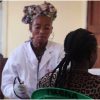
Protecting Women’s Reproductive Health During the Pandemic
“When I was 13… I got pregnant from my older brother… He raped me starting when I was 11,” a girl from Guatemala told one of us in 2015. She was one of the 2 million girls under 15 worldwide who give birth each year, often due to sexual violence.
COVID-19: Why We Must Reset Our Thinking
Covid-19 is the most significant event since the Second World War. It changes everything. It brings great sadness to many of us as we lose loved ones, as we see people losing their jobs, and as we see people around the world suffering immensely.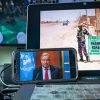
US Pulls the Plug on a UN Global Cease-Fire Resolution
After six weeks of negotiations, the United States shot down hopes for a resolution to be approved in the United Nations Security Council on May 8, refusing to back worldwide cease-fires as the US continues to castigate China and the World Health Organization for the Covid-19 pandemic. Meanwhile, momentum behind tenuous cease-fires is vanishing, experts say.
‘Passing the Buck’ Becomes Reckless ‘Conspiracy Blame Game’
Although Wuhan local authorities undoubtedly ostracized local medical whistle-blowers, notably Dr Li Wenliang, who suspected a new virus was responsible for flu-like infections in Wuhan in late 2019, official responses were apparently not delayed, and possibly even expedited, as the novel character of the SARS-CoV-2 virus, responsible for Covid-19 infections, was not immediately self-evident.
COVID-19 and the assault on fundamental rights
A spectre is haunting the conscientious citizens of Bangladesh—the spectre of the Digital Security Act, 2018 (DSA). By now the law has become synonymous with curtailment of freedom of expression and repression. The recent developments of involuntary disappearance, re-appearance and subsequent detention of several commentators and social activists have raised the alarm if indeed we as a nation are shying away from upholding one of the cardinal principles of the Muktijuddher Chetona (the spirit of the Liberation War) to freely express our views.
NGOs – with Local Groups in the Lead – are on COVID-19 Frontlines
NGOs, at the international, national - and most of all local - level are on the frontlines every day. I just heard from Oxfam staff in Bangladesh, that when asked whether they were scared to continue our response with the Rohingya communities in Cox’s Bazar, they replied: “They are now my relatives. I care about them — and this is the time they need us most.’”
VE Day Marks the End of the Second World War-But the World is Still at War
The world commemorated the 75th Anniversary to mark the end of the 2nd World War also called VE Day on 08 May 2020. With her nation, and much of the world still in lockdown due to COVID 19, England’s Queen marked 75 years since the allied victory in Europe with a poignant televised address. From Windsor Castle, Queen Elizabeth said, “the wartime generation knew that the best way to honour those who did not come back from the war, was to ensure that it didn’t happen again”.
Women Taking Charge during COVID-19
As the COVID-19 mayhem carries on in most countries, the role of mothers, daughters, and female caregivers have been affected the most. Besides looking after the household and home schooling children, they are also working on the front lines, actively or passively caring for their respective communities.
Former Child Bride Holds Pakistan to Account for Wrongful Imprisonment in Historic Legal Challenge
A former Pakistani child bride, who was wrongly accused of killing her husband at 13 and subsequently spent almost two decades in prison, is making history by being the first victim of a miscarriage of justice to seek compensation from the state, say legal human rights experts.
Religion & its Discontents: Considerations Around COVID-19 & Africa
COVID-19 has spread to many nations around the world, and has been declared a pandemic by the World Health Organization. In the global south, the COVID-19 pandemic has stretched the available medical and health resources, triggered economic shocks, and caused social upheavals and insecurity in many countries and localities.
World’s Poor Hit by Double Jeopardy: a Deadly Virus & a Devastating Debt Burden
The world’s poorer nations, reeling under an unrelenting attack on their fragile economies by the COVID-19 pandemic, have suffered an equally deadly body blow: being buried under heavy debt burdens.
Enforced Disappearances, Arbitrary Detentions, Hate Speech & Attacks on Civilians – ICC Report on Libya
The International Criminal Court (ICC) on Tuesday highlighted crimes against humanity and grave mismanagement of the law in Libya during a release of their latest report on the North African nation.« Previous Page — Next Page »


One world, one humanity, now one court to defend its rights. Another step towards universal human rights, but not remotely a step far enough. The United Nations adopted the Universal Declaration of Human Rights more than half a century ago, but that has done little to stop violations the world over, just as the Geneva Convention has not protected prisoners of war enough. Democracy itself and the freedom it presupposes has not been protective enough. This is the century to move from politicisation of human rights towards humanising political ways. IPS keeps an eye on that difficult path.

The Week with IPS

NEXT STOP - SDGs
Tracking global progress towards a sustainable world
Tracking global progress towards a sustainable world
