Languages
Saturday, November 14, 2026



News and Views from the Global South
Human Rights
George Floyd: US’ Week of Broken Glass and Broken Dreams
The United States has been a story of broken dreams and broken glass this past week. Once again, an unarmed black man died at the hands of a white police officer, with George Floyd being pinned to the ground under a lawman’s knee in Minneapolis, Minnesota, as stunned passersby made cell-phone videos of the incident to post on social media.
Lifelines in Danger
The COVID-19 pandemic is crippling the economies of rich and poor countries alike. Yet for many low-income and fragile states, the economic shock will be magnified by the loss of remittances—money sent home by migrant and guest workers employed in foreign countries.
‘I Can’t Breathe!’ Australia Must Look in the Mirror to See our Own Deaths in Custody
I can’t breathe, please! Let me up, please! I can’t breathe! I can’t breathe! These words are not the words of George Floyd or Eric Garner. They weren’t uttered on the streets of Minneapolis or New York. These are the final words of a 26-year-old Dunghutti man who died in a prison in south-eastern Sydney.
World Comes Together with $1.35 billion for Yemen
World leaders gathered on Tuesday to pledge $1.35 billion in aid for Yemen, which currently undergoing what many is the world’s “worst humanitarian crisis”, with Saudi Arabia announcing a contribution of $500 million.
The Pandemic Underlines America’s Ingrained Racism
The murder of George Floyd by a police officer in broad daylight came amid a high point in the continuing rampage of the coronavirus throughout the country, killing over 100,000 and infecting nearly 2 million while more than 45 million have lost their jobs.
As Minneapolis Burns, Trump’s Presidency is Sinking Deeper into Crisis. And yet, he may still be Re-elected
Violence has erupted across several US cities after the death of a black man, George Floyd, who was shown on video gasping for breath as a white police officer, Derek Chauvin, knelt on his neck. The unrest poses serious challenges for President Donald Trump and former Vice President Joe Biden as each man readies his campaign for the November 3 election.
This Year of Living Dangerously
Indonesia’s founding President Sukarno delivered his annual Independence or National Day address on 17 August 1964 anticipating the forthcoming year as Tahun vivere pericoloso, the ‘year of living dangerously’. 2020 may well be the world’s turn, and not only due to the obvious Covid-19 threat to the world.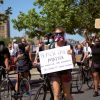
Is the Fight for Human Rights & Racial Justice Overriding the Coronavirus Risk?
The deadly coronavirus pandemic, which has claimed the lives of over 372,000 people worldwide, has reinforced the concept of “social distancing” which bars any gathering of over 10 or 20 people – whether at a social event, a wedding, a political rally or even a funeral.
For Love or Land – The Debate about Kenyan Women’s Rights to Matrimonial Property
Ida Njeri was a civil servant with access to a Savings and Credit Cooperative Society (SACCO) through her employer, and her husband a private consultant in the information and communication sector, when she began taking low-interest loans from the cooperative so they could buy up land in Ruiru, Central Kenya. She’d willing done it. Part of their long-term plan together for having a family was that they would acquire land and eventually build their dream home. But little did Njeri realise that 12 years and three children later the law would stand against her right to owning the matrimonial property.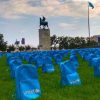
An Appeal to UN’s Budget Committee: It’s no Time to Cut Back on Child Protection
On February 26 this year, 15 South Sudanese children were released from armed groups and handed over to civilian child protection actors, including UNICEF and UNMISS, UN’s peacekeeping operation in South Sudan, who were able to facilitate the children’s safe return to their families.
Triple Emergencies of COVID-19, Flooding & Locusts Makes Somalia Susceptible to Human Trafficking
While simultaneously suffering from the coronavirus pandemic, flooding and a locust crisis, Somalia, could well see a rise in the number of people who are susceptible to human trafficking.
UN@75 & the Future We Want
Crises make us think smaller. When everything is uncertain, we turn inward: to our families, our communities, the immediate needs around us. We focus on the essential and the immediate; we survive.
War-Fighting in the Future and Our Current Hobson’s Choice!
Despite all the preoccupation with the current raging pandemic, it sadly appears that there has been no let-up in the global arms race among the major powers. In mid-May, the United States President Donald Trump, at an event for his new Space Force at the White House made a significant announcement, It was that the US was building right now an “incredible” new missile which would travel faster than any other in the world “by a factor of almost three”. This was obviously a response to the latest Russian ‘Avangard’ missile, which Russian President Vladimir Putin claims in invincible, with a speed of twenty times that of sound. The Chinese, reportedly are also feverishly working on their own hypersonic counterparts. All these would be strategic tools to significantly alter the war-fighting capabilities of humanity in the future.
No Woman Should Ever Die Giving Life
Consider this. 24 women, children and babies were murdered at a hospital in Kabul, the Afghan capital. Even by standards of a country as accustomed to bloodshed as Afghanistan, the May 12 attack on a Kabul maternity clinic was an event of unmitigated horror.
Innovation Is an Imperative – for Sustainable Food Systems
Hunger and food insecurity continue to rise. The official 2019 statistics refer to 821 million people suffering from hunger all over the world. According the recently launched Global Report on Food Crises, there are further 135 million people facing crisis levels of hunger or worse. WFP estimates that due to the impacts of COVID19, additional 130 million people could be pushed to the brink of starvation by the end of 2020. This means a total increase of 265 million people. If there will be no appropriate and urgent actions, “we could be facing multiple famines of biblical proportions within a short few months”, said David Beasley, WFP Executive Director, addressing the UN Security Council on 21st April.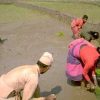
Women are Often an After-Thought in a Humanitarian Crisis
In an interview*, Bina Pradhan, an independent researcher, focuses on gender, macroeconomics and emerging issues of inequality. She is affiliated with the Federation of Business and Professional Women, Nepal (FBPWN), and has been working on the promotion and advancement of women in enterprise development and trade, post-earthquake community reconstruction, and rebuilding people’s lives and livelihoods with a focus on sustainability.
Kenya’s Adolescent Women Left Behind As More Married Women Access Contraception
It was only when 17-year-old Eva Muigai was in her final trimester that her family discovered she was pregnant. Muigai, a form three student who lives with her family in Gachie, Central Kenya, had spent her pregnancy wearing tight bodysuits and loose-fitting clothes that hid her growing baby bump.
Internal Migration: A Literary/Historical View
It is easy to generalize about migration. Populist politicians often portray migrants as strangers and ”our” homeland as a stable entity, rooted in an old agricultural society. When they do so they tend to forget that most of us are in fact migrants who have left that traditional farming community far behind and if it was not we who did so, it was our ancestors.
As COVID-19 Burns, World’s Forgotten Wars Continue to take Toll on Civilians as Well
Earlier this year, just before the coronavirus virtually shut down international travel, I sat under a mesquite tree and listened to a rambling speech by a South Sudanese general at a military base outside of the capital, Juba.
Yanghee Lee: Champion of justice for Rohingyas
"We all knew that [Aung San Suu Kyi] was put on a pedestal or portrayed as the icon of democracy and human rights, but ever since [her party] has taken office [after the 2015 election] and ever since she took the office of the State Councillor, all of her actions and her words, statements point otherwise", noted Professor Yanghee Lee, in one of her last conversations with Al Jazeera as the Special Rapporteur on the Human Rights Situation in Burma. "Perhaps the world didn't really know who she was", she said.
The Hotting-Up of the Sino-American Spat: Most Dangerous Side-Effect of Covid-19?
When the United States and China signed the First-Phase of their Trade Agreement in January this year, President Donald Trump called it a “momentous step”, and the world believed they had stepped back from a dangerous brink. But, alas, to cite an idiom that is so current today, it was but a ‘false positive’. As the globe reels from the surgoing COVID-19 pandemic, it is possible that the rapid deterioration of US-China relationship can become one of the worst side-effects of this raging virus.« Previous Page — Next Page »


One world, one humanity, now one court to defend its rights. Another step towards universal human rights, but not remotely a step far enough. The United Nations adopted the Universal Declaration of Human Rights more than half a century ago, but that has done little to stop violations the world over, just as the Geneva Convention has not protected prisoners of war enough. Democracy itself and the freedom it presupposes has not been protective enough. This is the century to move from politicisation of human rights towards humanising political ways. IPS keeps an eye on that difficult path.

The Week with IPS

NEXT STOP - SDGs
Tracking global progress towards a sustainable world
Tracking global progress towards a sustainable world
