Languages
Monday, August 17, 2026



News and Views from the Global South
Human Rights

Equal Footing: Building Pathways for Landlocked Developing Countries to Participate in Global Economy
Heads of State, ministers, investors and grassroots leaders are gathered in Awaza on Turkmenistan’s Caspian coast for a once-in-a-decade UN conference aimed at rewiring the global system in support of 32 landlocked developing countries whose economies are often ‘locked out’ of opportunity due to their lack of access to the sea.
Japan’s Right-wing Populist Rise
Rice queues – something once unthinkable – began appearing around May. As the country’s staple food hit record prices, frustrated shoppers found themselves breaking a cultural taboo by switching to rice from South Korea. It was a symbol of how far Japan’s economic certainties had crumbled, creating fertile ground for a political shift.
Do Nuclear Tests Still Remain a Future Threat — as World Commemorates the 80th Anniversary of Hiroshima & Nagasaki?
The 80th anniversary of the atomic bombings of Hiroshima and Nagasaki during World War II triggers the question: Is nuclear testing dead or is it still alive--and threatening? The August 6-9 anniversary marks the devastating bombings, which claimed the lives of between 150,000 and 246,000 civilians-- and still remains the only use of nuclear weapons in an armed conflict.
The Constitution Isn’t Optional: Why USA Belongs on the CIVICUS Monitor Watchlist
Successive United States governments have prided themselves on being governed by the Constitution of 1788. The First Amendment introduced in 1791 lays the foundations for secularism, respect for fundamental freedoms, and the right to seek redress of grievances.
Spotlight on Landlocked Developing Countries Ahead of Third UN Conference
Landlocked developing countries face a unique set of challenges. Without coastal ports, they rely on transit nations, causing higher trade costs and delays.
Survey by Staff Federation Expresses Disappointment over UN’s Reform Process
The Coordinating Committee for International Staff Unions and Associations of the United Nations System (CCISUA)* staff federation has conducted a quick survey of staff in its member unions of their thoughts on the UN80 initiative.
IPC Alert Declares the Worst Famine Conditions in Gaza since October 2023
Amidst the ongoing conflict in Gaza, the risk of famine among rising need of consumption and nutrition have reached their worst levels since the start of the conflict. Without urgent analysis to latest report from the Food Security Classificat “IPC ALERT: Worst-case scenario of Famine unfolding in the Gaza Strip”.
Why Locally Led Development Works and How Funders Can Get It Right
In Uganda, local communities are routinely sidelined in development processes, despite knowing most about their own needs. When a Moroto District officer remarked, ‘This is the first time local leaders were truly heard’, it offered a powerful reminder of what so often goes wrong: development fails when communities are excluded.
Four Times Rejected: Stateless Lotshampa Refugees Appeal to Nepal’s Supreme Court
Four Bhutanese Lotshampa refugees—Aasis Subedi, Santosh Darji, Roshan Tamang, and Ashok Gurung—filed an appeal in Nepal’s Supreme Court on July 27, challenging a government order that would deport them from Nepal.
As Gaza Enters ‘Worst-Case Scenario of Famine,’ States Call for Palestinian Self-Determination at General Assembly
As the starvation crisis in Gaza deepens into what aid organizations describe as a “worst-case scenario,” a growing coalition of nations is shifting its rhetoric and policy toward supporting Palestinian statehood. At the United Nations General Assembly this week, the humanitarian emergency has reignited global calls for a two-state solution and reignited scrutiny of the Israeli government’s blockade of aid.
ICJ Ruling Is a Pivotal Moment for Climate and Health Justice, Experts Say
Legal minds in international law are trying to interpret the scope and impact of the landmark advisory opinion on climate change by the International Court of Justice (ICJ), where it said that states have a duty to prevent significant harm to the environment.
Marital Rape: Confronting Religious Misinterpretations, Social Stigma, Despite Legal Clarity
“The last thing she asked for was a sip of water,” recalled Najma Maheshwari, referring to 19-year-old Shanti, a newlywed who died last week after brutal sexual violence allegedly inflicted by her husband, who is now in custody.
In Syria’s Sectarian Fights for Power, Humanity is the Loser
As sectarian violence rises in Syria, the number of displaced people has climbed exponentially since Syrian forces joined clashes between the Druze and Bedouin groups in the Sweida region.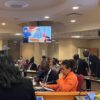
Africa’s Development at a Crossroads: Report Warns of Missed SDG Targets Without Urgent Action on Jobs, Equity, and Financing
Africa is making progress on over two-thirds of the Sustainable Development Goals (SDGs), but the pace remains far too slow to meet the 2030 targets, especially in areas like decent employment, gender equality, and access to social protection.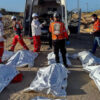
American Inhumanity on Full Display to the World
Why is a grinning Netanyahu, Israel’s Prime Minister, wildly cheered by both Democrats and Republicans whenever he addresses the US Congress, while at the same time in Gaza countless innocent civilians are being killed by American bombs and bullets—and now babies are starving?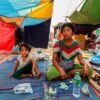
Airstrikes in Myanmar Continue To Spread Fear, Devastate Lives
In Myanmar, airstrikes occur almost daily. The phenomenon has become common since civil war broke out following the 2021 military coup that replaced the democratically elected National League for Democracy (NLD) with the Tatmadaw, Myanmar’s military. Several human rights organizations report that these airstrikes are disproportionately targeting civilians and harming lives.
Two-State Solution Conference Presents an “Exceptional Moment” for International Community – The Elders
Dignitaries across the international community have convened in New York to promote the two-State Solution - the coexistence of Israel and Palestine as sovereign states - as the only path forward to shared sustainable peace in the Middle East. Former and current leaders from 145 countries and independent groups will speak at the United Nations to demonstrate their ‘near-universal support’ and discuss the steps that need to be taken to achieve it.
Forests, Fossil Fuels, and the Fight for the Future: DRC’s Oil Expansion Sparks Global Alarm
The Democratic Republic of Congo (DRC) stands on the precipice of a profound environmental and social crisis, as the government prepares to auction 55 new oil blocks that cover more than half the country’s landmass.
When the System Protects Itself, Not People
In Geneva, nearly 600 UN staff based at the UN Office there held an Extraordinary Staff Union meeting on July 24, 2025, passing a unanimous motion of no confidence in the UN80 reform initiative, the Secretary General António Guterres, and Under Secretary General Guy Ryder—with no abstentions and no dissenting voices (source).
COMMENTARY: Trump National Monument at Mount Rushmore
President Donald Trump reportedly wants to add his own head to Mount Rushmore National Memorial. But the National Park Service says there’s no room next to the four current presidents: George Washington, Thomas Jefferson, Abraham Lincoln and Theodore Roosevelt. [Branch & White 6/27/2025] Here’s an innovative proposal for how to immortalize him right there in the Black Hills of South Dakota.
Violence Escalates in Sudan as Humanitarian Aid Struggles to Meet Growing Needs
Earlier this month, Sudanese civilians began facing a considerable escalation of hostilities, with the most recent attacks from the Rapid Support Forces (RSF) and the Sudanese Armed Forces (SAF) claiming dozens of lives. Amid a rapidly growing scale of needs and an overwhelming lack of funding, the United Nations (UN) and its partners have struggled to deliver adequate amounts of humanitarian aid.« Previous Page — Next Page »


One world, one humanity, now one court to defend its rights. Another step towards universal human rights, but not remotely a step far enough. The United Nations adopted the Universal Declaration of Human Rights more than half a century ago, but that has done little to stop violations the world over, just as the Geneva Convention has not protected prisoners of war enough. Democracy itself and the freedom it presupposes has not been protective enough. This is the century to move from politicisation of human rights towards humanising political ways. IPS keeps an eye on that difficult path.

The Week with IPS

NEXT STOP - SDGs
Tracking global progress towards a sustainable world
Tracking global progress towards a sustainable world
