Languages
Tuesday, August 18, 2026



News and Views from the Global South
Human Rights
When the System Protects Itself, Not People
In Geneva, nearly 600 UN staff based at the UN Office there held an Extraordinary Staff Union meeting on July 24, 2025, passing a unanimous motion of no confidence in the UN80 reform initiative, the Secretary General António Guterres, and Under Secretary General Guy Ryder—with no abstentions and no dissenting voices (source).
COMMENTARY: Trump National Monument at Mount Rushmore
President Donald Trump reportedly wants to add his own head to Mount Rushmore National Memorial. But the National Park Service says there’s no room next to the four current presidents: George Washington, Thomas Jefferson, Abraham Lincoln and Theodore Roosevelt. [Branch & White 6/27/2025] Here’s an innovative proposal for how to immortalize him right there in the Black Hills of South Dakota.
Violence Escalates in Sudan as Humanitarian Aid Struggles to Meet Growing Needs
Earlier this month, Sudanese civilians began facing a considerable escalation of hostilities, with the most recent attacks from the Rapid Support Forces (RSF) and the Sudanese Armed Forces (SAF) claiming dozens of lives. Amid a rapidly growing scale of needs and an overwhelming lack of funding, the United Nations (UN) and its partners have struggled to deliver adequate amounts of humanitarian aid.
Western Powers Are Complicit in Crimes Against Humanity in Gaza
The West, led by the Trump administration, has enabled the Netanyahu government to commit crimes against humanity and became complicit in the unfathomably horrific disaster that is being inflicted on the Palestinians in Gaza
Staff Union Unanimously Declares “No Confidence” in Secretary-General & Head of UN Reform Process
The growing opposition to the UN80 restructuring plan -– which has come under heavy fire from staff unions – has now reached the upper echelons of the world body. A motion, adopted at an Extraordinary General Assembly meeting, held July 24, by the Staff Union Council in Geneva (UNOG), reads “The staff have no confidence in UN80, Secretary-General Antonio Guterres and Under Secretary General Guy Ryder” (who is heading the UN restructuring process).
How Israel Lost its Soul
The dramatic story of Israel’s birth in 1948 following the Nazi Holocaust captured the wonder and admiration of the world. Its founders claimed that Israel would be a light to the nations, but now the Jewish State’s identity has gone from being the victim of genocide to perpetrator in less than two generations.
Climate Change An Existential Threat To Humanity, Urges Action – ICJ
The case was “unlike any that have previously come before the court,” President of the International Court of Justice Judge Yuji Iwasawa said while reading the court's unanimous advisory opinion outlining the legal obligations of United Nations member states with regard to climate change.
From Haor to Brickfields
 Nikli Upazila, located in the Kishoreganj district of Bangladesh, is part of the haor region, a vast wetland ecosystem characterized by bowl-shaped depressions. This unique geography subjects the area to significant climatic challenges, particularly recurrent flooding. The haor region, including Nikli, experiences a subtropical monsoon climate with distinct wet and dry seasons. During the monsoon season, heavy rainfall often leads to extensive flooding. Flash floods have become increasingly unpredictable and severe in recent years, causing substantial damage to agricultural lands and affecting the livelihoods of local communities. These people, trapped by water and driven by poverty, journey from the Haor to brickfields, where their lives become an endless cycle of hardship.
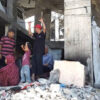
End Impunity for Israeli Crimes Against Palestinians: Demand Targeted Sanctions & Arms Embargo –at High-Level UN Conference
United Nations member countries should use the ministerial-level conference on Palestine on July 28-29, 2025, to publicly commit to concrete actions aimed at ending decades of impunity for Israeli authorities’ violations of international humanitarian and human rights law against Palestinians, Human Rights Watch said today.
Global South calls for Strategic Energy Transition Amidst SDG Target Slowdowns
At the UN 2025 High Level Political Forum last week, global energy leaders warned that without urgent action in expanding access to clean energy, hundreds of millions will remain vulnerable, and the world will risk falling short of its 2030 SDG deadline.
Protect Women’s Rights, Especially in a Time of Equality Backlash, Say Activists
Discriminatory laws and the absence of legal protections impact more than 2.5 billion women and girls worldwide in various ways. Legal reform is paramount to securing gender equality, and the world cannot afford to roll back on decades of progress in women’s rights.
Soaring Demand for Electric Vehicles, Lithium-Ion Batteries Creates Environmental Crisis in DRC
Electric vehicles contribute to an ongoing environmental and humanitarian crisis in the Democratic Republic of the Congo (DRC). Mining operations cause deforestation, pollution, food insecurity and exploitative labor practices.
‘The Lesson from Gaza Is Clear: When Ai-powered Machines Control Who Lives, Human Rights Die’
CIVICUS discusses the military use of artificial intelligence (AI) in Gaza with Dima Samaro, a Palestinian lawyer and researcher, and director of Skyline International for Human Rights, a civil society organisation (CSO) that defends digital freedoms and human rights in the Middle East and North Africa. Dima serves on multiple boards focused on civic space and surveillance issues, including Innovation for Change’s MENA Hub, the Surveillance in the Majority World Network and the VUKA! Solidarity Coalition, and volunteers with Resilience Pathways to help Palestinian CSOs counter Israeli efforts to restrict civic space and manipulate public narratives.

The Gaza Conundrum: Multilateralism is failing. Here’s why.
“Multilateralism is not an option but a necessity as we build back a better world with more equality and resilience and a more sustainable world."
Price and Power of Freedom: Celebrating Nelson Mandela International Day
The United Nations celebrated Nelson Mandela International Day in honor of the activist and politician’s lifelong commitment to peace and democracy.
Israeli Airstrikes Inflame Syria’s Humanitarian Crisis
Over the past week, the humanitarian situation in Syria has significantly deteriorated, with tensions between the Druze religious minority and the Syrian military reaching new peaks. On July 16, Israel launched a series of powerful airstrikes on Syria’s capital city, Damascus, in defense of Syria’s Druze population, further spurring regional instability and exacerbating the dire scale of needs.
Intersectional Feminist Leadership Needed to Realise Global Goals
In its 80-year history the UN has never once been led by a woman. As the international community convenes for the 2025 High-Level Political Forum (HLPF) to review progress on gender equality and other Sustainable Development Goals (SDGs), this remains a fundamental hypocrisy at the heart of global governance. How can an institution that has systematically excluded women from its highest office credibly champion gender justice worldwide?
From Gaza to Georgia, Human Rights Defenders Pay a High Price for Change. Here’s How You Can Help
Across the globe—from Gaza’s rubble to the streets of Tbilisi—people are standing up for justice, dignity, and basic rights. But far too often, they are paying with their freedom, their safety, even their lives.
A Fractured World Needs Peace, not more Conflicts, for Human Progress
Who in Asia would ask for an Asian NATO? Past attempts to develop Asian security compacts under US leadership have not been glittering successes. The two treaty organisations that the US set up in the 50s to counter the Communist tide, the CENTO and the SEATO, have long dissipated.
Human Rights in an Increasingly Digitizing World
Over the past several decades, digital technologies have transformed nearly every aspect of human life, revolutionizing developments across multiple sectors, including healthcare, education, and commerce, to name a few. However, these changes have also brought forth new concerns surrounding the preservation of human rights in an increasingly digitizing world.
The Emerging Quad 3.0: Prioritizing a Hard Security Agenda
On 1 July, the foreign ministers of the Quad—Australia, India, Japan and the US—convened for the second time this year in Washington, DC. While the first meeting, held just hours after the inauguration of Donald Trump as the 47th President of the United States, signaled the Quad's significance to the new US administration, the second meeting indicates that the Quad is entering a new phase with a renewed focus on a strategic and hard security agenda, weaning itself away from its non-traditional security priorities. This presents a departure from its previous versions: the first Quad, which collapsed in 2007, centred on humanitarian assistance and disaster relief (HADR), and Quad 2.0, which was reinstated in 2017, gradually developed a broad public goods agenda.« Previous Page — Next Page »


One world, one humanity, now one court to defend its rights. Another step towards universal human rights, but not remotely a step far enough. The United Nations adopted the Universal Declaration of Human Rights more than half a century ago, but that has done little to stop violations the world over, just as the Geneva Convention has not protected prisoners of war enough. Democracy itself and the freedom it presupposes has not been protective enough. This is the century to move from politicisation of human rights towards humanising political ways. IPS keeps an eye on that difficult path.

The Week with IPS

NEXT STOP - SDGs
Tracking global progress towards a sustainable world
Tracking global progress towards a sustainable world
