Languages
Friday, October 30, 2026



News and Views from the Global South
Human Rights

Activists Call on World to ‘Imagine’ Peace, End Nuclear Arms
In any discussion of world peace and the future of humanity, the issue of nuclear arms must be addressed, and now. That was the message from a range of delegates at the “Imaginer la Paix / Imagine Peace” conference, held in Paris September 22 to 24, and organized by the Sant’Egidio Community, a Christian organization founded in Rome in 1968 and now based in 70 countries.
‘We Need Competitive Elections so Only Truly Committed States Are Elected to the UN Human Rights Council’
CIVICUS discusses the upcoming election of new members of the United Nations (UN) Human Rights Council with Madeleine Sinclair, New York Office Director and Legal Counsel at the International Service for Human Rights (ISHR).

World Governments, NGOs Announce $350m Investments in Sexual and Reproductive Health Services
On the heels of the Summit of the Future and the sidelines of the United Nations High-Level Meeting Week, governments and philanthropies pledged to commit at least USD 350 million to boost family planning, sexual and reproductive health and supplies on the national and global level. As enshrined in the newly-adopted Pact for the Future, seeking new international finance models is critical to solving the issues that the world faces today. The decision to pledge forward is a demonstration of commitment to ongoing health issues.
Dying for a Cause: Environmental Defenders in the Firing Line
In 2017, South African activist Nonhle Mbuthuma took a stand against the powerful oil giant Shell, halting their plans to explore the pristine Wild Coast. Despite facing death threats, she refused to back down. As a co-founder of the Amadiba Crisis Committee and a 2024 Goldman Prize winner, Mbuthuma continues to fight for her community’s rights and the environment. Her bravery reflects the countless risks land and environmental defenders face across the globe.
Flooding and Armed Conflict Aggravates Sudan’s Cholera Epidemic
Sudan has been plunged into a deadly cholera outbreak in the midst of the Sudanese Civil War. Sudan is currently home to an approximate 15 million people, many of which have had to bear the brunt of hostilities between warring parties, widespread food insecurity, mass displacement, and extreme weather anomalies. Flooding, in particular, has been very damaging, leading to the collapse of critical infrastructures that ensure sanitation. This has caused the cholera outbreak to become a national concern.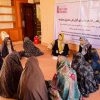
Cultivating a Culture of Peace
As global peace hits its lowest point since the Second World War, the International Day of Peace on September 21 offered a critical moment to reflect on and strengthen our peacebuilding efforts.
The UN Needs a Summit for the Present
The Summit of the Future has now ended, but the real and present world is still on fire. As the General Assembly, an annual ritual where dozens of heads of state descend on New York, kicks off, key questions about the role and future of the United Nations, a body that was created to maintain international peace and security almost 80 years ago, remain unanswered.
UN Moves De-Escalate Israel and Lebanon Conflict
Yesterday, Israel launched a series of bombardments across Southern Lebanon, killing over 500 people and injuring over 1,800, according to Lebanon’s Ministry of Public Health. This has been described as the deadliest day for the country since the 2006 Israel-Hezbollah War. Furthermore, this is only the latest of a series of conflicts between Israel and Lebanon since the eruption of the Israel-Hamas War in October of last year.
UN Charter: the Final Hurdle for Reform of the Security Council
When the "founding fathers" –regrettably, no "founding mothers"—created the United Nations 79 years ago, one of the biggest anomalies was bestowing the power of the veto to the five permanent members (P5) of the UN Security Council (UNSC): the US, UK, France, Russia and the Republic of China (later the People’s Republic of China).
Sustainable Peace in Afghanistan Needs Women on the Frontlines
Women in Afghanistan have continued to advocate for their rights and have called on the international community to not only stand in solidarity but to take decisive action to prevent the erosion of their rights and presence in public space.
Violence, Displacement, and Hunger Plagues Somalia
Somalia is currently in the midst of a dire humanitarian crisis that threatens to destabilize the nation’s security. This crisis is a result of the Somali Civil War, which began in 1991. Altercations between clan-based operations have caused a host of issues over the years, including over 596 civilian casualties, according to the United Nations Assistance Mission in Somalia (UNSOM). Tensions have greatly intensified in 2024, with levels of internal displacement and food insecurity increasing rapidly.
Summit of the Future: Youth Driven Action Needed to Tackle Nuclear and Climate Crises
Driving the Summit of the Future’s core messages of international solidarity and decisive action are young people who are determined to address the intersecting issues that the world contends with today.
Cultivating a Culture of Peace
The longing for peace transcends time, geography and religion. Based on justice, human rights and universal values outlined in the UN Charter, a culture of peace brings us all together in our common agenda for humanity. We can only co-exist by aligning ourselves with such a world order.
Gang Violence and Mass Displacement Ravage Haiti
Amid the ongoing civil unrest in Haiti due to gang violence, levels of internal displacement have soared. Mass internal displacements in Haiti have led to a host of adverse consequences. This includes a disruption of schooling, increased levels of violence and exploitation, and limited access to essential services such as healthcare.
Summit of the Future: On the Need for Civil Society to Make Its Voice Count at the UN
In a context of shrinking civic space that threatens civil society participation in an increasing number of countries and all the way to some UN processes, world leaders will gather to discuss the “multilateralism we want” at the Summit of the Future at the United Nations headquarters in New York.
Using Education To Stop the Generational Cycle of Violence Against Women in the Pacific
Parliamentary representation by women in Pacific Island countries remains stubbornly low at 8.4 percent. Yet women leaders across the region have been meeting every year for the past four decades to discuss goals and drive action to address gender inequality and the most pressing development challenges in the Pacific.
Multilateral Systems in Urgent Need of Reform, Says UN Secretary General
As the United Nations gears up to host the international community for the high-level meeting week, the UN chief appeals to world leaders to commit to universal agreements to work towards solutions.
Amid Great Challenges, Hope Reigns As More Children Reached with Education Support
Amid unprecedented global challenges and a growing list of countries in crisis, there is an existential threat to decades of development gains—with the global community marked by intensified armed conflict, forced displacements, and the debilitating effects of climate crises.
Explainer: Why Venezuela Needs To Reduce Its Gas Flaring
The most visible part of gas flaring in Venezuela is the so-called “Monagas illuminated nights.” These are red and orange skies, which are visible from the homes of the locals at night and which show the gas flaring in the oil fields of Monagas, a state located in the east of the Caribbean country and key in its oil production.
Nagorno-Karabakh: One Year After the Ethnic Cleansing
It has been 12 months since Hayk Harutyunyan, a 22-year-old photographer from Nagorno-Karabakh, cleaned his house for the last time and closed the door behind him for good.
ECW Delivers Holistic Education Against All Odds, But More Funding Needed
Education Cannot Wait (ECW) has delivered quality education to children in crisis "against all odds," ECW Executive Director Yasmine Sherif said at the United Nations today. "And you can imagine the odds. We are seeing more armed conflict, a growth of climate-induced disasters and the biggest refugee movement since World War 2."« Previous Page — Next Page »





One world, one humanity, now one court to defend its rights. Another step towards universal human rights, but not remotely a step far enough. The United Nations adopted the Universal Declaration of Human Rights more than half a century ago, but that has done little to stop violations the world over, just as the Geneva Convention has not protected prisoners of war enough. Democracy itself and the freedom it presupposes has not been protective enough. This is the century to move from politicisation of human rights towards humanising political ways. IPS keeps an eye on that difficult path.

The Week with IPS

NEXT STOP - SDGs
Tracking global progress towards a sustainable world
Tracking global progress towards a sustainable world
