Languages
Saturday, September 5, 2026



News and Views from the Global South
Press Freedom

Venezuela’s Opportunity for Democracy
Venezuela’s 28 July presidential election could offer a genuine chance of democratic transition. Despite an array of challenges, the opposition is coming into the campaign unified behind a single candidate. Many Venezuelans seem prepared to believe that voting could deliver change. But the authoritarian government is digging in its heels. The opposition reasonably fears the election could be suspended or the government could suppress the opposition vote. Large-scale fraud can’t be ruled out.
India’s Election: Cracks Start to Show in Authoritarian Rule
India’s Hindu nationalist strongman Narendra Modi has won his third prime ministerial term. But the result of the country’s April-to-June election fell short of the sweeping triumph that seemed within his grasp. Modi’s Bharatiya Janata Party (BJP) has shed seats compared to the 2019 election, losing its parliamentary majority. Modi remains prime minister thanks to coalition partners. It’s a long way from the 400-seat supermajority Modi proclaimed he wanted – which would have given him power to rewrite the constitution.
Chad: Dictatorship Continues by Other Means
On 6 May, people went to the polls in Chad, ostensibly to elect a president who’d usher in democratic civilian rule. Ten days later, the Constitutional Council confirmed there’d be no change: the elected president was the leader of the military-backed transitional government supposedly handing over power, Mahamat Idriss Déby.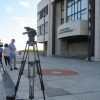
Slovakia PM Assassination Attempt Sparks Journalists’ Safety Fears
Fears for the safety of journalists in Slovakia are growing in the wake of an assassination attempt on the country’s prime minister, which some politicians are blaming in part on local independent media. Relations between some media and members of the governing coalition, led by Prime Minister Robert Fico’s Smer party, have become increasingly tense since the government came to power in October last year.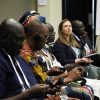
Democracy, Civic Space and Fundamental Freedoms Are under Attack, but Civil Society Is Here to Stay
During the Forus network’s General Assembly which took place in Gaborone, Botswana, civil society organisations from across 65 countries highlighted the challenges facing them globally in an increasingly polarised and crisis-hit world.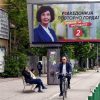
North Macedonia Turns Back the Clock
The old guard is back in North Macedonia, as the former ruling party – the Internal Macedonian Revolutionary Organization – Democratic Party for Macedonian National Unity (VMRO-DPMNE) – returns to parliamentary and presidential power.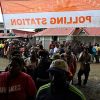
Solomon Islands: A Change More in Style than Substance
There’s change at the top in Solomon Islands – but civil society will be watching closely to see whether that means a government that’s grown hostile will start doing things differently.
Media Freedom Declining Across Europe, With Implications for Rule of Law
A new report has warned media freedom in the EU is close to “breaking point” in many states amid rising authoritarianism across the continent.
UN Secretary-General’s message for World Press Freedom Day
 The world is going through an unprecedented environmental emergency which poses an existential threat to this and future generations.
Press Freedom and Climate Journalism: United in Crisis
Journalism is in crisis, again. The challenges to press freedom are enormous and multi-faceted and they are deepening -- in “free” and open societies as well as autocracies. And there are no simple solutions. For individuals and entire media outlets the crisis is existential.
World Press Freedom Day 2024
Journalism is in crisis - again. The challenges to press freedom are enormous and multi-faceted.

Gaza Journalist Describes 33 Harrowing Days in Israeli Custody
Diaa Al-Kahlout, the veteran Gaza bureau chief for the Qatari-funded London-based newspaper Al-Araby Al-Jadeed, had been covering the Israel-Gaza war for two months when he became part of the news.
The Tragic Death of Palestinian Journalists
It is only fitting, against the backdrop of World Press Freedom Day, to recount the horror being inflicted on journalists and reporters around the world, which is increasing day by day. To tell the story of the mounting death of journalists in Gaza, it is essential to put into perspective the plight of journalists around the world.
The Deadliest Days for Journalists in War Zones
The seven- month-long war in Gaza is perhaps the only military conflict in contemporary history which has claimed the lives of over 100 journalists, including targeted killings.
‘I Couldn’t Remain Silent’: Son Fights for Uyghur Journalist’s Release from Chinese Prison
The last time Bahram Sintash saw his journalist father was in 2017. Qurban Mamut, an influential Uyghur editor had come to the United States for a visit but upon his return to Xinjiang in northwest China, he disappeared.
Afghan Women’s Voices Stifled as Taliban Tightens Media Controls
Since the Taliban regained control of Afghanistan in 2021, the space for women in the public sphere has significantly narrowed, with successive orders further restricting their presence in various sectors, including the media.
Senegal’s Democracy Passes Crucial Test
The fact that Senegal’s election took place on 24 March was in itself a triumph for civil society. That an opposition candidate, campaigning on an anti-establishment and anti-corruption agenda, emerged from jail to become the continent’s youngest leader offered fresh hope for democracy.
Democracy’s Contested Territory
This year more than half the world’s population has the chance to go to the polls. That might make it look like the most democratic year ever, but the reality is more troubling. Too many of those elections won’t give people a real say and won’t offer any opportunity for change.
Alarming Increase in Journalists Killed in Conflict Zones Last Year, says UNESCO
The Paris-based UN Educational, Scientific and Cultural Organization (UNESCO), whose mandate includes promoting the safety of journalists and ensuring press freedom worldwide, has pointed out that 2023 has been a particularly deadly year for journalists who work in conflict zones. Audrey Azoulay, UNESCO Director-General, said at least 38 journalists and media workers were killed in the line of work in countries in conflict in 2023, compared to 28 in 2022 and 20 in 2021.
Freedom of Speech Is Silenced in Nicaragua
Almost six years after the outbreak of the April 2018 protests, there are no signs left in Nicaragua of the violence that reigned in those days. There is no graffiti on walls or banners with demands or opinions against the leftist regime that has ruled the country since 2007.
Russia: Moments of Dissent after Two Years of War
Russia’s full-scale invasion of Ukraine marked its second anniversary on 24 February. And while civil society is offering an immense voluntary effort in Ukraine, in Russia activists have faced intense constraints. The suspicious death of opposition leader Alexei Navalny is part of a great wave of repression. He’s the latest in a long list of people who’ve come to a sudden end after falling out with Vladmir Putin.« Previous Page — Next Page »


Journalism is dangerous work. Dozens of reporters and other media workers are killed in the line of duty each year. Hundreds more face threats, intimidation, and harassment as they risk their lives to let us know what is going on in war zones and as they root out corruption. In the Information Age, the Internet provides us with new ways to disseminate the news even as it poses new threats to press freedoms.


IPS Director General Farhana Haque Rahman was invited by UNESCO as a panelist at the World Press Freedom Day 2017 gathering in Jakarta, in the Plenary Session: Quality journalism: a public good for just, peaceful and inclusive societies.

The Week with IPS

NEXT STOP - SDGs
Tracking global progress towards a sustainable world
Tracking global progress towards a sustainable world
